

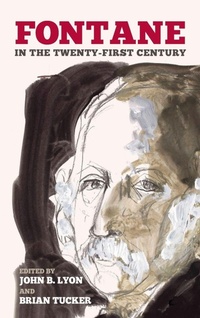
Fontane in the Twenty-First Century
Published on 24. May 2019
Book
Hardback
266 pages
978-1-64014-009-7 (ISBN)
Description
Assesses the relevance of the works of Fontane, perhaps the foremost German novelist between Goethe and Mann, for the twenty-first century.
Theodor Fontane remains a canonical figure in German literature, the most important representative of poetic realism, and likely the best German-language novelist between Goethe and Mann, yet scholarly attention to his works oftenlags behind his stature, at least in the English-speaking academy. This volume, coinciding with Fontane's 200th birthday in 2019, assesses the relevance of his works for us today and also draws attention to the most current English-language research.
Much has changed in the last two decades in critical theory, and the volume highlights how new methodological approaches and new archival research can update our understanding of Fontane's works. Although his novels are famously rooted in the details of quotidian life in nineteenth-century Germany, they also reflect larger historical transformations that resonate with our world today (e.g., financial crisis, class conflict, changing gender roles, and migration) and so speak to contemporary critical interests. The volume's contributors draw on literary and cultural studies approaches including gender and sexuality studies, emotion studies, transnationalismand globalization, media and visual studies, rhetorical criticism, paratextual criticism, and digital humanities. Their contributions survey a wide range of Fontane's literary production in order to speak to both German and non-German audiences in the twenty-first century.
Contributors: James N. Bade, Russell A. Berman, Katharina Adeline Engler-Coldren, Todd Kontje, John B. Lyon, Ervin Malakaj, Nicolas von Passavant, Lynne Tatlock, Christian Thomas, Brian Tucker, Michael J. White, Holly A. Yanacek.
John B. Lyon is Professor of German at the University of Pittsburgh. Brian Tucker is Associate Professor of German at Wabash College.
Theodor Fontane remains a canonical figure in German literature, the most important representative of poetic realism, and likely the best German-language novelist between Goethe and Mann, yet scholarly attention to his works oftenlags behind his stature, at least in the English-speaking academy. This volume, coinciding with Fontane's 200th birthday in 2019, assesses the relevance of his works for us today and also draws attention to the most current English-language research.
Much has changed in the last two decades in critical theory, and the volume highlights how new methodological approaches and new archival research can update our understanding of Fontane's works. Although his novels are famously rooted in the details of quotidian life in nineteenth-century Germany, they also reflect larger historical transformations that resonate with our world today (e.g., financial crisis, class conflict, changing gender roles, and migration) and so speak to contemporary critical interests. The volume's contributors draw on literary and cultural studies approaches including gender and sexuality studies, emotion studies, transnationalismand globalization, media and visual studies, rhetorical criticism, paratextual criticism, and digital humanities. Their contributions survey a wide range of Fontane's literary production in order to speak to both German and non-German audiences in the twenty-first century.
Contributors: James N. Bade, Russell A. Berman, Katharina Adeline Engler-Coldren, Todd Kontje, John B. Lyon, Ervin Malakaj, Nicolas von Passavant, Lynne Tatlock, Christian Thomas, Brian Tucker, Michael J. White, Holly A. Yanacek.
John B. Lyon is Professor of German at the University of Pittsburgh. Brian Tucker is Associate Professor of German at Wabash College.
Reviews / Votes
[A] welcome addition to Fontane scholarship in general, and to English-language scholarship on Fontane in particular. . . . [T]imely and imperative. . . . The collection's new theoretical approaches, as well as its profound close readings, advance Fontane scholarship into the twenty-first century and will serve as a profitable springboard for continuing endeavors. . . . Filling a critical gap in scholarship, [this volume] documents [Fontane's] resilience and enduring relevance for readers and scholars on both sides of the Atlantic. -- Edith H. Krause * GERMAN QUARTERLY * [C]ommemorate[s] what would have been Theodor Fontane's 200th birthday . . . [and aims] to both enrich and enliven English-language research on . . . [his] work. . . . Insights into Fontane's personal life, his agency as an author and as an aging observer, and his views on the military reveal an engaged, prescient, and versatile mind. The essays build on established research findings and offer some new readings. All German citations are translated. Recommended. * CHOICE *More details
Series
Language
English
Place of publication
Columbia, MD
United States
Publishing group
Boydell & Brewer Ltd
Target group
Professional and scholarly
Product notice
Cloth over boards
Illustrations
4 s/w Abbildungen
15 b/w illus.
Dimensions
Height: 235 mm
Width: 157 mm
Thickness: 19 mm
Weight
543 gr
ISBN-13
978-1-64014-009-7 (9781640140097)
Copyright in bibliographic data and cover images is held by Nielsen Book Services Limited or by the publishers or by their respective licensors: all rights reserved.
Schweitzer Classification
Other editions
Additional editions
John B. Lyon | Brian Tucker
Fontane in the Twenty-First Century
E-Book
05/2019
1st Edition
De Gruyter
€48.99
Available for download
Persons
BRIAN TUCKER is Professor of German at Wabash College, IN. BRIAN TUCKER is Professor of German at Wabash College, IN. LYNNE TATLOCK is the Hortense and Tobias Lewin Distinguished Professor in the Humanities and Chair of Germanic Languages and Literatures at Washington University in St. Louis, MO. MICHAEL WHITE is Senior Lecturer in German at the University of St Andrews and head of the UK and Ireland section of the Theodor Fontane Gesellschaft.
Content
Acknowledgments
Note on Editions
Introduction: Fontane in the Twenty-First Century - John B. Lyon and Brian Tucker
Narrative Digression and the Transformation of Nationhood in Vor dem Sturm - Russell A. Berman
Nasty Women: Female Anger as Moral Judgment in Grete Minde and Effi Briest - Holly A. Yanacek
Peforming the Philistine: Gossip as a Narrative Device and a Strategy for Reflection on Anti-Semitism in Theodor Fontane's L'Adultera - Nicolas von Passavant
To Have an Eye: Visual Culture and the Misapprehension of Class in Irrungen, Wirrungen - Brian Tucker
Fontane as a Pacifist? The Anti-War Message in Quitt and Fontane's Changing Attitude to Militarism - James N. Bade
Disjunctive Transnationalisms in Fontane's Frau Jenny Treibel - John B. Lyon
On the "Right Measure" in Effi Briest: Ethics and Aesthetics of the Prosaic - Katharina Adeline Engler-Coldren
Transfiguration, Effect, and Engagement: Theodor Fontane's Aesthetic Thought - Michael J. White
Fontane and World Literature: Prussians, Jews, and the Specter of Africa in Die Poggenpuhls - Todd Kontje
Von Zwanzig bis Dreissig: The Male Author in Parts - Lynne Tatlock
Melusine von Barby's Barriers and Connections in Fontane's Der Stechlin - Christian Thomas
Senescence and Fontane's Der Stechlin - Ervin Malakaj
Notes on the Contributors
Index
Note on Editions
Introduction: Fontane in the Twenty-First Century - John B. Lyon and Brian Tucker
Narrative Digression and the Transformation of Nationhood in Vor dem Sturm - Russell A. Berman
Nasty Women: Female Anger as Moral Judgment in Grete Minde and Effi Briest - Holly A. Yanacek
Peforming the Philistine: Gossip as a Narrative Device and a Strategy for Reflection on Anti-Semitism in Theodor Fontane's L'Adultera - Nicolas von Passavant
To Have an Eye: Visual Culture and the Misapprehension of Class in Irrungen, Wirrungen - Brian Tucker
Fontane as a Pacifist? The Anti-War Message in Quitt and Fontane's Changing Attitude to Militarism - James N. Bade
Disjunctive Transnationalisms in Fontane's Frau Jenny Treibel - John B. Lyon
On the "Right Measure" in Effi Briest: Ethics and Aesthetics of the Prosaic - Katharina Adeline Engler-Coldren
Transfiguration, Effect, and Engagement: Theodor Fontane's Aesthetic Thought - Michael J. White
Fontane and World Literature: Prussians, Jews, and the Specter of Africa in Die Poggenpuhls - Todd Kontje
Von Zwanzig bis Dreissig: The Male Author in Parts - Lynne Tatlock
Melusine von Barby's Barriers and Connections in Fontane's Der Stechlin - Christian Thomas
Senescence and Fontane's Der Stechlin - Ervin Malakaj
Notes on the Contributors
Index