

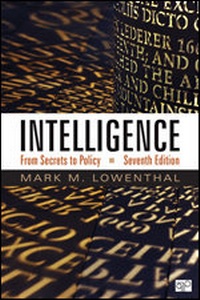
Intelligence
From Secrets to Policy
7th Edition
Published on 21. December 2016
Book
Paperback/Softback
624 pages
978-1-5063-4256-6 (ISBN)
Description
In this Seventh Edition, Lowenthal examines cyber space and the issues it presents to the intelligence community such as defining cyber as a new collection discipline; the implications of the Senate Intelligence Committee's staff report on enhanced interrogation techniques; the rise of the Islamic State; and the issues surrounding the nuclear agreement with Iran. New sections have been added offering a brief summary of the major laws governing U.S. intelligence today such as domestic intelligence collection, whistleblowers vs. leakers, and the growing field of financial intelligence.
Reviews / Votes
"Mark Lowenthal's Intelligence: From Secrets to Policy is a marvelous guide to the discipline's concepts and theories, and it keeps getting better with each edition. It is nuanced and comprehensive without losing sight of the big picture-that is, the key points that every scholar and practitioner must understand when it comes to the real world of strategic intelligence. Whether as an intelligence analyst, a manager, an overseer on Capitol Hill, or an outside scholar, Lowenthal has been there, done that. He brings a superb sense of realism and practicality into his book, while at the same time tapping into the most important scholarly research on the topic. Bravo!" -- Dr. Loch K. Johnson "Intelligence: From Secrets to Policy remains the standard by which all other intelligence studies textbooks should be evaluated. Each chapter covers its topic clearly and concisely, conveying the information within with just the right amount of detail; the sidebar boxes offer excellent topics for classroom discussion. The book is comprehensive and covers topics that are themselves each book worthy." -- Greg Moore "Lowenthal's Intelligence: From Secrets to Policy is a comprehensive text which reflects current events and new developments in the field. It is able to introduce difficult to understand concepts in ways that students are readily able to comprehend." -- John Comiskey "Intelligence: From Secrets to Policy is incredibly informative, timely, well-written, and easily accessible by students and professionals alike. Mark Lowenthal starts by providing a baseline for understanding the role that "intelligence" plays in the operation of a government and its interactions with other countries. He then provides historical context for the development of the U.S. intelligence community. From there, we get a deep look into the practice of intelligence and the broad spectrum of roles with the intelligence community, from protecting our secrets and obtaining the secrets of others. The use of intelligence in formulating policy is also an essential element discussed here and, in a "post-Snowden" era, Lowenthal's discussions of accountability, ethics, and reform are very timely and insightful." -- Gary C. Kessler, Ph.D.More details
Edition
7th Revised edition
Language
English
Place of publication
Washington
United States
Publishing group
SAGE Publications Inc
Target group
College/higher education
Edition type
Revised edition
Dimensions
Height: 229 mm
Width: 152 mm
Weight
740 gr
ISBN-13
978-1-5063-4256-6 (9781506342566)
Copyright in bibliographic data and cover images is held by Nielsen Book Services Limited or by the publishers or by their respective licensors: all rights reserved.
Schweitzer Classification
Other editions
Previous edition
Book
07/2014
6th Edition
SAGE Publications Inc
€104.18
Article exhausted; check for reprint
Person
Mark M. Lowenthal has over forty-four years of experience in U.S. intelligence. He has served as the Assistant Director of Central Intelligence for Analysis and Production, Vice Chairman for Evaluation on the National Intelligence Council, staff director of the House Permanent Select Committee on Intelligence, office director and as a Deputy Assistant Secretary of State in the State Department's Bureau of Intelligence and Research (INR), and Senior Specialist in U.S. Foreign Policy at the Congressional Research Service, Library of Congress. He is now the President and CEO of the Intelligence & Security Academy, an education and consulting firm. Dr. Lowenthal received his BA from Brooklyn College and his PhD in history from Harvard University. He serves as an adjunct professor at the Johns Hopkins University; the National Intelligence University; Sciences Po (Paris); and the Norwegian Defence Intelligence School. He was an adjunct at Columbia University from 1993-2007.
Content
Tables, Figures, and Boxes
Preface
Acronyms
Chapter 1. What Is "Intelligence"?
Why Have Intelligence Agencies?
What Is Intelligence About?
Key Terms
Further Readings
Chapter 2. The Development of U.S. Intelligence
Major Themes
Major Historical Developments
Key Terms
Further Readings
Chapter 3. The U.S. Intelligence Community
Alternative Ways of Looking at the Intelligence Community
The Many Different Intelligence Communities
Intelligence Community Relationships That Matter
The Intelligence Budget Process
Key Terms
Further Readings
Chapter 4. The Intelligence Process-A Macro Look: Who Does What for Whom?
Requirements
Collection
Processing and Exploitation
Analysis and Production
Dissemination and Consumption
Feedback
Thinking About the Intelligence Process
Key Terms
Further Readings
Chapter 5. Collection and the Collection Disciplines
Overarching Themes
Strengths and Weaknesses
Conclusion
Key Terms
Further Readings
Chapter 6. Analysis
Major Themes
Analytical Issues
Intelligence Analysis: An Assessment
Key Terms
Further Readings
Chapter 7. Counterintelligence
Internal Safeguards
External Indicators and Counterespionage
Problems in Counterintelligence
Leaks
Economic Espionage
National Security Letters
Conclusion
Key Terms
Further Readings
Chapter 8. Covert Action
The Decision-Making Process
The Range of Covert Actions
Issues in Covert Action
Assessing Covert Action
Key Terms
Further Readings
Chapter 9. The Role of the Policy Maker
The U.S. National Security Policy Process
Who Wants What?
The Intelligence Process: Policy and Intelligence
Key Term
Further Readings
Chapter 10. Oversight and Accountability
Executive Oversight Issues
Congressional Oversight
Issues in Congressional Oversight
Internal Dynamics of Congressional Oversight
The Courts
Conclusion
Key Terms
Further Readings
Chapter 11. The Intelligence Agenda: Nation-States
The Primacy of the Soviet Issue
The Emphasis on Soviet Military Capabilities
The Emphasis on Statistical Intelligence
The "Comfort" of a Bilateral Relationship
Collapse of the Soviet Union
Intelligence and the Soviet Problem
The Current Nation-State Issue
Key Terms
Further Readings
Chapter 12. The Intelligence Agenda: Transnational Issues
U.S. National Security Policy and Intelligence After the Cold War
Intelligence and the New Priorities
Cyberspace
Terrorism
Proliferation
Narcotics
Economics
Demographics
Health and the Environment
Peacekeeping Operations
Support to the Military
Conclusion
Key Terms
Further Readings
Chapter 13. Ethical and Moral Issues in Intelligence
General Moral Questions
Issues Related to Collection and Covert Action
Analysis-Related Issues
Oversight-Related Issues
Whistle-Blowers
The Media
Conclusion
Further Readings
Chapter 14. Intelligence Reform
The Purpose of Reform
Issues in Intelligence Reform
Conclusion
Key Terms
Further Readings
Chapter 15. Foreign Intelligence Services
Britain
China
France
Israel
Russia
Other Services
Other Services in Brief
Conclusion
Further Readings
Appendix 1. Additional Bibliographic Citations and Websites
Appendix 2. Major Intelligence Reviews or Proposals
Author Index
Subject Index
Preface
Acronyms
Chapter 1. What Is "Intelligence"?
Why Have Intelligence Agencies?
What Is Intelligence About?
Key Terms
Further Readings
Chapter 2. The Development of U.S. Intelligence
Major Themes
Major Historical Developments
Key Terms
Further Readings
Chapter 3. The U.S. Intelligence Community
Alternative Ways of Looking at the Intelligence Community
The Many Different Intelligence Communities
Intelligence Community Relationships That Matter
The Intelligence Budget Process
Key Terms
Further Readings
Chapter 4. The Intelligence Process-A Macro Look: Who Does What for Whom?
Requirements
Collection
Processing and Exploitation
Analysis and Production
Dissemination and Consumption
Feedback
Thinking About the Intelligence Process
Key Terms
Further Readings
Chapter 5. Collection and the Collection Disciplines
Overarching Themes
Strengths and Weaknesses
Conclusion
Key Terms
Further Readings
Chapter 6. Analysis
Major Themes
Analytical Issues
Intelligence Analysis: An Assessment
Key Terms
Further Readings
Chapter 7. Counterintelligence
Internal Safeguards
External Indicators and Counterespionage
Problems in Counterintelligence
Leaks
Economic Espionage
National Security Letters
Conclusion
Key Terms
Further Readings
Chapter 8. Covert Action
The Decision-Making Process
The Range of Covert Actions
Issues in Covert Action
Assessing Covert Action
Key Terms
Further Readings
Chapter 9. The Role of the Policy Maker
The U.S. National Security Policy Process
Who Wants What?
The Intelligence Process: Policy and Intelligence
Key Term
Further Readings
Chapter 10. Oversight and Accountability
Executive Oversight Issues
Congressional Oversight
Issues in Congressional Oversight
Internal Dynamics of Congressional Oversight
The Courts
Conclusion
Key Terms
Further Readings
Chapter 11. The Intelligence Agenda: Nation-States
The Primacy of the Soviet Issue
The Emphasis on Soviet Military Capabilities
The Emphasis on Statistical Intelligence
The "Comfort" of a Bilateral Relationship
Collapse of the Soviet Union
Intelligence and the Soviet Problem
The Current Nation-State Issue
Key Terms
Further Readings
Chapter 12. The Intelligence Agenda: Transnational Issues
U.S. National Security Policy and Intelligence After the Cold War
Intelligence and the New Priorities
Cyberspace
Terrorism
Proliferation
Narcotics
Economics
Demographics
Health and the Environment
Peacekeeping Operations
Support to the Military
Conclusion
Key Terms
Further Readings
Chapter 13. Ethical and Moral Issues in Intelligence
General Moral Questions
Issues Related to Collection and Covert Action
Analysis-Related Issues
Oversight-Related Issues
Whistle-Blowers
The Media
Conclusion
Further Readings
Chapter 14. Intelligence Reform
The Purpose of Reform
Issues in Intelligence Reform
Conclusion
Key Terms
Further Readings
Chapter 15. Foreign Intelligence Services
Britain
China
France
Israel
Russia
Other Services
Other Services in Brief
Conclusion
Further Readings
Appendix 1. Additional Bibliographic Citations and Websites
Appendix 2. Major Intelligence Reviews or Proposals
Author Index
Subject Index