

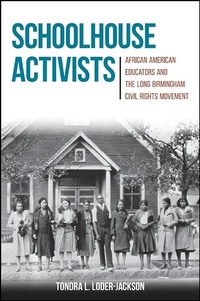
Schoolhouse Activists
African American Educators and the Long Birmingham Civil Rights Movement
Published on 2. July 2016
Book
Paperback/Softback
272 pages
978-1-4384-5860-1 (ISBN)
Description
Examines the role of African American educators in the Birmingham civil rights movement.
Schoolhouse Activists examines the role that African American educators played in the Birmingham, Alabama, civil rights movement from the late nineteenth century to the present day. Drawing on multiple perspectives from education, history, and sociology, Tondra L. Loder-Jackson revisits longstanding debates about whether these educators were friends or foes of the civil rights movement. She also uses Black feminist thought and the life course perspective to illuminate the unique and often clandestine brand of activism that these teachers cultivated. The book will serve as a resource for current educators and their students grappling with contemporary struggles for educational justice.
Schoolhouse Activists examines the role that African American educators played in the Birmingham, Alabama, civil rights movement from the late nineteenth century to the present day. Drawing on multiple perspectives from education, history, and sociology, Tondra L. Loder-Jackson revisits longstanding debates about whether these educators were friends or foes of the civil rights movement. She also uses Black feminist thought and the life course perspective to illuminate the unique and often clandestine brand of activism that these teachers cultivated. The book will serve as a resource for current educators and their students grappling with contemporary struggles for educational justice.
Reviews / Votes
"Schoolhouse Activists provides an insightful narrative into the role of African American educators during the Civil Rights Movement in Birmingham, Alabama from the late nineteenth century to present day. This text should play a prominent role in future discussions given the limited and partial information on the roles of educators during the Civil Rights Movement." - Journal of Negro Education"Tondra Loder-Jackson's book is valuable for several audiences; scholars of political science, civil rights, social justice, education, and histories of education will appreciate the multigenerational perspectives she offers on the role of African American educators' activism. She contributes critical insights into the history of African American educators' activism, illuminating the powerful role teachers have played in and out of the classroom from the late nineteenth century until present times." - Journal of African American History
"...Schoolhouse Activists is an engaging account of black educators in Birmingham that provides new history and raises important questions about the activism of black educators past and present." - History of Education Quarterly
More details
Language
English
Place of publication
Albany, NY
United States
Target group
College/higher education
Professional and scholarly
US School Grade: College Graduate Student and over
Product notice
Paperback (trade)
Illustrations
2 Tables, black and white; 8 Illustrations, black and white
Dimensions
Height: 226 mm
Width: 152 mm
Thickness: 15 mm
Weight
386 gr
ISBN-13
978-1-4384-5860-1 (9781438458601)
Copyright in bibliographic data and cover images is held by Nielsen Book Services Limited or by the publishers or by their respective licensors: all rights reserved.
Schweitzer Classification
Other editions
Additional editions
Tondra L. Loder-Jackson
Schoolhouse Activists
African American Educators and the Long Birmingham Civil Rights Movement
E-Book
10/2015
1st Edition
De Gruyter
€35.99
Available for download
Person
Tondra L. Loder-Jackson is Associate Professor of Educational Foundations at the University of Alabama at Birmingham.
Content
Illustrations
Preface
Acknowledgments
Abbreviations
Introduction: Activists or Accommodationists? Recasting the Role of African American Educators in the Civil Rights Movement
PART I. Breaking Ground and Laying the Foundation
1. Pioneering Black Schools Second to None
2. Organizing for Educational Equity
3. Supporting the Movement Inside and Outside of the Schoolhouse
PART II.Transitioning and Forging Ahead
4. Relative Activism
5. Intergenerational Bridge Building
6. Resurgent Activism?
Appendix. Notes on Methodology
Chronology
Notes
Bibliography
Index
Preface
Acknowledgments
Abbreviations
Introduction: Activists or Accommodationists? Recasting the Role of African American Educators in the Civil Rights Movement
PART I. Breaking Ground and Laying the Foundation
1. Pioneering Black Schools Second to None
2. Organizing for Educational Equity
3. Supporting the Movement Inside and Outside of the Schoolhouse
PART II.Transitioning and Forging Ahead
4. Relative Activism
5. Intergenerational Bridge Building
6. Resurgent Activism?
Appendix. Notes on Methodology
Chronology
Notes
Bibliography
Index