

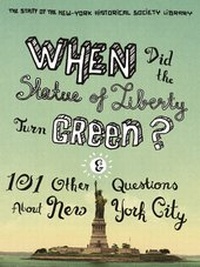
When Did the Statue of Liberty Turn Green?
And 101 Other Questions About New York City
Published on 19. October 2010
Book
Hardback
192 pages
978-0-231-14742-2 (ISBN)
Description
For years, the librarians at the New-York Historical Society have kept a record of the questions posed to them by curious New Yorkers and visitors to the city. Who was the first woman to run for mayor of New York? Why are beavers featured on the city's official seal? Is it true that a nineteenth-century New Yorker built a house out of spite? These questions involve people, places, buildings, monuments, rumors, and urban myths. They concern sports, food, transportation, the arts, politics, nature, and Central Park, among many other subjects. Taken together, they attest to the infinite stories hidden within the most intriguing metropolis in the world. In When Did the Statue of Liberty Turn Green? the staff of the New-York Historical Society Library answer more than a hundred of the most popular and compelling queries. The endlessly entertaining entries in this book feature hard-to-find data and unforgettable profiles, sharing snapshots of New York's secret history for all to enjoy.
Drawing on the library's extensive collections, the staff reveal when the first book was printed in New York, whether the story of Harlem residents presenting rats to government officials is true, who exactly were the Collyer brothers and why were they famous, and why premature babies were once displayed in Coney Island. For readers who love trivia, urban history, strange tales, and, of course, New York City, this book will delight with its rich, informative, and surprising stories. Look inside to learn: How "Peg-Leg" Peter Stuyvesant lost his right leg Whether Manhattan used to have cowboysHow the New York Yankees got their nameWho was Pig Foot MaryWhy the Manhattan House of Detention is called the TombsWho was Topsy and how she electrified New York CityHow many speakeasies were open during ProhibitionWhat occurred every May in the nineteenth century to cause so much commotionWhen penguins were stolen from the Coney Island Aquarium
Drawing on the library's extensive collections, the staff reveal when the first book was printed in New York, whether the story of Harlem residents presenting rats to government officials is true, who exactly were the Collyer brothers and why were they famous, and why premature babies were once displayed in Coney Island. For readers who love trivia, urban history, strange tales, and, of course, New York City, this book will delight with its rich, informative, and surprising stories. Look inside to learn: How "Peg-Leg" Peter Stuyvesant lost his right leg Whether Manhattan used to have cowboysHow the New York Yankees got their nameWho was Pig Foot MaryWhy the Manhattan House of Detention is called the TombsWho was Topsy and how she electrified New York CityHow many speakeasies were open during ProhibitionWhat occurred every May in the nineteenth century to cause so much commotionWhen penguins were stolen from the Coney Island Aquarium
Reviews / Votes
This compendium of both popular and more obscure questions and answers is filled with colorful, quirky historical threads that combine to create an extraordinary tapestry depicting New York's story... An almost addictive read. Library Journal Highly recommended to anyone curious to learn more about New York City's legacy, traditions, and amazing true stories. The Midwest Book ReviewMore details
Language
English
Place of publication
New York
United States
Product notice
Trade binding
Illustrations
52 illus.
Dimensions
Height: 203 mm
Width: 152 mm
Weight
368 gr
ISBN-13
978-0-231-14742-2 (9780231147422)
Copyright in bibliographic data and cover images is held by Nielsen Book Services Limited or by the publishers or by their respective licensors: all rights reserved.
Schweitzer Classification
Other editions
Additional editions
The Staff of the New-York Historical Society Library | Nina Nazionale | Jean Ashton
When Did the Statue of Liberty Turn Green?
And 101 Other Questions About New York City
Book
10/2010
Columbia University Press
€18.59
Shipment within 10-20 days
The Staff of the New-York Historical Society Library | Nina Nazionale | Jean Ashton
When Did the Statue of Liberty Turn Green?
And 101 Other Questions About New York City
E-Book
10/2010
1st Edition
De Gruyter
from
€14.95
Available for download
Persons
The New-York Historical Society, a preeminent educational and research institution, is home to both New York City's oldest museum and one of the nation's most distinguished independent research libraries. Each year, the library staff assists more than 5000 researchers on-site and another 5000 remotely. Jean W. Ashton is executive vice president and director of the New-York Historical Society Library. Nina Nazionale is director of library operations at the New-York Historical Society.
Content
Foreword, by Ric Burns Acknowledgments Firsts and Origins History and Politics Curiosities and Wonders Buildings, Streets, and Neighborhoods Arts, Leisure, and Diversions
When did the Statue of Liberty turn green?
For more than twenty years, the Statue of Liberty, originally known as "Liberty Enlightening the World," was dark brown, only changing to its familiar verdant hue close to the time of America's entry into the First World War. By the early 1920s, the entire monument turned green. The dark color of the statue in the early years gives quite accidental plausibility to proponents of a theory that the model for the work was black and that she was donated to the United States to celebrate the end of American slavery. August Bartholdi, however, claimed he gave the sculpture the stern features of his mother.
For more than twenty years, the Statue of Liberty, originally known as "Liberty Enlightening the World," was dark brown, only changing to its familiar verdant hue close to the time of America's entry into the First World War. By the early 1920s, the entire monument turned green. The dark color of the statue in the early years gives quite accidental plausibility to proponents of a theory that the model for the work was black and that she was donated to the United States to celebrate the end of American slavery. August Bartholdi, however, claimed he gave the sculpture the stern features of his mother.