

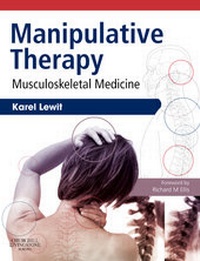
Manipulative Therapy
Musculoskeletal Medicine
Published on 16. September 2009
Book
Paperback/Softback
450 pages
978-0-7020-3056-7 (ISBN)
Description
"Manipulative Therapy" provides a systematic overview of chain reactions which are the basis of a rational holistic approach. These reactions are closely related to the upright human posture and to the 'deep stabilisation system' as shown in the work of Richardson et al in Therapeutic Exercise for Spinal Stabilisation in Low Back Pain. This approach has meant a considerable advance in the therapy and rehabilitation of patients. It gives a balanced picture of the importance of musles, joints and soft tissues, under the control of the nervous system, the textbook aims to treat disturbance of function, the most common cause of pain in the motor system, in the most effective way. Locomotor system dysfunctions are shown to be treated very effectively using manual medicine techniques. Spinal column and joint mobility can be restored, and pain triggered by the autonomic nervous system can be positively influenced. This is a comprehensive source of information relating to pathogenesis, diagnosis, indications and treatment methods, incorporating the latest research findings.
Radiological diagnosis is is shown as laying the foundation for successful diagnosis and treatment with manual medicine techniques. Typical conditions associated with pain in the locomotor system is presented and described in functional terms for the first time. The book concludes with chapters covering preventative aspects and expert assessment. "Manipulative Therapy: Musculoskeletal Medicine" is the follow on from: "Manipulative Therapy in Rehabilitation of the Locomotor System", published by Butterworth Heinemann, 1985.
Radiological diagnosis is is shown as laying the foundation for successful diagnosis and treatment with manual medicine techniques. Typical conditions associated with pain in the locomotor system is presented and described in functional terms for the first time. The book concludes with chapters covering preventative aspects and expert assessment. "Manipulative Therapy: Musculoskeletal Medicine" is the follow on from: "Manipulative Therapy in Rehabilitation of the Locomotor System", published by Butterworth Heinemann, 1985.
More details
Edition
English ed.
Language
English
Place of publication
London
United Kingdom
Publishing group
Elsevier Health Sciences
Target group
College/higher education
Professional and scholarly
All Manual Therapists, including Physical Therapists, Osteopaths, Chiropractors and other body workers.
Illustrations
Approx. 472 illustrations
Dimensions
Height: 189 mm
Width: 246 mm
ISBN-13
978-0-7020-3056-7 (9780702030567)
Copyright in bibliographic data and cover images is held by Nielsen Book Services Limited or by the publishers or by their respective licensors: all rights reserved.
Schweitzer Classification
Other editions
Additional editions
E-Book
09/2009
1st Edition
Elsevier
€60.68
Available for download
Person
Professor Karel Lewit is a neurologist and specialist in manual medicine of international reputation, and one of the founding members of the Prague school. He is still working and teaching as a professor in Prague. He played a decisive role in promoting manual medicine in central Europe. Doctors and physiotherapists in Germany are to this day largely taught according to his principles. He worked together with Vladimir Janda and Philip Greenman, and his postisometric relaxation (PIR) and reciprocal inhibition (RI) were developed from Mitchel's muscle energy technique.
Content
1 History and fundamental principles 2 Etiology and pathogenesis 3 Functional anatomy and radiology of the spinal column 4 Diagnosis of dysfunctions of the locomotor system 5 Indications for and principles underlying individual treatment methods 6 Therapeutic techniques 7 Clinical aspects of locomotor system dysfunction (vertebrogenic disorders) 8 Prevention of locomotor system dysfunctions 9 Expert assessment of locomotor system dysfunctions 10 The place of manipulative therapy and its future