

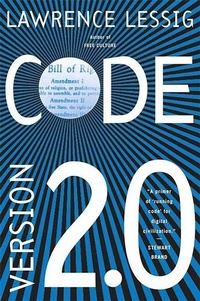
Code
And Other Laws of Cyberspace, Version 2.0
Published on 5. December 2006
Book
Paperback/Softback
432 pages
978-0-465-03914-2 (ISBN)
Description
There's a common belief that cyberspace cannot be regulated-that it is, in its very essence, immune from the government's (or anyone else's) control. Code , first published in 2000, argues that this belief is wrong. It is not in the nature of cyberspace to be unregulable cyberspace has no nature." It only has code-the software and hardware that make cyberspace what it is. That code can create a place of freedom-as the original architecture of the Net did-or a place of oppressive control. Under the influence of commerce, cyberspace is becoming a highly regulable space, where behaviour is much more tightly controlled than in real space. But that's not inevitable either. We can-we must-choose what kind of cyberspace we want and what freedoms we will guarantee. These choices are all about architecture: about what kind of code will govern cyberspace, and who will control it. In this realm, code is the most significant form of law, and it is up to lawyers, policymakers, and especially citizens to decide what values that code embodies. Since its original publication, this seminal book has earned the status of a minor classic. This second edition, or Version 2.0, has been prepared through the author's wiki, a web site that allows readers to edit the text, making this the first reader-edited revision of a popular book.
Reviews / Votes
Lawrence Lessig is a James Madison of our time, crafting the lineaments of a well-tempered cyberspace. This book is a primer of 'running code' for digital civilization. Like Madison, Lessig is a model of balance, judgement, ingenuity and persuasive argument. * Stewart Brand *More details
Language
English
Place of publication
United States
Product notice
Paperback (UK-trade)
Dimensions
Height: 236 mm
Width: 156 mm
Thickness: 32 mm
Weight
503 gr
ISBN-13
978-0-465-03914-2 (9780465039142)
Copyright in bibliographic data and cover images is held by Nielsen Book Services Limited or by the publishers or by their respective licensors: all rights reserved.
Schweitzer Classification
Other editions

Person
Lawrence Lessig is a professor at Stanford Law School and founder of the school's centre for the Internet and Society. After clerking for Judge Richard Posner on the 7th Circuit Court of Appeals and for Justice Antonin Scalia on the U.S. Supreme Court, he served on the faculties of the University of Chicago, Yale Law School, and Harvard Law School before moving to Stanford. He represented the web site developer Eric Eldred before the Supreme Court in Ashcroft v. Eldred, a landmark case challenging the Sonny Bono Copyright Term Extension Act. His other books are Free Culture and The Future of Ideas. Lessig also chairs the Creative Commons project and serves on the board of the Electronic Frontier Foundation. In 2002 he was named one of Scientific American's Top 50 Visionaries. He lives in Palo Alto, California.