

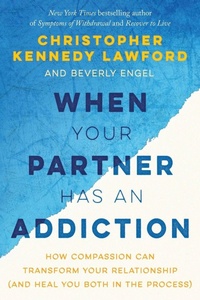
When Your Partner Has an Addiction
Description
That doesn't mean you should turn your back on the person you love.
We've been told that staying with a partner who struggles with addiction—whether it be with drugs, alcohol, or addictive behaviors—means that we're enabling their destructive behavior. That wanting to help them means we're codependent, and that the best thing for both of us is to walk away from the relationship entirely. But is that true?
When Your Partner Has an Addiction challenges the idea that the best chance for recovery—for the addict and their partner—is to walk away. Instead, it makes the revolutionary claim that you, and the love you have for your partner, can be a key part of his or her journey to recovery.
Together, addiction activist and bestselling author Christopher Kennedy Lawford and psychotherapist Beverly Engel, MFT, take a fresh look at addiction and codependency—the latest research on what causes them and what the two have in common. Rather than treat addiction or codependency as disease or weakness, When Your Partner Has an Addiction honors the trauma and shame that often lie at their source and shows you how to use your love to combat that shame, allowing you to more effectively support your partner and heal yourself.
The research proves that, while you cannot "fix" your partner, you can have a positive impact on their recovery. Whether you suffer from codependency, and whether your partner is already in recovery, When Your Partner Has an Addiction provides you with proven techniques and strategies to drastically improve your relationship and help get your partner the help he needs—without leaving and while taking care of yourself in the process.
More details
Other editions
Additional editions
Persons
Christopher Kennedy Lawford spent 20 years in the film and television industries as an actor, lawyer, executive and producer. He is the author of two New York Times bestselling books, Symptoms of Withdrawal (2005) and Moments of Clarity (2009).
In recovery for more than 25 years from drug addiction, Lawford campaigns tirelessly on behalf of the recovery community in both the public and private sectors. He presently works with the United Nations, the Canadian Center on Substance Abuse, the White House Office on Drug Control Policy, and the World Health Organization. He also consults with Fortune 500 companies and numerous non-profit groups, speaking around the world on issues related to addiction, mental health, and Hepatitis C.
In 2009, California Governor Arnold Schwarzenegger appointed Lawford to the California Public Health Advisory Committee. In 2011, Lawford was named Goodwill Ambassador for the United Nations Office on Drugs & Crime to promote activities supporting drug treatment, care and recovery. He also serves as national advocacy consultant for Caron Treatment Centers.
Content
Part I. Love, Compassion, and Understanding
Chapter 1: Love and Addiction: Can They Coexist?
Chapter 2: Do I Love My Partner Enough to Stay?
Chapter 3: Hope and Compassion: The Keys to Healing
Part II. Taking on a Compassionate Attitude
Chapter 4: A Fresh Look at Addiction
Chapter 5: A Different Perspective on Codependency
Part III. Your Role in Your Partner's Recovery
Chapter 6: The Difference between Codependency and Compassion
Chapter 7: Should You Be a Supporter or a Collaborator?
Chapter 8: Becoming a Compassionate Supporter
Chapter 9: Becoming a Compassionate Collaborator
Chapter 10: Creating Your Own Self-Care Program
Conclusion
Appendix I: Types of Childhood Abuse
Appendix II: Options for Recovery
Endnotes
About the Authors