


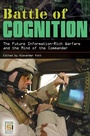
Battle of Cognition
The Future Information-Rich Warfare and the Mind of the Commander
Published on 30. December 2007
Book
Hardback
272 pages
978-0-313-34995-9 (ISBN)
Description
What if the true weak link of the Information Age force is not the hardware of machines, but the software of the human mind? And if so, could it be that the entire conceptual structure of the Information Revolution theorists, at least as it applies to military affairs, is built on sand, on the notorious fickleness of human cognition? These are the questions this book strives to examine. Looking at the command and control of information-rich warfare, the contributors explore its potential new processes, techniques, and organizational structures. As they do so, they find reasons for both optimism and concerns about the limitations of human cognition and supporting technologies in commanding battles in the Information Age.
Since the beginning of the Information Revolution, the military in the United States and elsewhere has been analyzing and implementing the changes driven by the rapidly advancing information technologies. Among military theorists and practitioners, many focus on the Information Revolution's impact on matters of military equipment. Far fewer, however, seem to worry about the gray matter-the mind of the commander, the place where all the information power of the new age is supposed to converge and to yield its mighty dividends.
Consider that it is the human mind, particularly the minds of military commanders and their staffs that remain the pinnacle and the ultimate consumer of the rapidly growing information flows. What if the true weak link of the Information Age force is not the hardware of machines, but the software of the human mind? And if so, could it be that the entire conceptual structure of the Information Revolution theorists, at least as it applies to military affairs, is built on sand, on the notorious fickleness of human cognition? These are the questions this book strives to examine. Looking at the command and control of information-rich warfare, the authors explore its potential new processes, techniques, and organizational structures. As they do so, they find reasons for both optimism and concerns about the limitations of human cognition and supporting technologies in commanding Information Age battles.
Since the beginning of the Information Revolution, the military in the United States and elsewhere has been analyzing and implementing the changes driven by the rapidly advancing information technologies. Among military theorists and practitioners, many focus on the Information Revolution's impact on matters of military equipment. Far fewer, however, seem to worry about the gray matter-the mind of the commander, the place where all the information power of the new age is supposed to converge and to yield its mighty dividends.
Consider that it is the human mind, particularly the minds of military commanders and their staffs that remain the pinnacle and the ultimate consumer of the rapidly growing information flows. What if the true weak link of the Information Age force is not the hardware of machines, but the software of the human mind? And if so, could it be that the entire conceptual structure of the Information Revolution theorists, at least as it applies to military affairs, is built on sand, on the notorious fickleness of human cognition? These are the questions this book strives to examine. Looking at the command and control of information-rich warfare, the authors explore its potential new processes, techniques, and organizational structures. As they do so, they find reasons for both optimism and concerns about the limitations of human cognition and supporting technologies in commanding Information Age battles.
More details
Series
Language
English
Place of publication
United States
Publishing group
Bloomsbury Publishing Plc
Target group
College/higher education
Interest Age: From 7 to 17 years
Dimensions
Height: 240 mm
Width: 161 mm
Thickness: 19 mm
Weight
575 gr
ISBN-13
978-0-313-34995-9 (9780313349959)
Copyright in bibliographic data and cover images is held by Nielsen Book Services Limited or by the publishers or by their respective licensors: all rights reserved.
Schweitzer Classification
Other editions
Additional editions
E-Book
12/2007
1st Edition
Praeger Publishers Inc
€62.49
Available for download
Person
Alexander Kott is a program manager in the Defense Advanced Research Projects Agency, the central R&D organization of the U.S. Department of Defense. Much of his work focuses on innovative information technologies for command and control. He earned his PhD from the University of Pittsburgh. Later, he directed R&D organizations at technology companies including Carnegie Group, Honeywell, and BBN.