


Surveillance and Space
1st Edition
Published on 19. December 2016
Book
Hardback
208 pages
978-1-4739-0776-8 (ISBN)
Description
The digital age is also a surveillance age. Today, computerized systems protect and manage our everyday life; the increasing number of surveillance cameras in public places, the computerized loyalty systems of the retail sector, geo-localized smart-phone applications, or smart traffic and navigation systems. Surveillance is nothing fundamentally new, and yet more and more questions are being asked:
Who monitors whom, and how and why?
How do surveillance techniques affect socio-spatial practices and relationships?
How do they shape the fabrics of our cities, our mobilities, the spaces of the everyday?
And what are the implications in terms of border control and the exercise of political power?
Surveillance and Space responds to these modern questions by exploring the complex and varied interactions between surveillance and space. In doing so, the book also advances a programmatic reflection on the very possibility of a 'political geography of surveillance'.
Who monitors whom, and how and why?
How do surveillance techniques affect socio-spatial practices and relationships?
How do they shape the fabrics of our cities, our mobilities, the spaces of the everyday?
And what are the implications in terms of border control and the exercise of political power?
Surveillance and Space responds to these modern questions by exploring the complex and varied interactions between surveillance and space. In doing so, the book also advances a programmatic reflection on the very possibility of a 'political geography of surveillance'.
Reviews / Votes
Questions of surveillance are always also questions of geography. From the famous disciplinary spaces of Bentham's panoptic prison projects to today's control societies based on millions of sensors, cameras and data capture devices spread across the world, perspectives from critical geography offer massive potential for understanding surveillance societies. And yet, remarkably, this pivotal and state-of-the art book is the first to really consider the intersections of geography and surveillance with real depth and clarity. Theoretically cutting-edge, politically astute, technologically informed, athletically multiscaled -- 'Surveillance and Space' is a remarkable analysis and is a 'must read' for anyone interested in the fast-moving politics and geographies of surveillance in contemporary societies. -- Stephen Graham This book engages with the timely and significant debate around surveillance, space and power. These three elements have been recognized as crucial since the works of Foucault, but a lot has changed since, especially when it comes to IT-based techniques of control. This book discusses the contemporary political geography of surveillance and the surveillance-space nexus in many different contexts. Firmly grounded in previous understandings, Klauser examines the multifaceted ways in which space makes a difference to the exercise and experience of surveillance. His perspective expands from the Anglophone world to German and French research, and is thus unique. Especially the works of Sloterdijk and Raffestin deeply enrichen the current theories of surveillance and space. Klauser has an exceptional ability to bring scholars from different times, cultures and disciplines into 'discussion', resulting in constructive new understandings. These brave theoretical conceptualizations are supported by several illustrative empirical case studies, for example, on airports and mega-events. Klauser maps the new geographies of surveillance with great skill and deep understanding, resulting in a work that is essential reading for every surveillance studies researcher and student. -- Hille KoskelaMore details
Series
Edition
First Edition
Language
English
Place of publication
London
United Kingdom
Target group
College/higher education
Professional and scholarly
Dimensions
Height: 240 mm
Width: 161 mm
Thickness: 16 mm
Weight
485 gr
ISBN-13
978-1-4739-0776-8 (9781473907768)
Copyright in bibliographic data and cover images is held by Nielsen Book Services Limited or by the publishers or by their respective licensors: all rights reserved.
Schweitzer Classification
Other editions
Additional editions

Francisco Klauser
Surveillance and Space
Book
12/2016
1st Edition
SAGE Publications Ltd
€81.50
Shipment within 15-20 days
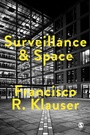
Francisco Klauser
Surveillance and Space
E-Book
12/2016
1st Edition
SAGE Publications Ltd
€73.49
Available for download
Person
?Francisco R. Klauser ?is Professor of Political Geography at The University of Neuchatel, Switzerland.
Content
Introduction: Governing the Everyday in the Digital Age
Part I: Conceptual foundations
Chapter 1: Surveillance and the Everyday
Chapter 2: Surveillance and Mediation
Chapter 3: Surveillance and Power
Chapter 4: Surveillance and Space
Part II: Spatial Logics of Surveillance
Chapter 5: Punctual, Linear and Planar Logics of Surveillance
Chapter 6: Surveillance relating to Fixity and Flexibility, Enclosure and Openness
Chapter 7: Spherical Attributes of Surveillance
Part III: The Functioning of Surveillance in its Relation to Space
Chapter 8: Surveillance, Authority and Expertise
Chapter 9: Policy Mobilities and Exemplification in Surveillance Matters
Part IV: The Socio-spatial Implications of Surveillance
Chapter 10: Spatial Distancing and Separation
Chapter 11: The Orchestration and Automatic Production of Space
Conclusion: Towards a Political Geography of Surveillance
Part I: Conceptual foundations
Chapter 1: Surveillance and the Everyday
Chapter 2: Surveillance and Mediation
Chapter 3: Surveillance and Power
Chapter 4: Surveillance and Space
Part II: Spatial Logics of Surveillance
Chapter 5: Punctual, Linear and Planar Logics of Surveillance
Chapter 6: Surveillance relating to Fixity and Flexibility, Enclosure and Openness
Chapter 7: Spherical Attributes of Surveillance
Part III: The Functioning of Surveillance in its Relation to Space
Chapter 8: Surveillance, Authority and Expertise
Chapter 9: Policy Mobilities and Exemplification in Surveillance Matters
Part IV: The Socio-spatial Implications of Surveillance
Chapter 10: Spatial Distancing and Separation
Chapter 11: The Orchestration and Automatic Production of Space
Conclusion: Towards a Political Geography of Surveillance