

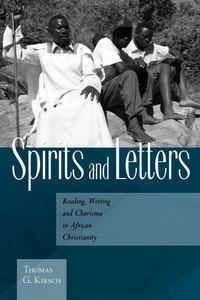
Spirits and Letters
Reading, Writing and Charisma in African Christianity
1st Edition
Published on 1. March 2011
Book
Paperback/Softback
288 pages
978-0-85745-142-2 (ISBN)
Description
Studies of religion have a tendency to conceptualise 'the Spirit' and 'the Letter' as mutually exclusive and intrinsically antagonistic. However, the history of religions abounds in cases where charismatic leaders deliberately refer to and make use of writings. This book challenges prevailing scholarly notions of the relationship between 'charisma' and 'institution' by analysing reading and writing practices in contemporary Christianity. Taking up the continuing anthropological interest in Pentecostal-charismatic Christianity, and representing the first book-length treatment of literacy practices among African Christians, this volume explores how church leaders in Zambia refer to the Bible and other religious literature, and how they organise a church bureaucracy in the Pentecostal-charismatic mode. Thus, by examining social processes and conflicts that revolve around the conjunction of Pentecostal-charismatic and literacy practices in Africa, Spirits and Letters reconsiders influential conceptual dichotomies in the social sciences and the humanities and is therefore of interest not only to anthropologists but also to scholars working in the fields of African studies, religious studies, and the sociology of religion.
Reviews / Votes
"Kirsch is impressively well read in the history and anthropology of Christianity and the study of literacy, and uses a range of insightful comparative examples to draw out the significance of his research...As well as providing an important and fascinating account of reading practices within and beyond African Christianity, Kirsch's study also alerts us to how religious print moves across the globe via religious organizations and networks to create and reinforce religious identities." ? Africa"This book has opened the internal communication system of so-called Spirit-filled churches for academic scrutiny. We can now begin to ask how and why are the Holy Spirit and internal communication becoming the principal tools for control, domination, or democracy in them." ? Pneuma
"For those interested in the social life of the bible and other written materials, this book is sure to surprise...The surprise value of Kirsch's work lies in the broad sweep from fine-grained descriptions of individuals' bibles to far-reaching theoretical critiques of the anthropology of literary practices and bureaucracy." ? Social Anthropology/Anthropologie sociale
"From relative obscurity, the study of Christianity has grown into a major academic field, to which this book makes an important and timely contribution. It is the first book-length study of literacy practices among African Christians." ? JRAI
"Developing new theoretical perspectives out of sensitive historical and ethnographic research on practices of reading and writing in the Spirit Apostolic Church, this well written and accessible study offers anthropology at its best. Cautioning against simplistic understandings of literacy and textuality that still underpin much work on Christianity, his work offers a substantial intervention into broader debates about religion, media and materiality." ? Birgit Meyer, Faculty of Social Sciences, Vrije Universiteit
"the primary aim of the author lies...in challenging the presuppositions made in the study of African religion - and in this he has admirably succeeded" ? H-Net Reviews
"...Kirsch...provides an excellent introduction, contextualizing his material and his aim of explaining the relationship between 'charisma' and 'institution' in the Spirit Apostolic Church." ? Choice
"The examination of literacy practices presented in this book enables - and hopefully will engender - much thought in a variety of ethnographic domains." ? Ethos
"[The author] demonstrates in this book an extraordinary command of several scholarly literatures and takes up questions that have vexed the social sciences since at least the time of Max Weber. In particular, Kirsch wishes to understand how something as fundamental to the 'religions of the Book' as literacy could be so often overlooked in current anthropological discussions of Christianity in favor of electronic and other media.. Kirsch has produced an impressive monograph here, one that ought to be read by Africanist anthropologists, religious studies scholars and by others interested in understanding the meaningful qualities of literacy for all 'peoples of the Book'." ? Journal of Religion in Africa
More details
Language
English
Place of publication
Oxford
United Kingdom
Target group
College/higher education
Product notice
Paperback (trade)
Illustrations
Bibliography; 7 Illustrations
Dimensions
Height: 229 mm
Width: 152 mm
Thickness: 16 mm
Weight
421 gr
ISBN-13
978-0-85745-142-2 (9780857451422)
DOI
10.3167/9781845454838
Copyright in bibliographic data and cover images is held by Nielsen Book Services Limited or by the publishers or by their respective licensors: all rights reserved.
Schweitzer Classification
Other editions
Additional editions
E-Book
05/2008
1st Edition
Berghahn Books
€24.49
Available for download
E-Book
05/2008
1st Edition
Berghahn Books
€32.49
Available for download
Person
Thomas G. Kirsch is professor for Social and Cultural Anthropology at the University of Konstanz. He received his Ph.D. in anthropology from the European University Viadrina in Frankfurt (Oder) in 2002 and taught at the Department of Anthropology and Philosophy in Halle (Saale) and at the Department of Anthropology at Goldsmiths College, University of London, before coming to the University of Konstanz in 2009. Between 1993 and 2001, he conducted extensive ethnographic fieldwork in Zambia. He has published a book on African Christianity in Zambia and articles in some of the major refereed journals for anthropology and sociology in Germany. Other articles were published in the journals American Anthropologist (2004), Visual Anthropology (2006) and American Ethnologist (2007). Since 2003, he has also conducted fieldwork and published on issues of human safety, security and crime prevention in South Africa.
Content
List of Illustrations
Acknowledgements
Notes on Language
Introduction
Charisma - Institution
Charisma/Spirit/Orality - Institution/Letter/Literacy
African Literate Religion
'Spirit' and 'Letter' in African Christianity
Examining Literacy Practices
The Fieldwork
Outline of the Book
PART I: HISTORIES AND ETHNOGRAPHIES
Chapter 1. Colonial Literacies
Mission, School and Printing Press
Steps towards Secularization
Counterforce in Writing
What is a School?
Resistance and Non-religious Literacies
Colonial Bureaucracy
Evangelists as Administrators
Chapter 2. Passages, Configurations, Traces
At the Edge of the Road
On the Road
Early Evangelisations
Christianity in the 1990s
Religious Intersections
Chapter 3. Schooled Literacy, Schooled Religion
PART II: LITERATE RELIGION
Enrolment in School
After the Ringing of the Bell
Recitations of Syllabi
Experiences with Mission Schools
Contemporary Religious Education
Chapter 4. Literate Cultures in a Material World
The Bible as an Everyday Object
Literacy in Times of Paper Shortage
Getting Hold of Christian Publications
Publications as Property
Chapter 5. Indices to the Scriptural
Bible Talks
Programmatic Visibility
References to the Book
Chapter 6. The Fringes of Christianity
Blurrings and Criteria
Turning Letters Upside Down
Chapter 7. Thoughts about 'Religions of the Book'
Book People
Scriptural Inerrancy and Authority
Canonization and the Bridging of Realms
PART III: WAYS OF READING
Chapter 8. Texts, Readers, Spirit
Bibles, Versions, Origins
Pamphlets and Eclecticism
Selections and Combinations
Private Readings, Implicit Influences
Bible Studies
Chapter 9. Evanescence and the Necessity of Intermediation
The Impossibility of Storing the Holy Spirit
Objects, Bodies and Spiritual Evanescence
Chapter 10. Setting Texts in Motion
Deciphering and Preaching
Sediments of the Spirit
Chapter 11. Missions in Writing
Literacy Networking
The Jehovah's Witnesses: Questions and Answers
The New Apostolic Church: Mediation via Circulars
Supplements as 'Obligatory Passage Points'
Enablement through Denominational Publications
Chapter 12. Enablements to Literacy
Rumination and Scholarship
Scripture and Enablement
Enabling Supplements
PART IV: BUREAUCRACY IN THE PENTECOSTAL-CHARISMATIC MODE
Chapter 13. Offices and the Dispersion of Charisma
Bureaucracy as Social Practice
Organizational Formalization as a Founding Myth
Dispersing Charisma, Allocating Offices
Charisma, Hierarchies, Variations
Ignorance and Mutual Recognition
Chapter 14. Positions of Writers, Positions in Writings
Certifications of Authority
God's Secretaries
Identifications and Registries
Fixing Polyvalent Rites of Passage
Portrayals of the Momentary
Chapter 15. Outlines for the Future, Documents of the Immediate
Agendas as Revelations
Reports of the Unpredictable
Agendas, Reports, and the Holy Spirit
Re-spiritualizing Bureaucracy
Chapter 16. Bureaucracy In-Between
Flows and Facades
African Christianity and the State
Formalizing Social Relations
Imagining the State
Legacies and Isomorphism
Presentations and Concealments
Bureaucracy as Pentecostal-charismatic Empowerment
Chapter 17. Epilogue
Bibliography
Index
Acknowledgements
Notes on Language
Introduction
Charisma - Institution
Charisma/Spirit/Orality - Institution/Letter/Literacy
African Literate Religion
'Spirit' and 'Letter' in African Christianity
Examining Literacy Practices
The Fieldwork
Outline of the Book
PART I: HISTORIES AND ETHNOGRAPHIES
Chapter 1. Colonial Literacies
Mission, School and Printing Press
Steps towards Secularization
Counterforce in Writing
What is a School?
Resistance and Non-religious Literacies
Colonial Bureaucracy
Evangelists as Administrators
Chapter 2. Passages, Configurations, Traces
At the Edge of the Road
On the Road
Early Evangelisations
Christianity in the 1990s
Religious Intersections
Chapter 3. Schooled Literacy, Schooled Religion
PART II: LITERATE RELIGION
Enrolment in School
After the Ringing of the Bell
Recitations of Syllabi
Experiences with Mission Schools
Contemporary Religious Education
Chapter 4. Literate Cultures in a Material World
The Bible as an Everyday Object
Literacy in Times of Paper Shortage
Getting Hold of Christian Publications
Publications as Property
Chapter 5. Indices to the Scriptural
Bible Talks
Programmatic Visibility
References to the Book
Chapter 6. The Fringes of Christianity
Blurrings and Criteria
Turning Letters Upside Down
Chapter 7. Thoughts about 'Religions of the Book'
Book People
Scriptural Inerrancy and Authority
Canonization and the Bridging of Realms
PART III: WAYS OF READING
Chapter 8. Texts, Readers, Spirit
Bibles, Versions, Origins
Pamphlets and Eclecticism
Selections and Combinations
Private Readings, Implicit Influences
Bible Studies
Chapter 9. Evanescence and the Necessity of Intermediation
The Impossibility of Storing the Holy Spirit
Objects, Bodies and Spiritual Evanescence
Chapter 10. Setting Texts in Motion
Deciphering and Preaching
Sediments of the Spirit
Chapter 11. Missions in Writing
Literacy Networking
The Jehovah's Witnesses: Questions and Answers
The New Apostolic Church: Mediation via Circulars
Supplements as 'Obligatory Passage Points'
Enablement through Denominational Publications
Chapter 12. Enablements to Literacy
Rumination and Scholarship
Scripture and Enablement
Enabling Supplements
PART IV: BUREAUCRACY IN THE PENTECOSTAL-CHARISMATIC MODE
Chapter 13. Offices and the Dispersion of Charisma
Bureaucracy as Social Practice
Organizational Formalization as a Founding Myth
Dispersing Charisma, Allocating Offices
Charisma, Hierarchies, Variations
Ignorance and Mutual Recognition
Chapter 14. Positions of Writers, Positions in Writings
Certifications of Authority
God's Secretaries
Identifications and Registries
Fixing Polyvalent Rites of Passage
Portrayals of the Momentary
Chapter 15. Outlines for the Future, Documents of the Immediate
Agendas as Revelations
Reports of the Unpredictable
Agendas, Reports, and the Holy Spirit
Re-spiritualizing Bureaucracy
Chapter 16. Bureaucracy In-Between
Flows and Facades
African Christianity and the State
Formalizing Social Relations
Imagining the State
Legacies and Isomorphism
Presentations and Concealments
Bureaucracy as Pentecostal-charismatic Empowerment
Chapter 17. Epilogue
Bibliography
Index