

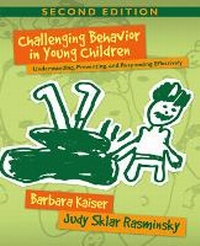
Challenging Behavior in Young Children
Understanding, Preventing, and Responding Effectively
2nd Edition
Published on 2. June 2006
Book
Paperback/Softback
320 pages
978-0-205-49333-3 (ISBN)
Description
Renowned authors Barbara Kaiser and Judy Sklar Rasminsky once again help teachers to discover effective ways to address challenging behavior in the classroom!
Making full use of Barbara Kaiser's 30 years of experience as a child care director and teacher, the Second Edition of Challenging Behavior in Young Children provides an in-depth look into the latest research on understanding and preventing challenging behavior and offers practical and effective strategies for responding to it, including positive behavior support and functional assessment, as mandated by IDEA.
Based on the authors' 40-page booklet Meeting the Challenge (1999), this new edition maintains the personal touch and real-life examples teachers have grown to rely on. It includes new chapters on relationships and inclusion as well as the latest information on risk and protective factors, culture, the brain, self-reflection, working with families, and bullying.
Challenging Behavior in Young Children emphasizes the teacher's role in the behavior of children, helping students and educators to reflect on their own values, feelings, and actions. The result is an invaluable resource for everyone involved in the education of young children.
Making full use of Barbara Kaiser's 30 years of experience as a child care director and teacher, the Second Edition of Challenging Behavior in Young Children provides an in-depth look into the latest research on understanding and preventing challenging behavior and offers practical and effective strategies for responding to it, including positive behavior support and functional assessment, as mandated by IDEA.
Based on the authors' 40-page booklet Meeting the Challenge (1999), this new edition maintains the personal touch and real-life examples teachers have grown to rely on. It includes new chapters on relationships and inclusion as well as the latest information on risk and protective factors, culture, the brain, self-reflection, working with families, and bullying.
Challenging Behavior in Young Children emphasizes the teacher's role in the behavior of children, helping students and educators to reflect on their own values, feelings, and actions. The result is an invaluable resource for everyone involved in the education of young children.
More details
Edition
2nd edition
Language
English
Place of publication
United States
Publishing group
Pearson Education (US)
Target group
Professional and scholarly
Dimensions
Height: 191 mm
Width: 235 mm
Thickness: 18 mm
Weight
451 gr
ISBN-13
978-0-205-49333-3 (9780205493333)
Copyright in bibliographic data and cover images is held by Nielsen Book Services Limited or by the publishers or by their respective licensors: all rights reserved.
Schweitzer Classification
Other editions
New editions
Barbara Kaiser | Judy Sklar Rasminsky
Challenging Behavior in Young Children
Understanding, Preventing and Responding Effectively
Book
05/2011
3rd Edition
Pearson
€38.43
Article exhausted; check for reprint
Previous edition
Barbara Kaiser | Judy Sklar Rasminsky
Challenging Behavior in Young Children
Understanding, Preventing, and Responding Effectively
Book
02/2003
Pearson
€43.55
Article exhausted; check for reprint
Persons
Barbara Kaiser is the former director of a child care center who has spent 30 years working with young children, their teachers, and their families. Now a consultant in early care and education, she frequently gives keynote addresses and workshops on challenging behavior throughout the United States and Canada. She has taught at Acadia University in Nova Scotia and Concordia University in Montreal.
Judy Sklar Rasminsky is a professional writer with special expertise in child care and family issues. She has won several awards for her work, which has appeared in American and Canadian magazines as well as college and high school textbooks.
Judy Sklar Rasminsky is a professional writer with special expertise in child care and family issues. She has won several awards for her work, which has appeared in American and Canadian magazines as well as college and high school textbooks.
Content
Foreword by Sue Bredekamp.
Preface.
Introduction.
CHAPTER 1: What Is Challenging Behavior?.
Isn't challenging behavior sometimes appropriate for very young children?
Do children outgrow challenging behavior?
What is aggression?
Does culture play a role in aggressive behavior?
What do you think?
Suggested reading.
CHAPTER 2: Risk Factors.
What causes challenging behavior?
Biological Risk Factors.
Genes.
Temperament.
Attention deficit hyperactivity disorder.
Complications of pregnancy and birth.
Substance abuse during pregnancy.
Malnutrition.
Language and cognition disorders.
Gender.
Environmental Risk Factors.
Family factors and parenting style.
Poverty and the conditions surroundings it.
Exposure to violence.
Turbulent times.
Violent media.
Child care.
What do you think?
Suggested reading.
CHAPTER 3: Protective Factors. Who is the resilient child?
What makes a resilient child bounce back?
How does the family contribute to resilience?
What is the community's role in resilience?
What do you think?
Suggested reading.
CHAPTER 4: Behavior and the Brain. How do babies' brains develop?
How does experience spur nerve cells to connect?
Is there a critical period for social or emotional behavior?
What does caregiving have to do with it?
What about neurotransmitters?
What role do genes play?
Which parts of the brain are involved in aggressive behavior?
What does all this mean?
What do you think?
Suggested reading.
CHAPTER 5: Relationship, Relationship, Relationship. The caring connection.
Understanding Yourself "Who are you?" said the caterpillar. What influences the way you relate to a child with challenging behavior?
What is self-reflection?
How do you reflect?
What do you reflect about?
Are there any techniques to help you reflect?
Understanding the Child.
What is the role of attachment?
Establishing a Relationship.
How does being securely attached to a teacher protect a child?
How can you develop a secure attachment to a child with challenging behavior?
Back to the beginning.
What do you think?
Suggested reading.
CHAPTER 6: Understanding the Child's Family and Culture. Collaborating with Families.
Getting to know you.
Opening the Culture Door.
What is culture?
What does culture have to do with identity?
Are cultures really so different?
How can you see your culture?
The culture of child care and school.
What happens when children move from one culture to another?
How does culture influence behavior?
What happens when a child speaks a different language?
Does each culture have its own special characteristics?
Why all this matters.
What do you think?
Suggested reading.
CHAPTER 7: Preventing Challenging Behavior with the Right Physical Space and Program.How does prevention work?
We're all the same, yet we're all different.
The Physical Space.
Wide open spaces.
What will go inside each area?
What about the people?
Does the level of stimulation make a difference?
Consider the results.
The Program.
Offering choices.
Choosing materials.
Are some activities harder for children with challenging behavior?
How do you get from A to B?
When circumstances change.
What do you think?
Suggested reading.
CHAPTER 8: Preventing Challenging Behavior with the Right Social Context.
Creating the Social Context.
What kind of social context fosters prosocial behavior and discourages aggressive behavior?
What is the teacher's role in the social context?
How can you create a cooperative and inclusive community?
Teaching Social Skills.
Why are social skills important?
How do children learn social skills?
Why should we include children with challenging behaviors?
How do you teach social skills?
What skills do children need to learn?
What do you think?
Suggested reading and resources.
CHAPTER 9: Guidance and Punishment. What information will you need?
How useful is positive reinforcement?
Which is better: Praise or encouragement?
What if positive reinforcement provokes challenging behavior?
What about natural and logical consequences?
Is it good practice to use time-out?
What's wrong with using punishment?
What do you think?
Suggested reading.
CHAPTER 10: The WEVAS Strategy. Calibration: Zeroing in on the child's state of mind.
The anxious state: The early warning system.
The agitated state: Reactions intensify.
The aggressive state: The fire inside.
The assaultive state: Involving the community.
What about using restraint?
The open state: A time to debrief and learn.
Returning to the group.
What do you think?
Suggested reading.
CHAPTER 11: Positive Behavior Support and Functional Assessment. How do you figure out the function of a behavior?
What functions can behavior serve?
What about appropriate behavior?
Why do you need to work as a team?
How do you get the information you need for a functional assessment?
How do you develop a hypothesis?
How do you create a positive behavior support plan?
How does the plan look?
How do you evaluate the plan?
What do you think?
Suggested reading.
CHAPTER 12: The Inclusive Classroom. About Inclusion.
Why is inclusion important?
How does IDEA work? What's happening on the front lines?
How is a child who needs special education identified?
What services does IDEA offer young children?
Preventing and Addressing Challenging Behavior in Children with Disabilities.
What is the connection between disability and challenging behavior? How can you organize the physical space to prevent challenging behavior?
How can the program and schedule prevent challenging behavior? How can an inclusive social context prevent challenging behavior?
How can you respond effectively to challenging behavior?
What do you think?
Suggested reading.
CHAPTER 13: Working with Families and Other Experts. How do families react to news of challenging behavior?
How do you feel?
How can colleagues help?
How do you arrange a meeting?
What should happen in a meeting with the family?
How do you close a meeting?
What if you and the family disagree?
How do you handle challenging behavior when the parent is present?
What should you say to the parents of the other children?
What about getting expert advice?
What if the child needs more help?
What about asking a child with challenging behavior to leave?
What do you think?
Suggested reading.
CHAPTER 14: Bullying. What is bullying?
How common is bullying?
Who are the children who bully others?
Who are the targets of bullying?
Who are the bystanders?
How can you prevent bullying?
What helps children cope with bullying?
How do you respond to bullying?
What do you do if you don't see the bullying?
How can you work with the parents of children involved in bullying?
What do you think?
Suggested reading and resources.
APPENDIX A: The Functional Assessment Observation Form.
APPENDIX B: The Functional Assessment A-B-C Chart.
References. Index.
Preface.
Introduction.
CHAPTER 1: What Is Challenging Behavior?.
Isn't challenging behavior sometimes appropriate for very young children?
Do children outgrow challenging behavior?
What is aggression?
Does culture play a role in aggressive behavior?
What do you think?
Suggested reading.
CHAPTER 2: Risk Factors.
What causes challenging behavior?
Biological Risk Factors.
Genes.
Temperament.
Attention deficit hyperactivity disorder.
Complications of pregnancy and birth.
Substance abuse during pregnancy.
Malnutrition.
Language and cognition disorders.
Gender.
Environmental Risk Factors.
Family factors and parenting style.
Poverty and the conditions surroundings it.
Exposure to violence.
Turbulent times.
Violent media.
Child care.
What do you think?
Suggested reading.
CHAPTER 3: Protective Factors. Who is the resilient child?
What makes a resilient child bounce back?
How does the family contribute to resilience?
What is the community's role in resilience?
What do you think?
Suggested reading.
CHAPTER 4: Behavior and the Brain. How do babies' brains develop?
How does experience spur nerve cells to connect?
Is there a critical period for social or emotional behavior?
What does caregiving have to do with it?
What about neurotransmitters?
What role do genes play?
Which parts of the brain are involved in aggressive behavior?
What does all this mean?
What do you think?
Suggested reading.
CHAPTER 5: Relationship, Relationship, Relationship. The caring connection.
Understanding Yourself "Who are you?" said the caterpillar. What influences the way you relate to a child with challenging behavior?
What is self-reflection?
How do you reflect?
What do you reflect about?
Are there any techniques to help you reflect?
Understanding the Child.
What is the role of attachment?
Establishing a Relationship.
How does being securely attached to a teacher protect a child?
How can you develop a secure attachment to a child with challenging behavior?
Back to the beginning.
What do you think?
Suggested reading.
CHAPTER 6: Understanding the Child's Family and Culture. Collaborating with Families.
Getting to know you.
Opening the Culture Door.
What is culture?
What does culture have to do with identity?
Are cultures really so different?
How can you see your culture?
The culture of child care and school.
What happens when children move from one culture to another?
How does culture influence behavior?
What happens when a child speaks a different language?
Does each culture have its own special characteristics?
Why all this matters.
What do you think?
Suggested reading.
CHAPTER 7: Preventing Challenging Behavior with the Right Physical Space and Program.How does prevention work?
We're all the same, yet we're all different.
The Physical Space.
Wide open spaces.
What will go inside each area?
What about the people?
Does the level of stimulation make a difference?
Consider the results.
The Program.
Offering choices.
Choosing materials.
Are some activities harder for children with challenging behavior?
How do you get from A to B?
When circumstances change.
What do you think?
Suggested reading.
CHAPTER 8: Preventing Challenging Behavior with the Right Social Context.
Creating the Social Context.
What kind of social context fosters prosocial behavior and discourages aggressive behavior?
What is the teacher's role in the social context?
How can you create a cooperative and inclusive community?
Teaching Social Skills.
Why are social skills important?
How do children learn social skills?
Why should we include children with challenging behaviors?
How do you teach social skills?
What skills do children need to learn?
What do you think?
Suggested reading and resources.
CHAPTER 9: Guidance and Punishment. What information will you need?
How useful is positive reinforcement?
Which is better: Praise or encouragement?
What if positive reinforcement provokes challenging behavior?
What about natural and logical consequences?
Is it good practice to use time-out?
What's wrong with using punishment?
What do you think?
Suggested reading.
CHAPTER 10: The WEVAS Strategy. Calibration: Zeroing in on the child's state of mind.
The anxious state: The early warning system.
The agitated state: Reactions intensify.
The aggressive state: The fire inside.
The assaultive state: Involving the community.
What about using restraint?
The open state: A time to debrief and learn.
Returning to the group.
What do you think?
Suggested reading.
CHAPTER 11: Positive Behavior Support and Functional Assessment. How do you figure out the function of a behavior?
What functions can behavior serve?
What about appropriate behavior?
Why do you need to work as a team?
How do you get the information you need for a functional assessment?
How do you develop a hypothesis?
How do you create a positive behavior support plan?
How does the plan look?
How do you evaluate the plan?
What do you think?
Suggested reading.
CHAPTER 12: The Inclusive Classroom. About Inclusion.
Why is inclusion important?
How does IDEA work? What's happening on the front lines?
How is a child who needs special education identified?
What services does IDEA offer young children?
Preventing and Addressing Challenging Behavior in Children with Disabilities.
What is the connection between disability and challenging behavior? How can you organize the physical space to prevent challenging behavior?
How can the program and schedule prevent challenging behavior? How can an inclusive social context prevent challenging behavior?
How can you respond effectively to challenging behavior?
What do you think?
Suggested reading.
CHAPTER 13: Working with Families and Other Experts. How do families react to news of challenging behavior?
How do you feel?
How can colleagues help?
How do you arrange a meeting?
What should happen in a meeting with the family?
How do you close a meeting?
What if you and the family disagree?
How do you handle challenging behavior when the parent is present?
What should you say to the parents of the other children?
What about getting expert advice?
What if the child needs more help?
What about asking a child with challenging behavior to leave?
What do you think?
Suggested reading.
CHAPTER 14: Bullying. What is bullying?
How common is bullying?
Who are the children who bully others?
Who are the targets of bullying?
Who are the bystanders?
How can you prevent bullying?
What helps children cope with bullying?
How do you respond to bullying?
What do you do if you don't see the bullying?
How can you work with the parents of children involved in bullying?
What do you think?
Suggested reading and resources.
APPENDIX A: The Functional Assessment Observation Form.
APPENDIX B: The Functional Assessment A-B-C Chart.
References. Index.