

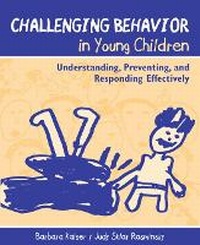
Challenging Behavior in Young Children
Understanding, Preventing, and Responding Effectively
Published on 6. February 2003
Book
Paperback/Softback
288 pages
978-0-205-34226-6 (ISBN)
Description
Making full use of Barbara Kaiser's 25 years of experience as a child care director and teacher, this text presents information and strategies to deal with the challenging behavior that teachers find more and more often in their classrooms.
Vignettes throughout the text featuring real children make these strategies come alive.
Based on the 40-page NAEYC booklet on the same topic, "Meeting the Challenge: Effective Strategies for Challenging Behavior in Early Childhood Environments" (1999), this new text explores the subject matter and strategies in greater depth with more up-to-date information. Additional chapters on resilience, culture, the brain, self-reflection, working with families, and bullying make this text a more comprehensive and useful resource.
In addition to two full chapters on preventing challenging behavior, three chapters provide specific strategies for responding to challenging behavior. Chapter 9, "Guidance and Punishment," gives a balanced overview of traditional guidance strategies (e.g. positive reinforcement, consequences, and time-out). Chapter 10, "The WEVAS Strategy," a new approach to challenging behavior that focuses on the teacher's response to the child, furnishes concrete, easy-to-use techniques. Chapter 11, "Functional Assessment," presents a clear, concise overview of functional assessment, a strategy mandated by IDEA that views challenging behavior from the child's perspective. The appendices contain functional assessment charts and explanations of how to use them.
Vignettes throughout the text featuring real children make these strategies come alive.
Based on the 40-page NAEYC booklet on the same topic, "Meeting the Challenge: Effective Strategies for Challenging Behavior in Early Childhood Environments" (1999), this new text explores the subject matter and strategies in greater depth with more up-to-date information. Additional chapters on resilience, culture, the brain, self-reflection, working with families, and bullying make this text a more comprehensive and useful resource.
In addition to two full chapters on preventing challenging behavior, three chapters provide specific strategies for responding to challenging behavior. Chapter 9, "Guidance and Punishment," gives a balanced overview of traditional guidance strategies (e.g. positive reinforcement, consequences, and time-out). Chapter 10, "The WEVAS Strategy," a new approach to challenging behavior that focuses on the teacher's response to the child, furnishes concrete, easy-to-use techniques. Chapter 11, "Functional Assessment," presents a clear, concise overview of functional assessment, a strategy mandated by IDEA that views challenging behavior from the child's perspective. The appendices contain functional assessment charts and explanations of how to use them.
Reviews / Votes
"What makes the authors' work so valuable is that it's as much about relationships as it is about strategies. Barbara has consulted with us at Family Communications about our "Challenging Behaviors" project. Now through this book, people who work closely with young children can benefit from what she and Judy have learned in their search to provide meaningful help to these children."- Fred Rogers, Creator and host of the PBS children's program, Mr. Rogers' Neighborhood
"Wise but eminently practical. What you'll learn from reading this book will have a significant positive effect on you as a teacher and on the hundreds of children you will eventually touch."
- Sue Bredekamp, author of Developmentally Appropriate Practice in Early Childhood Programs
"This textbook has been needed for a long time. It pulls together so many aspects of dealing with problem behavior and covers the field very well. It is up to date, accurate, and interesting to read. I particularly appreciate the fact that these authors are dealing with real children, real adults, and real situations."
- Dorothy Hewes, San Diego State University
"The authors' scholarship and experience are evident throughout. The direct references to cultural sensitivity are extremely well done. The chapter addressing reflective teaching is also a welcome addition.... Multiple references to various theories and philosophies of intervention provide an effective and eclectic approach."
- Diane E. Strangis, University of Florida
"Because this book really helps provide a framework for thinking about behavior, it is an extremely useful primary text for courses in elementary education."
- Ed Greene, Montclair State University, NJ
"Full of good sense and good ideas. This book is clear, practical, sympathetic, and wise. It will be helpful to a great many parents and teachers and child care professionals, and to anyone else who spends time with or cares about children."
- Lawrence Hartmann, M.D., Past President, American Psychiatric Association
More details
Language
English
Place of publication
United States
Publishing group
Pearson Education (US)
Target group
Professional and scholarly
Weight
485 gr
ISBN-13
978-0-205-34226-6 (9780205342266)
Copyright in bibliographic data and cover images is held by Nielsen Book Services Limited or by the publishers or by their respective licensors: all rights reserved.
Schweitzer Classification
Other editions
New editions
Barbara Kaiser | Judy Sklar Rasminsky
Challenging Behavior in Young Children
Understanding, Preventing, and Responding Effectively
Book
06/2006
2nd Edition
Pearson
€53.47
Article exhausted; check for reprint
Content
All chapters conclude with "What Do You Think?," "Suggested Reading," and "References."Foreword by Sue Bredekamp.
Introduction.
1. What Is Challenging Behavior?
Isn't challenging behavior sometimes appropriate for very young children?
Do children outgrow challenging behavior?
What is aggression?
Does culture play a role in aggressive behavior?
Is ethnicity a factor in aggressive behavior?
2. Risk Factors.
Biological risk factors.
Environmental risk factors.
3. Protective Factors.
Who is the resilient child?
What makes a resilient child bounce back?
How does the family contribute to resilience?
What is the community's role in resilience?
4. Behavior and the Brain.
How do babies' brains develop?
How does experience spur nerve cells to connect?
Is there a critical period for social or emotional behavior?
What does caregiving have to do with it?
What about neurotransmitters?
Which parts of the brain are involved in aggressive behavior?
What does all this mean?
5. Understanding Yourself.
The caring connection.
"Who are you?," said the caterpillar.
What influences the way you relate to a child with challenging behavior?
What is self-reflection?
How do you reflect?
When do you reflect?
What do you reflect about?
Are there any techniques to help you reflect?
6. Understanding the Child's Family and Culture.
Collaborating with families.
Opening the culture door.
7. Preventing Challenging Behavior with the Right Physical Space and Program.
The physical space.
The program.
8. Preventing Challenging Behavior with the Right Social Context.
Creating the social context.
Teaching social skills.
9. Guidance and Punishment.
What information will you need?
How useful is positive reinforcement?
Which is better, praise or encouragement?
What if positive reinforcement provokes challenging behavior?
What about natural and logical consequences?
Is it good practice to use time-out?
What's wrong with using punishment?
10. The WEVAS Strategy.
Calibration: Zeroing in on the child's state of mind.
The anxious state: The early warning system.
The agitated state: Reactions intensify.
The aggressive state: The fire inside.
The assaultive state: Involving the community.
What about using restraint?
The open state: A time to debrief and learn.
Returning to the group.
11. Functional Assessment.
What do you need to know to figure out the function of a behavior?
What about appropriate behavior?
How do you get the information you need for a functional assessment?
How do you observe?
What do you do with all this information?
12. Working with Families and Other Experts.
How do families react to news of challenging behavior?
How do you feel?
How can colleagues help?
How do you arrange a meeting?
What should happen in a meeting with the family?
How do you close a meeting?
What if you and the family disagree?
How do you handle challenging behavior when the parent is present?
What should you say to the parents of the other children?
What about getting expert advice?
What if the child needs more help?
What about asking a child with challenging behavior to leave?
13. Bullying.
What is bullying?
How common is bullying?
Who are the bullies?
Who are the victims?
Who are the bystanders?
What helps children cope with bullying?
How do you respond to bullying?
What do you do if you don't see the bullying?
How can you work with the parents of bullies and victims?
APPENDIX A. The Functional Assessment Observation Form.
Understanding the functional assessment observation form.
Using the functional assessment observation form.
Andrews functional assessment observation form.
Blank functional assessment observation form.
APPENDIX B. Functional Assessment A-B-C Chart.
Introduction.
1. What Is Challenging Behavior?
Isn't challenging behavior sometimes appropriate for very young children?
Do children outgrow challenging behavior?
What is aggression?
Does culture play a role in aggressive behavior?
Is ethnicity a factor in aggressive behavior?
2. Risk Factors.
Biological risk factors.
Environmental risk factors.
3. Protective Factors.
Who is the resilient child?
What makes a resilient child bounce back?
How does the family contribute to resilience?
What is the community's role in resilience?
4. Behavior and the Brain.
How do babies' brains develop?
How does experience spur nerve cells to connect?
Is there a critical period for social or emotional behavior?
What does caregiving have to do with it?
What about neurotransmitters?
Which parts of the brain are involved in aggressive behavior?
What does all this mean?
5. Understanding Yourself.
The caring connection.
"Who are you?," said the caterpillar.
What influences the way you relate to a child with challenging behavior?
What is self-reflection?
How do you reflect?
When do you reflect?
What do you reflect about?
Are there any techniques to help you reflect?
6. Understanding the Child's Family and Culture.
Collaborating with families.
Opening the culture door.
7. Preventing Challenging Behavior with the Right Physical Space and Program.
The physical space.
The program.
8. Preventing Challenging Behavior with the Right Social Context.
Creating the social context.
Teaching social skills.
9. Guidance and Punishment.
What information will you need?
How useful is positive reinforcement?
Which is better, praise or encouragement?
What if positive reinforcement provokes challenging behavior?
What about natural and logical consequences?
Is it good practice to use time-out?
What's wrong with using punishment?
10. The WEVAS Strategy.
Calibration: Zeroing in on the child's state of mind.
The anxious state: The early warning system.
The agitated state: Reactions intensify.
The aggressive state: The fire inside.
The assaultive state: Involving the community.
What about using restraint?
The open state: A time to debrief and learn.
Returning to the group.
11. Functional Assessment.
What do you need to know to figure out the function of a behavior?
What about appropriate behavior?
How do you get the information you need for a functional assessment?
How do you observe?
What do you do with all this information?
12. Working with Families and Other Experts.
How do families react to news of challenging behavior?
How do you feel?
How can colleagues help?
How do you arrange a meeting?
What should happen in a meeting with the family?
How do you close a meeting?
What if you and the family disagree?
How do you handle challenging behavior when the parent is present?
What should you say to the parents of the other children?
What about getting expert advice?
What if the child needs more help?
What about asking a child with challenging behavior to leave?
13. Bullying.
What is bullying?
How common is bullying?
Who are the bullies?
Who are the victims?
Who are the bystanders?
What helps children cope with bullying?
How do you respond to bullying?
What do you do if you don't see the bullying?
How can you work with the parents of bullies and victims?
APPENDIX A. The Functional Assessment Observation Form.
Understanding the functional assessment observation form.
Using the functional assessment observation form.
Andrews functional assessment observation form.
Blank functional assessment observation form.
APPENDIX B. Functional Assessment A-B-C Chart.