

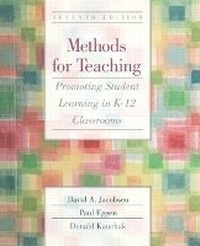
Methods for Teaching
Promoting Student Learning in K-12 Classrooms
7th Edition
Published on 7. July 2005
Book
Paperback/Softback
416 pages
978-0-13-119950-7 (ISBN)
Description
For K-12 general methods courses.
Methods for Teaching uses a three-phase model of teaching-planning, implementing, and assessing-as a framework for fostering a success-oriented K-12 environment that promotes student learning.
Methods for Teaching uses a three-phase model of teaching-planning, implementing, and assessing-as a framework for fostering a success-oriented K-12 environment that promotes student learning.
More details
Edition
7th edition
Language
English
Place of publication
United States
Publishing group
Pearson Education (US)
Target group
Professional and scholarly
Dimensions
Height: 232 mm
Width: 190 mm
Thickness: 18 mm
Weight
712 gr
ISBN-13
978-0-13-119950-7 (9780131199507)
Copyright in bibliographic data and cover images is held by Nielsen Book Services Limited or by the publishers or by their respective licensors: all rights reserved.
Schweitzer Classification
Other editions
New editions
David A. Jacobsen | Victor L. Dupuis | Don Kauchak
Methods for Teaching
Promoting Student Learning in K-12 Classrooms
Book
07/2008
8th Edition
Pearson
€159.06
Article exhausted; check for reprint
Previous edition

Book
05/2002
6th Edition
Pearson
€49.51
Article exhausted; check for reprint
Content
Chapter 1: A Model for Teaching
The Teacher's Role
Teaching: An Analysis
Standards and Professional Development
The Three-Phase Approach to Instruction
The Teacher as Decision Maker
The Importance of Reflection in Teaching
Unit One: Learning-Centered Planning
Chapter 2: The Goals of Instruction
Sources of Goals
The Three Domains
Content in the Cognitive Domain
Chapter 3: Formulating Goals and Objectives
Influences on Classroom Goals and Objectives
Alternate Formats
Implementing Goals and Objectives in Classrooms
Chapter 4: Planning for Learning
Decision Making and Planning
Long-Term Planning
Unit Planning
Lesson Planning
The Total Lesson Plan
Diversity in the Classroom: Planning for Diverse Populations
Adapting Lesson Planning for Everyday Use
Technology in the Classroom: Facilitating the Planning Process
Planning and Reflecting
Chapter 5: The Affective, Psychomotor, and Cognitive Domains
The Affective Domain
The Psychomotor Domain
The Cognitive Domain
Unit Two: Learner-Centered Instruction
Chapter 6: Questioning Strategies
Question Levels
Question Focus
Questioning Strategies
Questioning Skills
Motivating Students Through Questioning
Chapter 7: Teaching Strategies
Teacher-Directed and Discovery Teaching
Teacher-Directed Teaching
Guided Discovery Teaching
Cooperative Learning Strategies
Discussion Strategies
Problem-Based Learning
Chapter 8: Utilizing and Building on Learner Differences: Instructional Strategies
Multicultural Education
Teaching ELL Students
Teaching Students Placed at Risk
Inclusion
Diversity and Technology in the Classroom: Using Computers to Accommodate Students
Learning Styles
Howard Gardner's Multiple Intelligences
Chapter 9: Classroom Management: Prevention
Classroom Management: An Overview
Prerequisites to Effective Management
Planning for Effective Management
Teaching Rules and Procedures
Communication with Parents
Chapter 10: Classroom Management: Intervention
Sources of Management Problems
Characteristics of Effective Intervention
Theoretical Approaches to Intervention
An Intervention Continuum
Serious Management Problems: Violence and Aggression
Unit Three: Learner-Centered Assessment
Chapter 11: Assessing Student Learning
Measurement and Evaluation
Preparing Accurate Measurement Items
Alternative Assessment
Diversity in the Classroom: Reducing Bias in Assessment
Grades and Grading
Technology in the Classroom: Improving Assessment
References
Index
The Teacher's Role
Teaching: An Analysis
Standards and Professional Development
The Three-Phase Approach to Instruction
The Teacher as Decision Maker
The Importance of Reflection in Teaching
Unit One: Learning-Centered Planning
Chapter 2: The Goals of Instruction
Sources of Goals
The Three Domains
Content in the Cognitive Domain
Chapter 3: Formulating Goals and Objectives
Influences on Classroom Goals and Objectives
Alternate Formats
Implementing Goals and Objectives in Classrooms
Chapter 4: Planning for Learning
Decision Making and Planning
Long-Term Planning
Unit Planning
Lesson Planning
The Total Lesson Plan
Diversity in the Classroom: Planning for Diverse Populations
Adapting Lesson Planning for Everyday Use
Technology in the Classroom: Facilitating the Planning Process
Planning and Reflecting
Chapter 5: The Affective, Psychomotor, and Cognitive Domains
The Affective Domain
The Psychomotor Domain
The Cognitive Domain
Unit Two: Learner-Centered Instruction
Chapter 6: Questioning Strategies
Question Levels
Question Focus
Questioning Strategies
Questioning Skills
Motivating Students Through Questioning
Chapter 7: Teaching Strategies
Teacher-Directed and Discovery Teaching
Teacher-Directed Teaching
Guided Discovery Teaching
Cooperative Learning Strategies
Discussion Strategies
Problem-Based Learning
Chapter 8: Utilizing and Building on Learner Differences: Instructional Strategies
Multicultural Education
Teaching ELL Students
Teaching Students Placed at Risk
Inclusion
Diversity and Technology in the Classroom: Using Computers to Accommodate Students
Learning Styles
Howard Gardner's Multiple Intelligences
Chapter 9: Classroom Management: Prevention
Classroom Management: An Overview
Prerequisites to Effective Management
Planning for Effective Management
Teaching Rules and Procedures
Communication with Parents
Chapter 10: Classroom Management: Intervention
Sources of Management Problems
Characteristics of Effective Intervention
Theoretical Approaches to Intervention
An Intervention Continuum
Serious Management Problems: Violence and Aggression
Unit Three: Learner-Centered Assessment
Chapter 11: Assessing Student Learning
Measurement and Evaluation
Preparing Accurate Measurement Items
Alternative Assessment
Diversity in the Classroom: Reducing Bias in Assessment
Grades and Grading
Technology in the Classroom: Improving Assessment
References
Index