

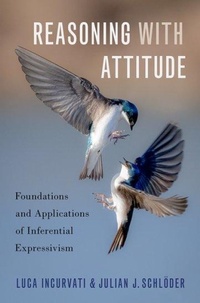
Reasoning with Attitude
Foundations and Applications of Inferential Expressivism
Published on 1. February 2024
Book
Hardback
352 pages
978-0-19-762098-4 (ISBN)
Description
This is an open access title available under the terms of a CC BY-NC-ND 4.0 license. It is free to read at Oxford Academic and offered as a free PDF download from OUP and selected open access locations.
Certain combinations of sounds or signs on paper are meaningful. What makes it the case that, unlike most combinations of sounds or signs, they have meaning? What is this meaning that they have? And what is it to understand this meaning? This book advances new answers to these questions by developing inferential expressivism, a novel approach to the study of meaning which combines elements of the expressivist and inferentialist programs.
Expressivists explain the meaning of words in terms of the attitudes that words are used to express; inferentialists explain the meaning of words in terms of the inferences that words are used to draw. Reasoning with Attitude lays out the foundations of inferential expressivism by defending the view that the meaning of an expression is to be explained in terms of the inferences we draw involving the attitudes we express. As the book shows, by joining forces, expressivism and inferentialism can meet their key challenges whilst retaining their distinctive insights and advantages. Notably, inferential expressivism solves the Frege-Geach Problem plaguing expressivism, and addresses the charge that inferentialism has limited applicability. The book demonstrates the fruitfulness of the inferential expressivist approach by applying it to several open questions in semantics from different areas of inquiry, including epistemic operators and conditionals in the philosophy of language, negation and the truth predicate in the philosophy of logic, and normative vocabulary in meta-ethics.
Certain combinations of sounds or signs on paper are meaningful. What makes it the case that, unlike most combinations of sounds or signs, they have meaning? What is this meaning that they have? And what is it to understand this meaning? This book advances new answers to these questions by developing inferential expressivism, a novel approach to the study of meaning which combines elements of the expressivist and inferentialist programs.
Expressivists explain the meaning of words in terms of the attitudes that words are used to express; inferentialists explain the meaning of words in terms of the inferences that words are used to draw. Reasoning with Attitude lays out the foundations of inferential expressivism by defending the view that the meaning of an expression is to be explained in terms of the inferences we draw involving the attitudes we express. As the book shows, by joining forces, expressivism and inferentialism can meet their key challenges whilst retaining their distinctive insights and advantages. Notably, inferential expressivism solves the Frege-Geach Problem plaguing expressivism, and addresses the charge that inferentialism has limited applicability. The book demonstrates the fruitfulness of the inferential expressivist approach by applying it to several open questions in semantics from different areas of inquiry, including epistemic operators and conditionals in the philosophy of language, negation and the truth predicate in the philosophy of logic, and normative vocabulary in meta-ethics.
More details
Language
English
Place of publication
New York
United States
Target group
College/higher education
Product notice
sewn/stitched
Cloth over boards
Dimensions
Height: 226 mm
Width: 168 mm
Thickness: 41 mm
Weight
635 gr
ISBN-13
978-0-19-762098-4 (9780197620984)
Copyright in bibliographic data and cover images is held by Nielsen Book Services Limited or by the publishers or by their respective licensors: all rights reserved.
Schweitzer Classification
Other editions
Additional editions
Luca Incurvati | Julian J. Schlöder
Reasoning with Attitude
Foundations and Applications of Inferential Expressivism
E-Book
12/2023
OUP eBook
€85.99
Available for download
Luca Incurvati | Julian J. Schlöder
Reasoning with Attitude
Foundations and Applications of Inferential Expressivism
E-Book
12/2023
OUP eBook
€77.99
Available for download
Persons
Luca Incurvati is Associate Professor in the Department of Philosophy and in the Institute for Logic, Language and Computation at the University of Amsterdam. A recipient of an ERC Starting Grant, he has published numerous journal articles in these areas and is the author of Conceptions of Set and the Foundations of Mathematics (Cambridge University Press, 2020).
Julian J. Schloeder is an Assistant Research Professor of Philosophy at the Philosophy Department of the University of Connecticut.
Julian J. Schloeder is an Assistant Research Professor of Philosophy at the Philosophy Department of the University of Connecticut.
Author
Associate Professor in the Department of Philosophy and in the Institute for Logic, Language and ComputationAssociate Professor in the Department of Philosophy and in the Institute for Logic, Language and Computation, University of Amsterdam
Assistant Research Professor of PhilosophyAssistant Research Professor of Philosophy, University of Connecticut
Content
List of Figures
Preface
1 Expressivism
1.1 Semantics, postsemantics and meta-semantics
1.2 Why expressivism?
1.3 Speaker subjectivism
1.4 Traditional expressivism
1.5 Attitude expression
1.6 The Frege--Geach Problem
1.7 Sophisticated expressivism
1.8 The Many Attitudes Problem
1.9 The Wishful Thinking Problem
1.10 The Problem of Creeping Minimalism
2 Inferentialism
2.1 Inferentialist semantics
2.2 From semantics to meta-semantics and back
2.3 Why inferentialism?
2.4 The Problem of Defective Concepts
2.5 The Problem of Constitutive Rules
2.6 The Problem of Limited Applicability
3 Inferential Expressivism
3.1 Traditional expressivism about negation
3.2 Bilateralism and Frege--Geach
3.3 Inferential expressivism
3.4 Mixed inferences and Frege--Geach
3.5 Evidence and the problem of weak rejections
3.6 From bilateralism to multilateralism
3.7 Linguistic realization of strong rejection
3.8 Appendix
4 Epistemic Modals
4.1 Traditional expressivism about might
4.2 Might and perhaps
4.3 Weak assertion
4.4 Coordinating the speech acts
4.5 The meaning of might
4.6 Weak assertions, epistemic modal assertions, and evidence
4.7 Frege--Geach and its revenge version
4.8 Modal disagreement and Yalcinean sentences
4.9 Appendix
5 Moral Vocabulary
5.1 The Negation Problem
5.2 Bilateralism and the Negation Problem
5.3 Disapproval and moral vocabulary
5.4 Schroeder and the Negation Problem
5.5 Wishful thinking and evidence
5.6 Moral Moorean sentences
5.7 Moral motivation
6 Attitudes
6.1 Many attitudes, few contents
6.2 Expressing many attitudes
6.3 Ascribing many attitudes
6.4 Having many attitudes
6.5 Semantics in its proper place
7 Truth
7.1 Traditional expressivism about truth
7.2 The meaning of the truth predicate
7.3 Evidence and the truth rules
7.4 The truth predicate in multilateral logic
7.5 Truth and supervaluation
7.6 Classical recapture and revenge
7.7 Rejectability and revenge
7.8 Epistemic Liars
7.9 The question of realism
7.10 Appendix
8 Conditionals
8.1 Binary speech acts
8.2 Frege--Geach for conditionals
8.3 Counterfactuals and counterepistemics
8.4 The Gibbard Collapse Argument
8.5 Generalised Yalcinean sentences
8.6 Curry's Paradox
8.7 Content conditionals and inferential conditionals
8.8 On the plurality of conditionals
9 Probability
9.1 Traditional expressivism about probable
9.2 Probable and probably
9.3 Moderate assertion and moderate rejection
9.4 Coordination principles
9.5 Operational rules
9.6 Evidence and probability
9.7 Inferential expressivism about probability
9.8 Gradability
9.9 Moss on probabilistic belief
10 The Road Ahead
Bibliography
Index
Preface
1 Expressivism
1.1 Semantics, postsemantics and meta-semantics
1.2 Why expressivism?
1.3 Speaker subjectivism
1.4 Traditional expressivism
1.5 Attitude expression
1.6 The Frege--Geach Problem
1.7 Sophisticated expressivism
1.8 The Many Attitudes Problem
1.9 The Wishful Thinking Problem
1.10 The Problem of Creeping Minimalism
2 Inferentialism
2.1 Inferentialist semantics
2.2 From semantics to meta-semantics and back
2.3 Why inferentialism?
2.4 The Problem of Defective Concepts
2.5 The Problem of Constitutive Rules
2.6 The Problem of Limited Applicability
3 Inferential Expressivism
3.1 Traditional expressivism about negation
3.2 Bilateralism and Frege--Geach
3.3 Inferential expressivism
3.4 Mixed inferences and Frege--Geach
3.5 Evidence and the problem of weak rejections
3.6 From bilateralism to multilateralism
3.7 Linguistic realization of strong rejection
3.8 Appendix
4 Epistemic Modals
4.1 Traditional expressivism about might
4.2 Might and perhaps
4.3 Weak assertion
4.4 Coordinating the speech acts
4.5 The meaning of might
4.6 Weak assertions, epistemic modal assertions, and evidence
4.7 Frege--Geach and its revenge version
4.8 Modal disagreement and Yalcinean sentences
4.9 Appendix
5 Moral Vocabulary
5.1 The Negation Problem
5.2 Bilateralism and the Negation Problem
5.3 Disapproval and moral vocabulary
5.4 Schroeder and the Negation Problem
5.5 Wishful thinking and evidence
5.6 Moral Moorean sentences
5.7 Moral motivation
6 Attitudes
6.1 Many attitudes, few contents
6.2 Expressing many attitudes
6.3 Ascribing many attitudes
6.4 Having many attitudes
6.5 Semantics in its proper place
7 Truth
7.1 Traditional expressivism about truth
7.2 The meaning of the truth predicate
7.3 Evidence and the truth rules
7.4 The truth predicate in multilateral logic
7.5 Truth and supervaluation
7.6 Classical recapture and revenge
7.7 Rejectability and revenge
7.8 Epistemic Liars
7.9 The question of realism
7.10 Appendix
8 Conditionals
8.1 Binary speech acts
8.2 Frege--Geach for conditionals
8.3 Counterfactuals and counterepistemics
8.4 The Gibbard Collapse Argument
8.5 Generalised Yalcinean sentences
8.6 Curry's Paradox
8.7 Content conditionals and inferential conditionals
8.8 On the plurality of conditionals
9 Probability
9.1 Traditional expressivism about probable
9.2 Probable and probably
9.3 Moderate assertion and moderate rejection
9.4 Coordination principles
9.5 Operational rules
9.6 Evidence and probability
9.7 Inferential expressivism about probability
9.8 Gradability
9.9 Moss on probabilistic belief
10 The Road Ahead
Bibliography
Index