

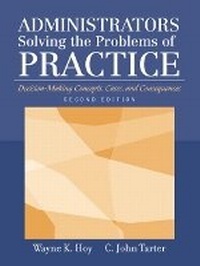
Administrators Solving the Problems of Practice
Decision-Making Concepts, Cases, and Consequences
2nd Edition
Published on 24. February 2004
Book
Paperback/Softback
288 pages
978-0-205-38080-0 (ISBN)
Description
Tested in hundreds of classrooms, this text is a student favorite that brings eight classical models of decision making to life, creating useful tools in developing strategies to solve real-life problems. The frameworks include; classical, administrative, incremental, mixes scanning, political, and garbage can models as well as two models of shared decision making. After illustrating the use of these decision-making models to analyze and develop solution strategies, students have the opportunity to explore about fifty actual cases to build their own analyses and solution strategies. New, contemporary cases have been added to this edition throughout the text as well as a final chapter that encourages cooperative learning by incorporating a comprehensive case study to be handled as a group project.
More details
Edition
2nd edition
Language
English
Place of publication
United States
Publishing group
Pearson Education (US)
Target group
Professional and scholarly
Dimensions
Height: 235 mm
Width: 178 mm
Weight
458 gr
ISBN-13
978-0-205-38080-0 (9780205380800)
Copyright in bibliographic data and cover images is held by Nielsen Book Services Limited or by the publishers or by their respective licensors: all rights reserved.
Schweitzer Classification
Other editions
New editions

Wayne Hoy | C. Tarter
Administrators Solving the Problems of Practice
Decision-Making Concepts, Cases, and Consequences
Book
07/2007
3rd Edition
Pearson
€124.02
Article not available for order
Previous edition
Wayne Kolter Hoy | C. John Tarter
Administrators Solving The Problems of Practice
Decision-Making Concepts, Cases, and Consequences
Book
06/1995
Pearson
€50.94
Article exhausted; check for reprint
Content
Preface.
1. Introduction.
Case Method: An Historical Perspective.
Rationality and Decision-Making.
Rationality and Values.
Rationality and the Environment.
Rationality and the Unexpected.
Consequence Analysis.
Mindfulness.
Mindful Decision Making: Reflective, Not Mechanical.
2. Decision-Making: Optimizing and Satisficing.
The Classical Model: An Optimizing Strategy.
The Administrative Model: A Satisficing Strategy.
Decision-Making Process: A Cyclical Process.
Step 1. Recognize and Define the Problem.
Step 2. Analyze the Difficulties.
Step 3. Establish Criteria for a Satisfactory Solution.
Step 4. Develop a Plan or Strategy for Action.
Step 5. Initiate the Plan of Action.
CASE 2.1: The Teachers Council.
Analyzing the Case: Using the Satisficing Model.
Recognize and Define the Problem.
Analyze the Difficulties.
Establish Criteria for a Satisfactory Solution.
Develop a Plan of Action.
A Strategy for Action.
Initiate the Plan.
Summary and Conclusion.
CASE 2.2: Controversial Speaker.
3. Decision-Making: Muddling and Scanning.
The Incremental Model: A Strategy of Successive Limited Comparisons.
CASE 3.1: Conflict at Christmas.
Analyzing the Case: An Incremental Approach.
The Mixed-Scanning Model: An Adaptive Strategy.
Analyzing the Case: An Adaptive Strategy.
Summary and Conclusion.
CASE 3.2: Crisis in Marshall Creek.
4. Decision-Making: Garbage and Politics.
The Garbage-Can Model: Irrational Decision Making.
CASE 4.1: Quality Circle.
Analyzing the Case: Garbage-Can Model.
The Political Model: Personal Rationality.
CASE 4.2: Divided Loyalties.
Analyzing the Case: The Political Model.
Summary and Conclusion.
CASE 4.3: Politics at River Grove.
5. Using the Best Model: Practice Cases.
Decision-Making Models: A Comparison.
The Best Model: A Contingency Approach.
Applying the Appropriate Model.
CASE 5.1: Problem Child.
CASE 5.2: Sexual Harassment.
CASE 5.3: Hard Choices.
CASE 5.4: Mishap at Monroe.
CASE 5.5: Discord and Disharmony.
CASE 5.6: Superintendents Hiring Dilemma.
CASE 5.7: Electives.
CASE 5.8: Sour Notes.
CASE 5.9: Zero Tolerance Policy: The Eagle Scout.
CASE 5.10: Poison E-Mail.
CASE 5.11: Low Expectations, Poor Performance.
CASE 5.12: Kinky Hair.
6. Shared Decision-Making: A Comprehensive Model.
Managing Participation: Enhancing Quality and Acceptance.
Decision-Making Styles.
Decision-Making Trees.
CASE 6.1: The Curriculum Dilemma: A Group Problem.
Analyzing the Case: The Curriculum Dilemma.
Individual Problems.
CASE 6.2: The Secretary's Office: An Individual Problem.
Analyzing the Case: The Secretary's Office.
Summary and Cautions.
CASE 6.3: Parking Lot.
7. Shared Decision Making: A Simplified Model.
Zone of Acceptance.
Mapping the Zone of Acceptance.
Participation.
Situations for Participation.
Matching the Situation with Participation.
Structuring Participation.
Matching Situations with Structures of Participation.
Directing Participation: Administrative Roles.
Using the Model.
CASE 7.1: The Curriculum Dilemma: A Group Problem Revisited.
Analyzing the Case: The Curriculum Dilemma.
Discussion: A Preference for Action.
CASE 7.2: The Secretary's Office: An Individual Problem Revisited.
Analyzing the Case: The Secretary's Office.
A Comparison.
Another Application.
CASE 7.3: Computer Purchasing Problem.
Analyzing the Case: A Theory-Driven Student Analysis.
Analysis.
Solution Strategy.
Analysis.
Solution Strategy.
Summary and Cautions.
CASE 7.4: Teacher Tardiness.
8. Decision-Making: Final Cases.
Subordinate Participation: A Comparison.
Which Model?
CASE 8.1: The Scheduling Problem.
CASE 8.2: Administrative Communication.
CASE 8.3: Principals In-Service.
CASE 8.4: Parent Complaint.
CASE 8.5: The Hiring Problem.
CASE 8.6: The Advisory Council.
CASE 8.7: Student Athletes.
CASE 8.8: Grading Policy.
CASE 8.9: Beginning Principal: A Time for Leadership?
CASE 8.10: Dress Code.
Cases in Higher Education.
CASE 8.11: Appropriate Attire.
CASE 8.12: Professional Dilemma.
CASE 8.13: Intellectual Property?
CASE 8.14: Grade Change.
CASE 8.15: The Staffing Problem.
CASE 8.16: New Department Chair.
CASE 8.17: Assistant Dean.
CASE 8.18: The Dean's Advisory Council.
9. Putting It All Together.
CASE 9.1: Redistricting.
Suggestions for a Group Project.
Other Suggested Activities.
Appendix: Standards for School Leaders.
Bibliography.
Index.
1. Introduction.
Case Method: An Historical Perspective.
Rationality and Decision-Making.
Rationality and Values.
Rationality and the Environment.
Rationality and the Unexpected.
Consequence Analysis.
Mindfulness.
Mindful Decision Making: Reflective, Not Mechanical.
2. Decision-Making: Optimizing and Satisficing.
The Classical Model: An Optimizing Strategy.
The Administrative Model: A Satisficing Strategy.
Decision-Making Process: A Cyclical Process.
Step 1. Recognize and Define the Problem.
Step 2. Analyze the Difficulties.
Step 3. Establish Criteria for a Satisfactory Solution.
Step 4. Develop a Plan or Strategy for Action.
Step 5. Initiate the Plan of Action.
CASE 2.1: The Teachers Council.
Analyzing the Case: Using the Satisficing Model.
Recognize and Define the Problem.
Analyze the Difficulties.
Establish Criteria for a Satisfactory Solution.
Develop a Plan of Action.
A Strategy for Action.
Initiate the Plan.
Summary and Conclusion.
CASE 2.2: Controversial Speaker.
3. Decision-Making: Muddling and Scanning.
The Incremental Model: A Strategy of Successive Limited Comparisons.
CASE 3.1: Conflict at Christmas.
Analyzing the Case: An Incremental Approach.
The Mixed-Scanning Model: An Adaptive Strategy.
Analyzing the Case: An Adaptive Strategy.
Summary and Conclusion.
CASE 3.2: Crisis in Marshall Creek.
4. Decision-Making: Garbage and Politics.
The Garbage-Can Model: Irrational Decision Making.
CASE 4.1: Quality Circle.
Analyzing the Case: Garbage-Can Model.
The Political Model: Personal Rationality.
CASE 4.2: Divided Loyalties.
Analyzing the Case: The Political Model.
Summary and Conclusion.
CASE 4.3: Politics at River Grove.
5. Using the Best Model: Practice Cases.
Decision-Making Models: A Comparison.
The Best Model: A Contingency Approach.
Applying the Appropriate Model.
CASE 5.1: Problem Child.
CASE 5.2: Sexual Harassment.
CASE 5.3: Hard Choices.
CASE 5.4: Mishap at Monroe.
CASE 5.5: Discord and Disharmony.
CASE 5.6: Superintendents Hiring Dilemma.
CASE 5.7: Electives.
CASE 5.8: Sour Notes.
CASE 5.9: Zero Tolerance Policy: The Eagle Scout.
CASE 5.10: Poison E-Mail.
CASE 5.11: Low Expectations, Poor Performance.
CASE 5.12: Kinky Hair.
6. Shared Decision-Making: A Comprehensive Model.
Managing Participation: Enhancing Quality and Acceptance.
Decision-Making Styles.
Decision-Making Trees.
CASE 6.1: The Curriculum Dilemma: A Group Problem.
Analyzing the Case: The Curriculum Dilemma.
Individual Problems.
CASE 6.2: The Secretary's Office: An Individual Problem.
Analyzing the Case: The Secretary's Office.
Summary and Cautions.
CASE 6.3: Parking Lot.
7. Shared Decision Making: A Simplified Model.
Zone of Acceptance.
Mapping the Zone of Acceptance.
Participation.
Situations for Participation.
Matching the Situation with Participation.
Structuring Participation.
Matching Situations with Structures of Participation.
Directing Participation: Administrative Roles.
Using the Model.
CASE 7.1: The Curriculum Dilemma: A Group Problem Revisited.
Analyzing the Case: The Curriculum Dilemma.
Discussion: A Preference for Action.
CASE 7.2: The Secretary's Office: An Individual Problem Revisited.
Analyzing the Case: The Secretary's Office.
A Comparison.
Another Application.
CASE 7.3: Computer Purchasing Problem.
Analyzing the Case: A Theory-Driven Student Analysis.
Analysis.
Solution Strategy.
Analysis.
Solution Strategy.
Summary and Cautions.
CASE 7.4: Teacher Tardiness.
8. Decision-Making: Final Cases.
Subordinate Participation: A Comparison.
Which Model?
CASE 8.1: The Scheduling Problem.
CASE 8.2: Administrative Communication.
CASE 8.3: Principals In-Service.
CASE 8.4: Parent Complaint.
CASE 8.5: The Hiring Problem.
CASE 8.6: The Advisory Council.
CASE 8.7: Student Athletes.
CASE 8.8: Grading Policy.
CASE 8.9: Beginning Principal: A Time for Leadership?
CASE 8.10: Dress Code.
Cases in Higher Education.
CASE 8.11: Appropriate Attire.
CASE 8.12: Professional Dilemma.
CASE 8.13: Intellectual Property?
CASE 8.14: Grade Change.
CASE 8.15: The Staffing Problem.
CASE 8.16: New Department Chair.
CASE 8.17: Assistant Dean.
CASE 8.18: The Dean's Advisory Council.
9. Putting It All Together.
CASE 9.1: Redistricting.
Suggestions for a Group Project.
Other Suggested Activities.
Appendix: Standards for School Leaders.
Bibliography.
Index.