

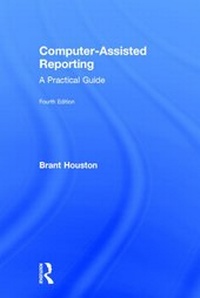
Computer-Assisted Reporting
A Practical Guide
4th Edition
Published on 12. January 2015
Book
Hardback
264 pages
978-1-138-85503-8 (ISBN)
Description
This straightforward and effective how-to guide provides the basics for any journalist or student beginning to use data for news stories. It has step-by-step instructions on how to do basic data analysis in journalism while addressing why these digital tools should be an integral part of reporting in the 21st century. The book pays particular attention to the need for accuracy in computer-assisted reporting and to both the potential and pitfalls in utilizing large datasets in journalism.
An ideal core text for courses on data-driven journalism or computer-assisted reporting, Houston pushes back on current trends by helping current and future journalists become more accountable for the accuracy and relevance of the data they acquire and share.
Online instructor's materials are available to adopting professors, and additional exercises are available free online to students at the below address:
http://ire.org/carbook/ username: carbook password: carbook4
An ideal core text for courses on data-driven journalism or computer-assisted reporting, Houston pushes back on current trends by helping current and future journalists become more accountable for the accuracy and relevance of the data they acquire and share.
Online instructor's materials are available to adopting professors, and additional exercises are available free online to students at the below address:
http://ire.org/carbook/ username: carbook password: carbook4
Reviews / Votes
"Brant Houston has done more for helping journalists learn database journalism than any other person on this planet. We wouldn't exaggerate. He's taught thousands of reporters how to crunch spreadsheets, query data and create geocoded maps."- David Cuillier, the University of Arizona, USA and Charles N. Davis, the University of Georgia, USA, in (2011) "The Art of Access: Strategies for acquiring public records".
More details
Edition
4th New edition
Language
English
Place of publication
London
United Kingdom
Publishing group
Taylor & Francis Ltd
Target group
College/higher education
Edition type
New edition
Dimensions
Height: 229 mm
Width: 152 mm
Weight
499 gr
ISBN-13
978-1-138-85503-8 (9781138855038)
Copyright in bibliographic data and cover images is held by Nielsen Book Services Limited or by the publishers or by their respective licensors: all rights reserved.
Schweitzer Classification
Other editions
New editions
Book
12/2018
5th Edition
Routledge
€206.50
Shipment within 15-20 days
Additional editions
Book
01/2015
4th Edition
M.E. Sharpe
€68.35
Article exhausted; check for reprint
Person
Brant Houston is a Professor and the Knight Chair in Investigative Reporting at the University of Illinois, where he teaches journalism and oversees an online newsroom. An award-winning journalist, he was an investigative reporter at U.S. newspapers for seventeen years. For a more than a decade, he served as executive director of Investigative Reporters and Editors, a 5,000-member association headquartered at the University of Missouri School of Journalism, where he also taught investigative reporting. Houston has conducted more than 300 seminars for professional journalists and students in twenty-five countries, and he is a co-founder of networks of nonprofit newsrooms and educators throughout the world.
Content
1. Data Journalism: What Computer-Assisted Reporting Is and Why Journalists Use It
History of Computer-Assisted Reporting
The Basic Tools
Trial and Error and Repetition
Where You Are Going
Practical Advice
CAR Wars
Chapter Checklist
Your Turn to Practice
Part I. Learning Computer-Assisted Reporting Skills
2. Online Resources: Researching and Finding Data on the Internet
Finding Data
Digital Information and Data on the Internet
Using Online Resources
What Online Resources to Use
Digital Library Researchers and Journalists
Newsroom Databases
Discussion Groups and Social Media
Using Boolean Logic to Search the Internet
Downloading Databases
Different File Types
Downloading Different Files
CAR Wars
Chapter Checklist
Your Turn to Practice
3. Spreadsheets, Part 1: Basic Math for Journalists
Becoming Friendly with Numbers
Learning Addresses
Calculating Percentages
Going from Horizontal to Vertical
Comparing Parts to the Sum
Sorting the Results
Using Average and Median for Better Accuracy
Interpreting Outliers
CAR Wars
Chapter Checklist
Your Turn to Practice
4. Spreadsheets, Part 2: More Math That Matters
Rates
Ranking
Filtering
Ratios
Pivot Tables
Charts and Graphs
CAR Wars
Chapter Checklist
Your Turn to Practice
5. Database Managers, Part 1: Searching and Summarizing
The Query
Selecting and Searching
Criteria and Filtering
Sorting
Boolean Logic: And, Or, Not
Grouping
CAR Wars
Chapter Checklist
Your Turn to Practice
6. Database Managers, Part 2: Matchmaking and Advanced Queries
Relational Databases
Joining Tables
Enterprise Matchmaking
Structured Query Language
CAR Wars
Chapter Checklist
Your Turn to Practice
Part II. Using Computer-Assisted Reporting In News Stories
7. Getting Data Not on the Web: How to Find and Negotiate for Data
Finding Data
Obtaining a Database
The Record Layout
Privacy and Security Issues
High Costs
Importing
CAR Wars
Chapter Checklist
Your Turn to Practice
8. Building Your Own Database: How to Develop Exclusive Sources
When to Build
Spreadsheet or Database Manager
Using the Database Manager
Creating a Relational Database
CAR Wars
Chapter Checklist
Your Turn to Practice
9. Fact Checking the Database: How to Find and Clean Dirty Data
Kinds of Pitfalls
Two Rules
Record Layout
Record Layout Miscues
Cryptic Codes
Sorry, Wrong Number
Where Is the Standard?
Header-aches
Numbers versus Text
Offensive Characters
Parsing
CAR Wars
Chapter Checklist
Your Turn to Practice
10. Doing the Computer-Assisted Reporting Story: How to Report and Write with Data
Pick a Story You Know Can Be Done
Pick a Database You Can Get
Some First-Time Examples
Start Small
Building Your Own
Match the Database to Your Knowledge
The Minimum Story
Keep Up with Other Reporters' Work
Integrate Databases into Your Daily Work
Find a Partner
Becoming Familiar with the Field of Data Processing
Look for Tips
Writing the Story
Good Reporting and Ethics
Stay Curious, Get Excited
Reporting with CAR
CAR Wars
Chapter Checklist
Your Turn to Practice
APPENDICES
A. A Short Introduction to Mapping
B. A Short Introduction to Social Network Analysis
C. Choosing Hardware and Software
Selected Bibliography
Glossary
History of Computer-Assisted Reporting
The Basic Tools
Trial and Error and Repetition
Where You Are Going
Practical Advice
CAR Wars
Chapter Checklist
Your Turn to Practice
Part I. Learning Computer-Assisted Reporting Skills
2. Online Resources: Researching and Finding Data on the Internet
Finding Data
Digital Information and Data on the Internet
Using Online Resources
What Online Resources to Use
Digital Library Researchers and Journalists
Newsroom Databases
Discussion Groups and Social Media
Using Boolean Logic to Search the Internet
Downloading Databases
Different File Types
Downloading Different Files
CAR Wars
Chapter Checklist
Your Turn to Practice
3. Spreadsheets, Part 1: Basic Math for Journalists
Becoming Friendly with Numbers
Learning Addresses
Calculating Percentages
Going from Horizontal to Vertical
Comparing Parts to the Sum
Sorting the Results
Using Average and Median for Better Accuracy
Interpreting Outliers
CAR Wars
Chapter Checklist
Your Turn to Practice
4. Spreadsheets, Part 2: More Math That Matters
Rates
Ranking
Filtering
Ratios
Pivot Tables
Charts and Graphs
CAR Wars
Chapter Checklist
Your Turn to Practice
5. Database Managers, Part 1: Searching and Summarizing
The Query
Selecting and Searching
Criteria and Filtering
Sorting
Boolean Logic: And, Or, Not
Grouping
CAR Wars
Chapter Checklist
Your Turn to Practice
6. Database Managers, Part 2: Matchmaking and Advanced Queries
Relational Databases
Joining Tables
Enterprise Matchmaking
Structured Query Language
CAR Wars
Chapter Checklist
Your Turn to Practice
Part II. Using Computer-Assisted Reporting In News Stories
7. Getting Data Not on the Web: How to Find and Negotiate for Data
Finding Data
Obtaining a Database
The Record Layout
Privacy and Security Issues
High Costs
Importing
CAR Wars
Chapter Checklist
Your Turn to Practice
8. Building Your Own Database: How to Develop Exclusive Sources
When to Build
Spreadsheet or Database Manager
Using the Database Manager
Creating a Relational Database
CAR Wars
Chapter Checklist
Your Turn to Practice
9. Fact Checking the Database: How to Find and Clean Dirty Data
Kinds of Pitfalls
Two Rules
Record Layout
Record Layout Miscues
Cryptic Codes
Sorry, Wrong Number
Where Is the Standard?
Header-aches
Numbers versus Text
Offensive Characters
Parsing
CAR Wars
Chapter Checklist
Your Turn to Practice
10. Doing the Computer-Assisted Reporting Story: How to Report and Write with Data
Pick a Story You Know Can Be Done
Pick a Database You Can Get
Some First-Time Examples
Start Small
Building Your Own
Match the Database to Your Knowledge
The Minimum Story
Keep Up with Other Reporters' Work
Integrate Databases into Your Daily Work
Find a Partner
Becoming Familiar with the Field of Data Processing
Look for Tips
Writing the Story
Good Reporting and Ethics
Stay Curious, Get Excited
Reporting with CAR
CAR Wars
Chapter Checklist
Your Turn to Practice
APPENDICES
A. A Short Introduction to Mapping
B. A Short Introduction to Social Network Analysis
C. Choosing Hardware and Software
Selected Bibliography
Glossary