

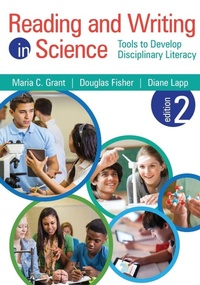
Reading and Writing in Science
Tools to Develop Disciplinary Literacy
2nd Edition
Published on 7. April 2015
Book
Paperback/Softback
192 pages
978-1-4833-4568-0 (ISBN)
Description
Engage your students in scientific thinking across disciplines!
Did you know that scientists spend more than half of their time reading and writing? Students who are science literate can analyze, present, and defend data - both orally and in writing.
The updated edition of this bestseller offers strategies to link the new science standards with literacy expectations and specific ideas you can put to work right away. Features include:
A discussion of how to use science to develop essential 21st century skills
Instructional routines that help students become better writers
Useful strategies for using complex scientific texts in the classroom
Tools to monitor student progress through formative assessment
When students are curious, they thrive. Give your students the strong base they need to create and share scientific ideas that have an impact in the classroom and beyond.
"This is a teacher-friendly book that drew me in from the introduction to the end. Through real-life scenarios combined with useful methods for instruction, it illustrates how science teachers can use language as a tool for teaching science."
-Trina Allen, Science Content Specialist
Measurement Incorporated
"An eminently readable guide for the novice and experienced teacher. The many practical ideas in this volume demonstrate that improving students' skills in reading and writing can also improve their understanding and ability in science."
- Cary Sneider, Associate Research Professor
Portland State University, Portland, OR
Did you know that scientists spend more than half of their time reading and writing? Students who are science literate can analyze, present, and defend data - both orally and in writing.
The updated edition of this bestseller offers strategies to link the new science standards with literacy expectations and specific ideas you can put to work right away. Features include:
A discussion of how to use science to develop essential 21st century skills
Instructional routines that help students become better writers
Useful strategies for using complex scientific texts in the classroom
Tools to monitor student progress through formative assessment
When students are curious, they thrive. Give your students the strong base they need to create and share scientific ideas that have an impact in the classroom and beyond.
"This is a teacher-friendly book that drew me in from the introduction to the end. Through real-life scenarios combined with useful methods for instruction, it illustrates how science teachers can use language as a tool for teaching science."
-Trina Allen, Science Content Specialist
Measurement Incorporated
"An eminently readable guide for the novice and experienced teacher. The many practical ideas in this volume demonstrate that improving students' skills in reading and writing can also improve their understanding and ability in science."
- Cary Sneider, Associate Research Professor
Portland State University, Portland, OR
Reviews / Votes
"The authors of Reading and Writing in Science bring together expertise in Next Generation Science Standards, English language arts, and excellent teaching methods to produce an eminently readable guide for the novice and experienced teacher.Teachers who wish to teach science while improving their students' reading and writing skills will find a wealth of practical ideas in this volume.
The many practical ideas in this volume demonstrate that improving students' skills in reading and writing can also improve their understanding and abilities in science." -- Cary Sneider, Associate Research Professor "Reading and Writing in Science is a teacher friendly book that drew me in from the introduction to the end. Through real life scenarios combined with useful methods for instruction, it illustrates how science teachers can use language as a tool for teaching science." -- Trina Allen, Science Content Specialist The real strength of the book is the almost equal weighting given to the four strands of literacy; oral, aural, reading and writing. This provides a useful prompt for the reader to go beyond the obvious when incorporating a greater literacy focus into their curriculum. -- Kristy Turner
More details
Edition
2nd Revised edition
Language
English
Place of publication
Thousand Oaks
United States
Publishing group
SAGE Publications Inc
Target group
Professional and scholarly
Edition type
Revised edition
Dimensions
Height: 254 mm
Width: 178 mm
Thickness: 11 mm
Weight
373 gr
ISBN-13
978-1-4833-4568-0 (9781483345680)
Copyright in bibliographic data and cover images is held by Nielsen Book Services Limited or by the publishers or by their respective licensors: all rights reserved.
Schweitzer Classification
Other editions
Previous edition
Maria C. Grant | Douglas Fisher
Reading and Writing in Science
Tools to Develop Disciplinary Literacy
Book
01/2010
1st Edition
Corwin Press Inc
€41.07
Article exhausted; check for reprint
Persons
Maria C. Grant, EdD, is a professor in the Department of Secondary Education at California State University Fullerton and the director of the Single Subject Credential Program at CSUF. She works with both pre-service and in-service teachers in the credential program and at school sites. Her work includes research and publications in the areas of disciplinary literacy, literacy in the content areas, science education, and pedagogy. In addition to her efforts at the university, Maria's experience includes many years of teaching in high school and middle school science classrooms. She has taught physics, oceanography, coordinated science, chemistry, and earth science. She currently supports learners as teacher and coach at Health Sciences High & Middle College. Over the years, Maria has acted as a leader in curriculum development and professional development at both the school and district levels. Her most recent efforts include research and professional development work centered on reading, writing, and language within content classrooms. Maria can be reached at mgrant@fullerton.edu. Follow her on twitter at @mgrantfullerton
Douglas Fisher is a professor and chair of educational leadership at San Diego State University and a teacher leader at Health Sciences High and Middle College. Previously, Fisher was an early intervention teacher and elementary school educator. In 2022, he was inducted into the Reading Hall of Fame by the Literacy Research Association. He has published numerous articles on reading and literacy, leadership, and curriculum design, as well as books such as Your Introduction to PLC+, Welcome to Teaching, How Feedback Works, Teaching Reading, and RIGOR Unveiled. Fisher loves being an educator and hopes to share that passion with others.
Diane Lapp, EdD, is a distinguished professor of education at San Diego State University where her work continues to be applied to schools. She is also an instructional coach and teacher at Health Sciences High & Middle College. Throughout her career, Diane has taught in elementary, middle, and high schools. Her major areas of research and instruction regard issues related to the planning and assessment of very intentional literacy instruction and learning. A member of both the California and the International Reading Halls of Fame, Diane has authored, coauthored, and edited numerous articles, columns, texts, handbooks and children's materials on instruction, assessment, and literacy related issues. Diane is the recipient of the ILA 2023 William S. Gray Citation of Merit, a prestigious award reserved for those who have made outstanding contributions to multiple facets of literacy development. Diane can be reached at lapp@sdsu.edu. Follow her on twitter @lappsdsu
Douglas Fisher is a professor and chair of educational leadership at San Diego State University and a teacher leader at Health Sciences High and Middle College. Previously, Fisher was an early intervention teacher and elementary school educator. In 2022, he was inducted into the Reading Hall of Fame by the Literacy Research Association. He has published numerous articles on reading and literacy, leadership, and curriculum design, as well as books such as Your Introduction to PLC+, Welcome to Teaching, How Feedback Works, Teaching Reading, and RIGOR Unveiled. Fisher loves being an educator and hopes to share that passion with others.
Diane Lapp, EdD, is a distinguished professor of education at San Diego State University where her work continues to be applied to schools. She is also an instructional coach and teacher at Health Sciences High & Middle College. Throughout her career, Diane has taught in elementary, middle, and high schools. Her major areas of research and instruction regard issues related to the planning and assessment of very intentional literacy instruction and learning. A member of both the California and the International Reading Halls of Fame, Diane has authored, coauthored, and edited numerous articles, columns, texts, handbooks and children's materials on instruction, assessment, and literacy related issues. Diane is the recipient of the ILA 2023 William S. Gray Citation of Merit, a prestigious award reserved for those who have made outstanding contributions to multiple facets of literacy development. Diane can be reached at lapp@sdsu.edu. Follow her on twitter @lappsdsu
Content
Introduction
New to This Edition
About the Authors
1. Teaching Students to Think Like Scientists
How Well Are U.S. Students Doing in Science?
What Foundations Do We Need to Have in Place?
What Are the Features of Purposeful Science Instruction?
What Do Real-World Scientists Do?
2. Knowing and Using Scientific Language to Communicate Like a Scientist
Language Is the Foundation for Learning
Using Language in Science
Connecting the Common Core State Standards and the Next Generation Science Standards
Next Generation Science Standards Support the Precision of Language Use
Science Instruction
Assess to Instruct: Developing Knowledge and Language
Fostering Independent Word Learning in Science
Word Play Promotes Increased Vocabulary Knowledge
3. Reading Like a Scientist
Connecting the Next Generation Science Standards and the Common Core State Standards
Features That Make Texts Complex
Teaching Students to Read Science Texts
Collaborative Conversations Support Learning and Sharing Scientific Language and Concepts
The Connection Between Vocabulary and Reading Success
Why Teach Reading in Science?
4. Writing Like a Scientist
Connecting the Common Core State Writing Standards and the Next Generation Science Standards
Writing Like a Scientist Is Different
WebQuest: Collecting Data for Writing
Writing Frames: Scaffolds for Scientific Writing
Teaching Scientific Phrasing
Writing Formats in Science
Writing Well-Supported Arguments
Why Learn to Write Like a Scientist?
5. Assessing Student Learning in Science
The Purpose of Assessment in Science
Using Assessment Information
Identifying Literacy-Language Strengths and Needs
Creating Science Assessments
Final Thoughts About Assessment
References
Index
New to This Edition
About the Authors
1. Teaching Students to Think Like Scientists
How Well Are U.S. Students Doing in Science?
What Foundations Do We Need to Have in Place?
What Are the Features of Purposeful Science Instruction?
What Do Real-World Scientists Do?
2. Knowing and Using Scientific Language to Communicate Like a Scientist
Language Is the Foundation for Learning
Using Language in Science
Connecting the Common Core State Standards and the Next Generation Science Standards
Next Generation Science Standards Support the Precision of Language Use
Science Instruction
Assess to Instruct: Developing Knowledge and Language
Fostering Independent Word Learning in Science
Word Play Promotes Increased Vocabulary Knowledge
3. Reading Like a Scientist
Connecting the Next Generation Science Standards and the Common Core State Standards
Features That Make Texts Complex
Teaching Students to Read Science Texts
Collaborative Conversations Support Learning and Sharing Scientific Language and Concepts
The Connection Between Vocabulary and Reading Success
Why Teach Reading in Science?
4. Writing Like a Scientist
Connecting the Common Core State Writing Standards and the Next Generation Science Standards
Writing Like a Scientist Is Different
WebQuest: Collecting Data for Writing
Writing Frames: Scaffolds for Scientific Writing
Teaching Scientific Phrasing
Writing Formats in Science
Writing Well-Supported Arguments
Why Learn to Write Like a Scientist?
5. Assessing Student Learning in Science
The Purpose of Assessment in Science
Using Assessment Information
Identifying Literacy-Language Strengths and Needs
Creating Science Assessments
Final Thoughts About Assessment
References
Index