

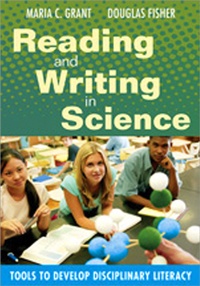
Reading and Writing in Science
Tools to Develop Disciplinary Literacy
1st Edition
Published on 12. January 2010
Book
Paperback/Softback
120 pages
978-1-4129-5614-7 (ISBN)
Description
Coauthored by a science educator and a literacy expert, this book offers science teachers a collection of research-based literacy strategies to help students develop science vocabulary, comprehend science textbooks and other reading materials, and engage in writing assignments that lead to better understanding of science content.
To help teachers enhance and deepen science content learning, Reading and Writing in Science: Strategies to Develop Disciplinary Literacy includes science-specific examples to illustrate the teaching strategies. The authors also provide structures for scaffolding textbook access, ways for teachers to expand literacy in the classroom through the use of trade books, and methods for assessing student learning.
To help teachers enhance and deepen science content learning, Reading and Writing in Science: Strategies to Develop Disciplinary Literacy includes science-specific examples to illustrate the teaching strategies. The authors also provide structures for scaffolding textbook access, ways for teachers to expand literacy in the classroom through the use of trade books, and methods for assessing student learning.
Reviews / Votes
"Science teachers, literacy coaches, and reading specialists will find this helpful book a great starting point for teaching the language of science-reading, writing, and speaking about science to engage the powerful ideas of the discipline. The tried-and-true, research-based practices explained in this highly readable and inviting volume provide many with the start they need to successfully support science literacy development." -- Patricia L. Anders, Distinguished Professor "Grant and Fisher's book talks to teachers, not just sharing the current research but actually drawing connections between research and practice. The authors use their own extensive teaching experience to take the reader into the classrooms of exceptional teachers and present scenarios of how to teach science concepts in engaging, motivating, and research-based ways. At last we have a book that recognizes that science teachers are not reading teachers, but they are promoters of science literacy, communicators of their field whose ultimate goal is to inform, enlighten, and foster strategic thinkers who have the potential to take our society to even greater heights." -- Karen D. Wood, Professor and Graduate Reading Program Coordinator "Finally, a book that uses real ideas about science literacy and shares those in interesting and informative ways. The idea that science teachers are teachers of language-instead of the usual argument of reading-brings literacy to the forefront in using instructional routines that fit the context of science. Grant and Fisher understand that there is more to science instruction than just the content." -- Julia Reynolds, Assistant Superintendent for Curriculum and Instruction "Students of science need both content knowledge and discipline-specific literacy skills to participate in rigorous science content. This book shows us how to use literacy strategies to improve student performance and participation in the secondary science classroom." -- Ellen Levy, Author of Constructing MeaningMore details
Language
English
Place of publication
Thousand Oaks
United States
Publishing group
SAGE Publications Inc
Target group
Professional and scholarly
Dimensions
Height: 254 mm
Width: 178 mm
Weight
255 gr
ISBN-13
978-1-4129-5614-7 (9781412956147)
Copyright in bibliographic data and cover images is held by Nielsen Book Services Limited or by the publishers or by their respective licensors: all rights reserved.
Schweitzer Classification
Other editions
New editions
Maria C. Grant | Douglas Fisher | Diane K. Lapp
Reading and Writing in Science
Tools to Develop Disciplinary Literacy
Book
04/2015
2nd Edition
Corwin Press Inc
€36.30
Shipment within 10-20 days
Persons
Maria C. Grant, EdD, is a professor in the Department of Secondary Education at California State University Fullerton and the director of the Single Subject Credential Program at CSUF. She works with both pre-service and in-service teachers in the credential program and at school sites. Her work includes research and publications in the areas of disciplinary literacy, literacy in the content areas, science education, and pedagogy. In addition to her efforts at the university, Maria's experience includes many years of teaching in high school and middle school science classrooms. She has taught physics, oceanography, coordinated science, chemistry, and earth science. She currently supports learners as teacher and coach at Health Sciences High & Middle College. Over the years, Maria has acted as a leader in curriculum development and professional development at both the school and district levels. Her most recent efforts include research and professional development work centered on reading, writing, and language within content classrooms. Maria can be reached at mgrant@fullerton.edu. Follow her on twitter at @mgrantfullerton
Douglas Fisher is a professor and chair of educational leadership at San Diego State University and a teacher leader at Health Sciences High and Middle College. Previously, Fisher was an early intervention teacher and elementary school educator. In 2022, he was inducted into the Reading Hall of Fame by the Literacy Research Association. He has published numerous articles on reading and literacy, leadership, and curriculum design, as well as books such as Your Introduction to PLC+, Welcome to Teaching, How Feedback Works, Teaching Reading, and RIGOR Unveiled. Fisher loves being an educator and hopes to share that passion with others.
Douglas Fisher is a professor and chair of educational leadership at San Diego State University and a teacher leader at Health Sciences High and Middle College. Previously, Fisher was an early intervention teacher and elementary school educator. In 2022, he was inducted into the Reading Hall of Fame by the Literacy Research Association. He has published numerous articles on reading and literacy, leadership, and curriculum design, as well as books such as Your Introduction to PLC+, Welcome to Teaching, How Feedback Works, Teaching Reading, and RIGOR Unveiled. Fisher loves being an educator and hopes to share that passion with others.
Content
Preface
Acknowledgments
About the Authors
1. The Role of Language in Science
Learning Is Based in Language
Using Language in Science
2. Developing and Activating Background Knowledge
Why Background Knowledge Is Important
Determining Relevant Background Knowledge
Demonstrations: Understanding While Seeing
Anticipation Guides: Looking for Misconceptions
Bridging the Gap When Background Knowledge Is Scant
ReQuest: Teaching Apprentices to Question
DR-TA: Predicting as a Key to Scientific Reading
QAR: Connecting Questions With Answers
The Background Knowledge Big Picture
3. Integrating Vocabulary Instruction Into the Science Classroom
The Importance of Vocabulary
Vocabulary Self-Awareness Charts
Content Area Word Walls
Instructional Routines Useful for Developing Vocabulary
Semantic Feature Analysis: Assessing Relationships Between Words
Word Cards: Investigating Examples and Non-Examples
Semantic Mapping: Visualizing Word Relationships
Fostering Independent Word Learning in Science
Word Play Promotes Increased Vocabulary Knowledge
Vocabulary Helps Students Understand Science
4. Reading Science Texts
Helping Students Read Science Texts
Read-Alouds Support Student Learning
Shared Reading Defined and Implemented
The Benefits of Shared Reading
Releasing Responsibility to Students
Facilitating Collaborative Learning
ReQuest: Reading With Questions
Reciprocal Teaching: Practicing What Good Readers Do
Incorporating Independent Practice
Why Teach Reading in Science?
5. Writing in Science: Scaffolding Skills for Science Students
Writing Like a Scientist Is Different
WebQuest: Collecting Data to Write
Writing Frames: Scaffolding for Scientific Writing
Teaching Scientific Phrasing
Writing Formats in Science
Why Learn to Write Like a Scientist?
6. Assessing Student Learning in Science
The Purpose of Assessment in Science
Using Assessment Information
Identifying Specific Students' Needs
Creating Science Assessments
Types of Assessments Useful in Science
Final Thoughts About Assessment
References
Index
Acknowledgments
About the Authors
1. The Role of Language in Science
Learning Is Based in Language
Using Language in Science
2. Developing and Activating Background Knowledge
Why Background Knowledge Is Important
Determining Relevant Background Knowledge
Demonstrations: Understanding While Seeing
Anticipation Guides: Looking for Misconceptions
Bridging the Gap When Background Knowledge Is Scant
ReQuest: Teaching Apprentices to Question
DR-TA: Predicting as a Key to Scientific Reading
QAR: Connecting Questions With Answers
The Background Knowledge Big Picture
3. Integrating Vocabulary Instruction Into the Science Classroom
The Importance of Vocabulary
Vocabulary Self-Awareness Charts
Content Area Word Walls
Instructional Routines Useful for Developing Vocabulary
Semantic Feature Analysis: Assessing Relationships Between Words
Word Cards: Investigating Examples and Non-Examples
Semantic Mapping: Visualizing Word Relationships
Fostering Independent Word Learning in Science
Word Play Promotes Increased Vocabulary Knowledge
Vocabulary Helps Students Understand Science
4. Reading Science Texts
Helping Students Read Science Texts
Read-Alouds Support Student Learning
Shared Reading Defined and Implemented
The Benefits of Shared Reading
Releasing Responsibility to Students
Facilitating Collaborative Learning
ReQuest: Reading With Questions
Reciprocal Teaching: Practicing What Good Readers Do
Incorporating Independent Practice
Why Teach Reading in Science?
5. Writing in Science: Scaffolding Skills for Science Students
Writing Like a Scientist Is Different
WebQuest: Collecting Data to Write
Writing Frames: Scaffolding for Scientific Writing
Teaching Scientific Phrasing
Writing Formats in Science
Why Learn to Write Like a Scientist?
6. Assessing Student Learning in Science
The Purpose of Assessment in Science
Using Assessment Information
Identifying Specific Students' Needs
Creating Science Assessments
Types of Assessments Useful in Science
Final Thoughts About Assessment
References
Index