

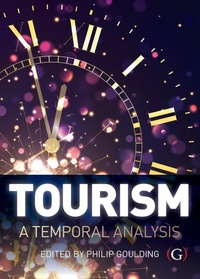
Tourism
A temporal analysis
Published on 31. January 2023
Book
Paperback/Softback
256 pages
978-1-911635-85-7 (ISBN)
Description
Examines how temporality manifests in and impacts tourism in different parts of the world looking at climate, culture and/or structural conditions of the tourism operation. It looks at the reasons and causes for temporality within tourism and how this effects both the industry, the consumer and the environment.
Divided into four parts, Tourism: A temporal analysis looks at:
* The dimensions and relationships between time and tourism: the causal reasons for seasonality in tourism, links between seasonal variations and visitation and why people travel when they do.
* The operational dimensions of temporality: the challenges of 'peak season' and 'low season', pricing, planning, managing the labour demands and yield systems.
* Strategic responses to temporal variation: the role of temporality/seasonal variation as a policy issue, the role of festivals and events in combatting temporality and the effect of social media.
* The End of Temporality?: the rise of 'year-round ' tourism, its enablers and its' resulting effects both positive nad negative in the industry, the environments and the economy.
With contributions from international experts from academia and industry, this text uses case students and vignettes throughout to contextualise the theory and enabling students to have a better understanding in order to critique and question the issues discussed.
Divided into four parts, Tourism: A temporal analysis looks at:
* The dimensions and relationships between time and tourism: the causal reasons for seasonality in tourism, links between seasonal variations and visitation and why people travel when they do.
* The operational dimensions of temporality: the challenges of 'peak season' and 'low season', pricing, planning, managing the labour demands and yield systems.
* Strategic responses to temporal variation: the role of temporality/seasonal variation as a policy issue, the role of festivals and events in combatting temporality and the effect of social media.
* The End of Temporality?: the rise of 'year-round ' tourism, its enablers and its' resulting effects both positive nad negative in the industry, the environments and the economy.
With contributions from international experts from academia and industry, this text uses case students and vignettes throughout to contextualise the theory and enabling students to have a better understanding in order to critique and question the issues discussed.
More details
Language
English
Place of publication
Oxford
United Kingdom
Target group
Professional and scholarly
Illustrations
40 Figures
Dimensions
Height: 173 mm
Width: 246 mm
Thickness: 18 mm
Weight
480 gr
ISBN-13
978-1-911635-85-7 (9781911635857)
Copyright in bibliographic data and cover images is held by Nielsen Book Services Limited or by the publishers or by their respective licensors: all rights reserved.
Schweitzer Classification
Person
Content
Section 1: Overview of the dimensions and relationships between time and tourism; Ch 1 Time and Tourism: from 'seasonality' to 'temporality' Ch 2 Causal Factors in Seasonality; Ch 3 Tourism and the Seasons; Ch 4 Nature and Time; Ch 5 Behavioural and Cultural Dimensions of Temporality in Tourism; Ch 6 Mobility and The Pace of Tourism: slow vs fast tourism; Ch 7 Night vs Day; Section 2: Operational Dimensions of Temporality; Ch 8 The Language and Meaning of Temporality; Ch 9 Temporal Pricing; Ch 10 Measuring Temporal Performance Ch 11 Planning for 'Seasons'; Ch 12 Seasonal Labour; Ch 13 Temporality and the 'Lifestyle Operator'; Section 3: Strategic Responses to Temporal Variation; Ch 14 Temporality and the Destination Management Perspective; Ch 15 Festivals and Events in Temporal Strategies; Ch 16 Marketing the Seasons Ch 17 The Community Perspective; Section 4: The End of Temporality?; Ch 18 The Growth of 'De-temporalisation'; Ch 19 Over-tourism and Temporality; Ch 20 Temporal Pasts and Futures; Index