

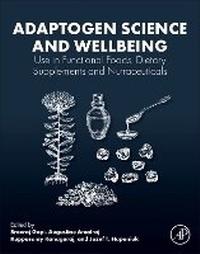
Adaptogen Science and Wellbeing
Use in Functional Foods, Dietary Supplements and Nutraceuticals
Will be published approx. on 1. March 2027
Book
Paperback/Softback
600 pages
978-0-443-33811-3 (ISBN)
Description
Adaptogen Science and Wellbeing: Use in Functional Foods, Dietary Supplements and Nutraceuticals explores the rich phytochemical constituents of adaptogens and their specific mechanisms of action. This book delves into the numerous phytosterols, vitamins, lignans, alkaloids, and flavonoids present in natural product adaptogens. By understanding these components, readers can appreciate their health benefits, how they enhance nutraceuticals, and how they improve functional food formulations. The book aims to provide a comprehensive overview of these natural substances and their potential applications in promoting overall well-being.
The book identifies over 30 species of plants, roots, and fungi, such as sea buckthorn, holy basil, American ginseng, licorice root, maca, cordyceps, ashwagandha, and more. It explains the mechanisms of action and bioavailability of each adaptogen, discussing their immune function and anti-inflammatory benefits, cell energy metabolism for improved vitality, and neurotransmitter regulation for mental well-being. The book concludes with regulatory guidelines, protocols, and challenges for utilizing these natural products in functional foods and nutraceuticals.
The book identifies over 30 species of plants, roots, and fungi, such as sea buckthorn, holy basil, American ginseng, licorice root, maca, cordyceps, ashwagandha, and more. It explains the mechanisms of action and bioavailability of each adaptogen, discussing their immune function and anti-inflammatory benefits, cell energy metabolism for improved vitality, and neurotransmitter regulation for mental well-being. The book concludes with regulatory guidelines, protocols, and challenges for utilizing these natural products in functional foods and nutraceuticals.
More details
Language
English
Place of publication
San Diego
United States
Publishing group
Elsevier Science Publishing Co Inc
Product notice
Paperback (trade)
Unsewn / adhesive bound
Dimensions
Height: 276 mm
Width: 216 mm
Weight
450 gr
ISBN-13
978-0-443-33811-3 (9780443338113)
Copyright in bibliographic data and cover images is held by Nielsen Book Services Limited or by the publishers or by their respective licensors: all rights reserved.
Schweitzer Classification
Persons
Dr. Sreeraj Gopi is the Co-Founder and Director of Molecules Food solutions Pvt Ltd, Zingon Naturals Pvt Ltd. He was the Chief Scientist at Plant Lipids Pvt Ltd. and Chief Scientific Officer at Aurea Biolabs Pvt Ltd., He has also served as an adjunct professor at universities including Stockholm University, Sweden, Siberian Federal University, Russia, and Mahatma Gandhi University, India. He completed his doctorate in organic chemistry and nanotechnology, and nano drug delivery working in the area of natural products, isolation, and biological activities. He published more than 175 international articles and filed more than 75 patents, in the US and Europe. At Plant Lipids, he developed many innovative products and technologies, and is responsible for driving the research team to excellence, as well as, implementing new projects, presenting scientific seminars to various customers. He was listed world's top 2% scientist list by Standford University.
Dr. Augustine Amalraj is currently working as a Senior Scientist in the Department of Research and Development at Molecules Food Solutions Private Limited, Koratty, Thrissur, Kerala, India. He was worked as a Deputy Manager in the Department of Research and Development at Plant Lipids Private Limited and Aurea Biolabs Private Limited, Cochin, India. He obtained his Doctoral degree in Chemistry from Gandhigram Rural Institute - Deemed University, Gandhigram, Tamil Nadu, India. His research interests are in applied chemistry, food chemistry, natural product chemistry, environmental chemistry, chemosensors, and polymer and nanocomposite materials. He has published more than 60 research articles in international journals, as well as 22 book chapters, co-edited 10 books and filed 3 patents. He was listed among the top 2% of scientists in the world by Stanford University. Dr. Kuppusamy Kanagaraj is a Senior Research Associate and Scientist at Shanghai University, China, and a Visiting Researcher at Sichuan University, China. He received his Ph.D. in 2014 from Madurai Kamaraj University under the supervision of Professor Kasi Pitchumani. From 2014 to 2019, he worked as a post-doctoral researcher with Professor Cheng Yang at Sichuan University and he continued as a visiting researcher in the same group. In 2020, he joined Professor Julius Rebek, Jr.'s research group and Professor Yang Yu at Shanghai University. His innovative contributions have resulted in more than 45 papers, articles, and reviews (in international journals of repute) and 3 invited book chapters to his credit. His current research interest includes supramolecular and bio-mimetic chemistry with various water-soluble hosts (studying molecular behavior in small spaces - sensing and catalysis), natural products chemistry, bio-formulations, etc. Additionally, his research focused on applied chemistry, environmental chemistry, and material chemistry.
Prof. Jozef T. Haponiuk is Professor and Head of Department, at the Department of Polymer Technology, Gdansk University of Technology, Poland. Prof. Haponiuk is an experienced researcher in the fields of polymer composites, polymer blends, and associated materials. He has received a number of prizes and awards for his work.
Dr. Augustine Amalraj is currently working as a Senior Scientist in the Department of Research and Development at Molecules Food Solutions Private Limited, Koratty, Thrissur, Kerala, India. He was worked as a Deputy Manager in the Department of Research and Development at Plant Lipids Private Limited and Aurea Biolabs Private Limited, Cochin, India. He obtained his Doctoral degree in Chemistry from Gandhigram Rural Institute - Deemed University, Gandhigram, Tamil Nadu, India. His research interests are in applied chemistry, food chemistry, natural product chemistry, environmental chemistry, chemosensors, and polymer and nanocomposite materials. He has published more than 60 research articles in international journals, as well as 22 book chapters, co-edited 10 books and filed 3 patents. He was listed among the top 2% of scientists in the world by Stanford University. Dr. Kuppusamy Kanagaraj is a Senior Research Associate and Scientist at Shanghai University, China, and a Visiting Researcher at Sichuan University, China. He received his Ph.D. in 2014 from Madurai Kamaraj University under the supervision of Professor Kasi Pitchumani. From 2014 to 2019, he worked as a post-doctoral researcher with Professor Cheng Yang at Sichuan University and he continued as a visiting researcher in the same group. In 2020, he joined Professor Julius Rebek, Jr.'s research group and Professor Yang Yu at Shanghai University. His innovative contributions have resulted in more than 45 papers, articles, and reviews (in international journals of repute) and 3 invited book chapters to his credit. His current research interest includes supramolecular and bio-mimetic chemistry with various water-soluble hosts (studying molecular behavior in small spaces - sensing and catalysis), natural products chemistry, bio-formulations, etc. Additionally, his research focused on applied chemistry, environmental chemistry, and material chemistry.
Prof. Jozef T. Haponiuk is Professor and Head of Department, at the Department of Polymer Technology, Gdansk University of Technology, Poland. Prof. Haponiuk is an experienced researcher in the fields of polymer composites, polymer blends, and associated materials. He has received a number of prizes and awards for his work.
Editor
Co-Founder and Director of Molecules Food Solutions Pvt Ltd, Zingon Naturals Pvt Ltd., India
Senior Scientist, Department of Research and Development, Molecules Food Solutions Private Limited, Kerala, India
Senior Research Associate and Scientist, Center for Supramolecular Chemistry & Catalysis and Department of Chemistry, College of Science, Shanghai University, China
Professor, Head of Department, Department of Polymers Technology, Gdansk University of Technology, Gdansk, Poland
Content
1. Overview on natural product adaptogens
2. Withania somnifera
3. Astragalus membranaceus
4. Panax ginseng
5. Ocimum sanctum and Ocimum tenuiflorum
6. Rhodiola rosea and Rhodiola crenulata
7. Schisandra chinensis
8. Curcuma longa
9. Acanthopanax senticosus
10. Panax quinquefolius
11. Lycium barbarum
12. Gynostemma pentaphyllum
13. Glycyrrhiza glabra
14. Rhaponticum carthamoides
15. Moringa oleifera
16. Centella asiatica
17. Lepidium meyenii
18. Emblica officinalis
19. Andrographis paniculate
20. Asparagus racemosus
21. Bacopa monnieri
22. Pfaffia paniculata
23. Hippophae rhamnoides
24. Gynostemma pentaphyllum
25. Echinacea Purpurea
26. Matricaria chamomilla
27. Salvia officinalis
28. Rosmarinus officinalis
29. Melissa officinalis
30. Cordyceps militaris
31. Hericium erinaceus
32. Ganoderma lucidum
33. Inonotus obliquus
34. Regulatory guidelines and protocol for utilization of natural products as an adaptogen in functional foods and nutraceutical sectors
35. Current status, challenges and future perspectives of natural product adaptogens in nutraceutical, dietary supplements and functional foods
2. Withania somnifera
3. Astragalus membranaceus
4. Panax ginseng
5. Ocimum sanctum and Ocimum tenuiflorum
6. Rhodiola rosea and Rhodiola crenulata
7. Schisandra chinensis
8. Curcuma longa
9. Acanthopanax senticosus
10. Panax quinquefolius
11. Lycium barbarum
12. Gynostemma pentaphyllum
13. Glycyrrhiza glabra
14. Rhaponticum carthamoides
15. Moringa oleifera
16. Centella asiatica
17. Lepidium meyenii
18. Emblica officinalis
19. Andrographis paniculate
20. Asparagus racemosus
21. Bacopa monnieri
22. Pfaffia paniculata
23. Hippophae rhamnoides
24. Gynostemma pentaphyllum
25. Echinacea Purpurea
26. Matricaria chamomilla
27. Salvia officinalis
28. Rosmarinus officinalis
29. Melissa officinalis
30. Cordyceps militaris
31. Hericium erinaceus
32. Ganoderma lucidum
33. Inonotus obliquus
34. Regulatory guidelines and protocol for utilization of natural products as an adaptogen in functional foods and nutraceutical sectors
35. Current status, challenges and future perspectives of natural product adaptogens in nutraceutical, dietary supplements and functional foods