

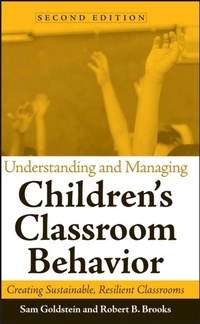
Understanding and Managing Children's Classroom Behavior
Creating Sustainable, Resilient Classrooms
2nd Edition
Published on 26. April 2007
Book
Hardback
608 pages
978-0-471-74212-8 (ISBN)
Description
"This book sets the standard in delivering a comprehensive, state-of-the-art approach for understanding, treating, and preventing classroom behavior difficulties. It should be on the bookshelves of all professionals who work in school settings. I will certainly recommend this text to my colleagues and students."
-George J. DuPaul, PhD, Professor of School Psychology, Associate Chair, Education and Human Services, Lehigh University
A classic guide to creating a positive classroom environment
Covering the most recent and relevant findings regarding behavior management in the classroom, this new edition of Understanding and Managing Children's Classroom Behavior has been completely updated to reflect the current functional approach to assessing, understanding, and positively managing behavior in a classroom setting.
With its renewed focus on the concept of temperament and its impact on children's behavior and personality, Understanding and Managing Children's Classroom Behavior emphasizes changing behavior rather than labeling it.
Numerous contributions from renowned experts on each topic explore:
How to identify strengths and assets and build on them
Complete functional behavioral assessments
The relationship between thinking, learning, and behavior in the classroom
Practical strategies for teachers to improve students' self-regulation
How to facilitate social skills
Problem-solving approaches to bullies and their victims
Medications and their relationship to behavior
The classic guide to helping psychologists, counselors, and educators improve their ability to serve all students, Understanding and Managing Children's Classroom Behavior, Second Edition will help educators create citizens connected to each other, to their teachers, to their families, and to their communities.
-George J. DuPaul, PhD, Professor of School Psychology, Associate Chair, Education and Human Services, Lehigh University
A classic guide to creating a positive classroom environment
Covering the most recent and relevant findings regarding behavior management in the classroom, this new edition of Understanding and Managing Children's Classroom Behavior has been completely updated to reflect the current functional approach to assessing, understanding, and positively managing behavior in a classroom setting.
With its renewed focus on the concept of temperament and its impact on children's behavior and personality, Understanding and Managing Children's Classroom Behavior emphasizes changing behavior rather than labeling it.
Numerous contributions from renowned experts on each topic explore:
How to identify strengths and assets and build on them
Complete functional behavioral assessments
The relationship between thinking, learning, and behavior in the classroom
Practical strategies for teachers to improve students' self-regulation
How to facilitate social skills
Problem-solving approaches to bullies and their victims
Medications and their relationship to behavior
The classic guide to helping psychologists, counselors, and educators improve their ability to serve all students, Understanding and Managing Children's Classroom Behavior, Second Edition will help educators create citizens connected to each other, to their teachers, to their families, and to their communities.
Reviews / Votes
"The book is a valuable resource for school psychologists working in consultation with teachers and other educational staff who must deal with issues such as disruptive behaviors, social learning problems, and bullying. Today's school psychologists need a variety of tools to address all the demands of students in the 21st century. This book offers excellent ways to help these children be resilient in today's complex world. It is a must have!" (NASP Communique, Sept 2007)More details
Series
Edition
2nd edition
Language
English
Place of publication
New York
United States
Target group
Professional and scholarly
Product notice
sewn/stitched
Paper over boards
Illustrations
Charts: 0 B&W, 0 Color; Drawings: 0 B&W, 0 Color; Screen captures: 0 B&W, 0 Color; Graphs: 0 B&W, 0 Color
Dimensions
Height: 239 mm
Width: 165 mm
Thickness: 46 mm
Weight
1002 gr
ISBN-13
978-0-471-74212-8 (9780471742128)
Copyright in bibliographic data and cover images is held by Nielsen Book Services Limited or by the publishers or by their respective licensors: all rights reserved.
Schweitzer Classification
Other editions
Additional editions
Sam Goldstein | Robert B. Brooks
Understanding and Managing Children's Classroom Behavior
Creating Sustainable, Resilient Classrooms
E-Book
06/2008
2nd Edition
Wiley
€71.99
Available for download
Previous edition

Sam Goldstein
Understanding and Managing Children's Classroom Behavior
Book
11/1994
Wiley
€105.23
Article exhausted; check for reprint
Persons
Sam Goldstein is a member of the faculty at the University of Utah, maintains a private practice at the Neurology, Learning, and Behavior Center in Salt Lake City, Utah, and is on staff at the University Neuropsychiatric Institute. He has written twenty-three books, both for professional and lay audiences, and lectures both internationally and nationally to professionals and parents on practical ways to apply current research. He is the Editor in Chief of the Journal of Attention Disorders and sits on seven editorial boards.
Robert B. Brooks is on the faculty of Harvard Medical School and has served as the Director of Psychology at McLean Hospital. He is the author or coauthor of thirteen books and has lectured nationally and internationally to audiences of educators, parents, health care professionals, and businesspeople on topics pertaining to motivation, resilience, school climate, parenting, family relationships, and the qualities of effective leaders.
Robert B. Brooks is on the faculty of Harvard Medical School and has served as the Director of Psychology at McLean Hospital. He is the author or coauthor of thirteen books and has lectured nationally and internationally to audiences of educators, parents, health care professionals, and businesspeople on topics pertaining to motivation, resilience, school climate, parenting, family relationships, and the qualities of effective leaders.
Content
Foreword xiii
Lawrence Lewandowski
Foreword xv
Robert H. Pasternack
Preface xvii
Acknowledgments xxi
Contributors xxiii
PART I BACKGROUND
CHAPTER 1 Introduction 3
Sam Goldstein and Robert Brooks
CHAPTER 2 Creating Sustainable Classroom Environments: The Mindsets of Effective Teachers, Successful Students, and Productive Consultants 22
Sam Goldstein and Robert Brooks
PART II UNDERSTANDING AND EVALUATING CLASSROOM BEHAVIOR
CHAPTER 3 Functional Behavioral Assessment of Classroom Behavior 43
Mark W. Steege, F. Charles "Bud" Mace, and Rachel Brown-Chidsey
CHAPTER 4 Cognition, Learning, and Behavior: The Role of Intellectual Processes in Classroom Behavior 64
Jack A. Naglieri, Cara Conway, and Sam Goldstein
CHAPTER 5 Disruptive Behaviors 91
Sam Goldstein and Richard Rider
CHAPTER 6 Problems of Self-Discipline 113
Sam Goldstein and Robert Brooks
CHAPTER 7 Worry and Helplessness 128
Sam Goldstein and Robert Brooks
CHAPTER 8 Social Learning Problems 166
Sam Goldstein and Robert Brooks
PART III INTERVENTION
CHAPTER 9 Developing the Mindset of Effective Teachers 189
Robert Brooks and Sam Goldstein
CHAPTER 10 Developing the Mindset of Effective Students 208
Robert Brooks and Sam Goldstein
CHAPTER 11 Applying Behavior Modification 226
Sam Goldstein and Robert Brooks
CHAPTER 12 Cognitive Behavioral Strategies 279
Lauren Braswell
CHAPTER 13 Strategies to Improve Self-Regulation 322
Sandra Rief
CHAPTER 14 School-Based Interventions for Children with Internalizing Problems 361
Janay B. Sander, Dawn S. Reinemann, and Jennifer A. Herren
CHAPTER 15 Building Social Skills 383
Emily D. Warnes, Susan M. Sheridan, and S. Andrew Garbacz
CHAPTER 16 Bullies and Their Victims: A Problem-Solving Approach to Treatment and Prevention 408
Myrna B. Shure
CHAPTER 17 Medications and Behavior 432
Lawrence Diller and Sam Goldstein
CHAPTER 18 Concluding Remarks 460
Sam Goldstein and Robert Brooks
APPENDIX Language Milestones in School-Age Children 465
Janet Goldstein
References 469
Author Index 549
Subject Index 571
Lawrence Lewandowski
Foreword xv
Robert H. Pasternack
Preface xvii
Acknowledgments xxi
Contributors xxiii
PART I BACKGROUND
CHAPTER 1 Introduction 3
Sam Goldstein and Robert Brooks
CHAPTER 2 Creating Sustainable Classroom Environments: The Mindsets of Effective Teachers, Successful Students, and Productive Consultants 22
Sam Goldstein and Robert Brooks
PART II UNDERSTANDING AND EVALUATING CLASSROOM BEHAVIOR
CHAPTER 3 Functional Behavioral Assessment of Classroom Behavior 43
Mark W. Steege, F. Charles "Bud" Mace, and Rachel Brown-Chidsey
CHAPTER 4 Cognition, Learning, and Behavior: The Role of Intellectual Processes in Classroom Behavior 64
Jack A. Naglieri, Cara Conway, and Sam Goldstein
CHAPTER 5 Disruptive Behaviors 91
Sam Goldstein and Richard Rider
CHAPTER 6 Problems of Self-Discipline 113
Sam Goldstein and Robert Brooks
CHAPTER 7 Worry and Helplessness 128
Sam Goldstein and Robert Brooks
CHAPTER 8 Social Learning Problems 166
Sam Goldstein and Robert Brooks
PART III INTERVENTION
CHAPTER 9 Developing the Mindset of Effective Teachers 189
Robert Brooks and Sam Goldstein
CHAPTER 10 Developing the Mindset of Effective Students 208
Robert Brooks and Sam Goldstein
CHAPTER 11 Applying Behavior Modification 226
Sam Goldstein and Robert Brooks
CHAPTER 12 Cognitive Behavioral Strategies 279
Lauren Braswell
CHAPTER 13 Strategies to Improve Self-Regulation 322
Sandra Rief
CHAPTER 14 School-Based Interventions for Children with Internalizing Problems 361
Janay B. Sander, Dawn S. Reinemann, and Jennifer A. Herren
CHAPTER 15 Building Social Skills 383
Emily D. Warnes, Susan M. Sheridan, and S. Andrew Garbacz
CHAPTER 16 Bullies and Their Victims: A Problem-Solving Approach to Treatment and Prevention 408
Myrna B. Shure
CHAPTER 17 Medications and Behavior 432
Lawrence Diller and Sam Goldstein
CHAPTER 18 Concluding Remarks 460
Sam Goldstein and Robert Brooks
APPENDIX Language Milestones in School-Age Children 465
Janet Goldstein
References 469
Author Index 549
Subject Index 571