

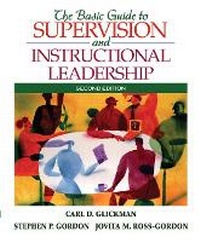
The Basic Guide to Supervision and Instructional Leadership
2nd Edition
Published on 9. June 2008
Book
Paperback/Softback
384 pages
978-0-205-57859-7 (ISBN)
Description
This shortened version maintains the original text's emphases on school culture, teachers as adult learners, developmental leadership, democratic education, and collegial supervision while editing chapters to create a more accessible format. This new edition continues the book's trend-setting tradition by placing instructional leadership and school improvement within a community and societal context; providing new examples of direct assistance, professional development, and action research; and presenting an entire new chapter on "Supervision for What? Democracy and the Good School."
More details
Edition
2nd edition
Language
English
Place of publication
United States
Publishing group
Pearson Education (US)
Target group
Professional and scholarly
Dimensions
Height: 232 mm
Width: 191 mm
Weight
549 gr
ISBN-13
978-0-205-57859-7 (9780205578597)
Copyright in bibliographic data and cover images is held by Nielsen Book Services Limited or by the publishers or by their respective licensors: all rights reserved.
Schweitzer Classification
Other editions
New editions
Carl D. Glickman | Stephen P. Gordon | Jovita M. Ross-Gordon
Basic Guide to SuperVision and Instructional Leadership, The Plus MyEdLeadership Lab with Pearson eText -- Access Card Package
Book
08/2012
3rd Edition
Pearson
€101.93
Article is exhausted; no reprint
Carl D. Glickman | Stephen P. Gordon | Jovita M. Ross-Gordon
The Basic Guide to SuperVision and Instructional Leadership
International Edition
Book
03/2012
3rd Edition
Pearson
€124.40
Article is exhausted; no reprint

Carl Glickman | Carl D. Glickman | Stephen P. Gordon
Basic Guide to SuperVision and Instructional Leadership, The
Book
02/2012
3rd Edition
Pearson
€163.99
Shipment within 15-20 days
Previous edition
Carl D. Glickman | Stephen P. Gordon | Jovita M. Ross-Gordon
SuperVision and Instructional Leadership, Brief Edition
Book
12/2004
Pearson
€69.51
Article exhausted; check for reprint
Content
I. INTRODUCTION.
1. SuperVision for Successful Schools.
SuperVision: A New Name for a New Paradigm.
Supervisory Glue as a Metaphor for Success.
Who Is Responsible for SuperVision?
Organization of This Book.
The Agony of Thought and Feeling.
II. KNOWLEDGE.
2. The Norm: Why Schools Are as They Are.
The Work Environment or Culture of Schools.
The Legacy of the One-Room Schoolhouse.
Blaming the Victim and Structural Strain.
3. The Exception: What Schools Can Be.
Background to School Effectiveness Studies.
Early Effective Schools Research.
The Second Wave of Effective Schools Research.
Context Studies in Effective Schools Research.
Has Effective Schools Research Outlived Its Usefulness?
The Legacy of Effective Schools Research.
From Effective Schools to School Improvement.
A Cause Beyond Oneself.
Summary
4. Adult and Teacher Development within the Context of the School: Clues for Supervisory Practice.
Adults as Learners.
Adult and Teacher Development.
Developmental Theories of Motivation and Teacher Development.
Development: Ebb and Flow.
Propositions.
5. Reflections on Schools, Teaching, and Supervision.
The Coast of Britain.
Effective and Good Schools: The Same?
Changing Views: New Emphasis on Constructivist Teaching and Learning.
Instructional Improvement and Effective Teaching.
Beliefs about Education.
Supervision Beliefs.
Supervisory Platform as Related to Educational Philosophy.
Checking Your Own Educational Philosophy and Supervisory Beliefs.
What Does Your Belief Mean in Terms of Supervisor and Teacher Responsibility?
Summary, Conclusions, and Propositions.
III. INTERPERSONAL SKILLS.
6. Supervisory Behavior Continuum: Know Thyself.
Outcomes of Conference.
Valid Assessment of Self.
Johari Window.
Cognitive Dissonance.
Summary, Conclusions, and Preview.
7. Developmental Supervision: An Introduction.
Case Study One.
Case Study Two.
Case Study Three.
Case Study Four.
Developmental Supervision.
Summary and a Look Ahead.
8. Directive Control Behaviors.
Directive Control Behaviors with Individuals.
Directive Control Behaviors with Groups.
A History of Overreliance on Control.
Issues in Directive Control.
When to Use Directive Control Behaviors.
Moving from Directive Control toward Directive Informational Behaviors.
9. Directive Informational Behaviors.
Directive Informational Behaviors with Individuals.
Directive Informational Behaviors with Groups.
Comparing Directive Control and Directive Informational Statements.
Issues in the Directive Informational Approach.
When to Use Directive Informational Behaviors.
Moving from Directive Informational toward Collaborative Behaviors.
10. Collaborative Behaviors.
Collaborative Behaviors with Individuals.
Collaborative Behaviors with Groups.
Issues in Collaborative Supervision.
When to Use Collaborative Behaviors.
Moving from Collaborative toward Nondirective Behaviors.
Collaboration and Cooperation.
11. Nondirective Behaviors.
Nondirective Behaviors with Individuals.
Nondirective Behaviors with Groups.
Initiating Nondirective Supervision.
Nondirective, Not Laissez Faire, Supervision.
Issues with Nondirective Supervision.
When to Use Nondirective Behaviors.
Nondirective Supervision, Teacher Collaboration.
12. Developmental Supervision: Theory and Practice.
Rationale for Developmental Supervision.
Applying Developmental Supervision.
Not Algorithms, But Guideposts for Decisions.
IV. TECHNICAL SKILLS.
13. Assessing and Planning Skills.
Assessing and Planning within the Organization.
Ways of Assessing Needs.
Analyzing Organizational Needs.
Planning.
Models Combining Assessment and Planning.
Strategic Planning.
Planning: To What Extent?
14. Observing Skills.
Formative Observation Instruments Are Not Summative Evaluation Instruments.
Ways of Describing.
Quantitative Observations.
Quantitative and Qualitative Instruments.
Qualitative Observations.
Tailored Observation Systems.
Types and Purposes of Observations.
Further Cautions When Using Observations.
15. Research and Evaluation Skills.
Alternative Approaches to Research and Evaluation.
Judgments.
Evaluating Specific Instructional Programs.
Key Decisions in the Evaluation Process.
Multiple Sources and Methods.
Overall Instructional Program Evaluation.
What About High Stakes Tests and New Forms of Assessment?
Teacher Evaluation.
V. TASKS OF SUPERVISION.
16. Direct Assistance to Teachers.
Clinical Supervision.
Comparing Clinical Supervision with Teacher Evaluation.
Integrating Clinical Supervision and Developmental Supervision.
Peer Coaching.
Other Forms of Direct Assistance.
Developmental Considerations in Direct Assistance.
17. Group Development.
Dimensions of an Effective Group.
Group Member Roles.
Changing Group Leadership Style.
Applying Developmental Supervision to Groups
Comparing Developmental Supervision with Situational Leadership
Dealing with Dysfunctional Members.
Resolving Conflict.
Preparing for Group Meetings.
18. Professional Development.
Why the Need for Professional Development?
Characteristics of Successful Professional Development Programs.
Individual Teacher-Based Professional Development.
Alternative Professional Development Formats.
Examples of Effective Professional Development Programs.
Stages of Professional Development.
The Nuts and Bolts.
Teachers as Objects or Agents in Professional Development.
19. Curriculum Development.
Sources of Curriculum Development.
Teacher-Proof Curriculum.
What Should Be the Purpose of the Curriculum?
What Should Be the Content of the Curriculum?
How Should the Curriculum Be Organized?
In What Format Should the Curriculum Be Written?
Curriculum Format as Reflective of Choice Given to Teachers.
Relationship of Curriculum Purpose, Content, Organization, and Format.
Levels of Teacher Involvement in Curriculum Development.
Integrating Curriculum Format with Developers and Levels of Development.
Matching Curriculum Development with Teacher Development.
Curriculum Development as a Vehicle for Enhancing Collective Thinking about Instruction.
20. Action Research: The School as the Center of Inquiry.
How Is Action Research Conducted?
A Developmental Approach to Action Research.
Decisions about Action Research.
Action Research: Vehicle for a Cause beyond Oneself.
Examples of Action Research.
Shared Governance for Action Research.
Personal Examples of School-Based Action Research Plans.
Conclusion: Focus, Structure, and Time for Development.
VI. FUNCTION OF SUPERVISION.
21. SuperVision, Change, and School Success.
Assumptions about Change.
Change from the Teacher's View.
Chaos Theory and Change.
Chaos Theory Applied to School Change.
Implications of Chaos Theory at the Classroom Level.
Creating a Culture for Change.
What Is School Success?
22. Supervision for What? Democracy and the Good School
The Good School and Moral Principles
Priorities
Using Supervision to Promote the Good School
Conclusion
Name Index.
Subject Index.
1. SuperVision for Successful Schools.
SuperVision: A New Name for a New Paradigm.
Supervisory Glue as a Metaphor for Success.
Who Is Responsible for SuperVision?
Organization of This Book.
The Agony of Thought and Feeling.
II. KNOWLEDGE.
2. The Norm: Why Schools Are as They Are.
The Work Environment or Culture of Schools.
The Legacy of the One-Room Schoolhouse.
Blaming the Victim and Structural Strain.
3. The Exception: What Schools Can Be.
Background to School Effectiveness Studies.
Early Effective Schools Research.
The Second Wave of Effective Schools Research.
Context Studies in Effective Schools Research.
Has Effective Schools Research Outlived Its Usefulness?
The Legacy of Effective Schools Research.
From Effective Schools to School Improvement.
A Cause Beyond Oneself.
Summary
4. Adult and Teacher Development within the Context of the School: Clues for Supervisory Practice.
Adults as Learners.
Adult and Teacher Development.
Developmental Theories of Motivation and Teacher Development.
Development: Ebb and Flow.
Propositions.
5. Reflections on Schools, Teaching, and Supervision.
The Coast of Britain.
Effective and Good Schools: The Same?
Changing Views: New Emphasis on Constructivist Teaching and Learning.
Instructional Improvement and Effective Teaching.
Beliefs about Education.
Supervision Beliefs.
Supervisory Platform as Related to Educational Philosophy.
Checking Your Own Educational Philosophy and Supervisory Beliefs.
What Does Your Belief Mean in Terms of Supervisor and Teacher Responsibility?
Summary, Conclusions, and Propositions.
III. INTERPERSONAL SKILLS.
6. Supervisory Behavior Continuum: Know Thyself.
Outcomes of Conference.
Valid Assessment of Self.
Johari Window.
Cognitive Dissonance.
Summary, Conclusions, and Preview.
7. Developmental Supervision: An Introduction.
Case Study One.
Case Study Two.
Case Study Three.
Case Study Four.
Developmental Supervision.
Summary and a Look Ahead.
8. Directive Control Behaviors.
Directive Control Behaviors with Individuals.
Directive Control Behaviors with Groups.
A History of Overreliance on Control.
Issues in Directive Control.
When to Use Directive Control Behaviors.
Moving from Directive Control toward Directive Informational Behaviors.
9. Directive Informational Behaviors.
Directive Informational Behaviors with Individuals.
Directive Informational Behaviors with Groups.
Comparing Directive Control and Directive Informational Statements.
Issues in the Directive Informational Approach.
When to Use Directive Informational Behaviors.
Moving from Directive Informational toward Collaborative Behaviors.
10. Collaborative Behaviors.
Collaborative Behaviors with Individuals.
Collaborative Behaviors with Groups.
Issues in Collaborative Supervision.
When to Use Collaborative Behaviors.
Moving from Collaborative toward Nondirective Behaviors.
Collaboration and Cooperation.
11. Nondirective Behaviors.
Nondirective Behaviors with Individuals.
Nondirective Behaviors with Groups.
Initiating Nondirective Supervision.
Nondirective, Not Laissez Faire, Supervision.
Issues with Nondirective Supervision.
When to Use Nondirective Behaviors.
Nondirective Supervision, Teacher Collaboration.
12. Developmental Supervision: Theory and Practice.
Rationale for Developmental Supervision.
Applying Developmental Supervision.
Not Algorithms, But Guideposts for Decisions.
IV. TECHNICAL SKILLS.
13. Assessing and Planning Skills.
Assessing and Planning within the Organization.
Ways of Assessing Needs.
Analyzing Organizational Needs.
Planning.
Models Combining Assessment and Planning.
Strategic Planning.
Planning: To What Extent?
14. Observing Skills.
Formative Observation Instruments Are Not Summative Evaluation Instruments.
Ways of Describing.
Quantitative Observations.
Quantitative and Qualitative Instruments.
Qualitative Observations.
Tailored Observation Systems.
Types and Purposes of Observations.
Further Cautions When Using Observations.
15. Research and Evaluation Skills.
Alternative Approaches to Research and Evaluation.
Judgments.
Evaluating Specific Instructional Programs.
Key Decisions in the Evaluation Process.
Multiple Sources and Methods.
Overall Instructional Program Evaluation.
What About High Stakes Tests and New Forms of Assessment?
Teacher Evaluation.
V. TASKS OF SUPERVISION.
16. Direct Assistance to Teachers.
Clinical Supervision.
Comparing Clinical Supervision with Teacher Evaluation.
Integrating Clinical Supervision and Developmental Supervision.
Peer Coaching.
Other Forms of Direct Assistance.
Developmental Considerations in Direct Assistance.
17. Group Development.
Dimensions of an Effective Group.
Group Member Roles.
Changing Group Leadership Style.
Applying Developmental Supervision to Groups
Comparing Developmental Supervision with Situational Leadership
Dealing with Dysfunctional Members.
Resolving Conflict.
Preparing for Group Meetings.
18. Professional Development.
Why the Need for Professional Development?
Characteristics of Successful Professional Development Programs.
Individual Teacher-Based Professional Development.
Alternative Professional Development Formats.
Examples of Effective Professional Development Programs.
Stages of Professional Development.
The Nuts and Bolts.
Teachers as Objects or Agents in Professional Development.
19. Curriculum Development.
Sources of Curriculum Development.
Teacher-Proof Curriculum.
What Should Be the Purpose of the Curriculum?
What Should Be the Content of the Curriculum?
How Should the Curriculum Be Organized?
In What Format Should the Curriculum Be Written?
Curriculum Format as Reflective of Choice Given to Teachers.
Relationship of Curriculum Purpose, Content, Organization, and Format.
Levels of Teacher Involvement in Curriculum Development.
Integrating Curriculum Format with Developers and Levels of Development.
Matching Curriculum Development with Teacher Development.
Curriculum Development as a Vehicle for Enhancing Collective Thinking about Instruction.
20. Action Research: The School as the Center of Inquiry.
How Is Action Research Conducted?
A Developmental Approach to Action Research.
Decisions about Action Research.
Action Research: Vehicle for a Cause beyond Oneself.
Examples of Action Research.
Shared Governance for Action Research.
Personal Examples of School-Based Action Research Plans.
Conclusion: Focus, Structure, and Time for Development.
VI. FUNCTION OF SUPERVISION.
21. SuperVision, Change, and School Success.
Assumptions about Change.
Change from the Teacher's View.
Chaos Theory and Change.
Chaos Theory Applied to School Change.
Implications of Chaos Theory at the Classroom Level.
Creating a Culture for Change.
What Is School Success?
22. Supervision for What? Democracy and the Good School
The Good School and Moral Principles
Priorities
Using Supervision to Promote the Good School
Conclusion
Name Index.
Subject Index.