


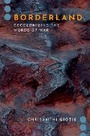
Borderland
Decolonizing the Words of War
Published on 21. November 2022
Book
Paperback/Softback
288 pages
978-0-19-756580-3 (ISBN)
Description
Every two seconds a person is displaced, caught in one of the more than 40 active conflicts around the world that show no sign of ending. Since 1994, there has been ongoing war in the Democratic Republic of Congo, which has uprooted millions of people and resulted in the deaths of millions more. In the West, we have entered a political era where our border policies are underpinned by unending wars. At this critical juncture, how can journalists, especially those engaged in foreign correspondence, tell these stories? How can they make connections across time and space, and across politics, economics, environments, and crucially, people? Given its colonial history, are these connections possible for the profession of foreign correspondence?
In Borderland, Chrisanthi Giotis argues that decolonization is possible and necessary for the development of a truly global, public sphere. New global narratives need to meaningfully include the voices, and knowledge, of those with the least power who are caught in resource-fuelled wars. Drawing on insights from postcolonial studies, international relations, development studies, and philosophy, which are brought to life through auto-ethnographic descriptions and analysis of "behind-the-scenes" events, Giotis introduces new reporting techniques for foreign correspondents. Borderland argues that decolonized reporting techniques will help journalists--and their audiences--move beyond the sociohistorical and political myopia that prevents us from communicating and understanding the reality of a complex world.
In Borderland, Chrisanthi Giotis argues that decolonization is possible and necessary for the development of a truly global, public sphere. New global narratives need to meaningfully include the voices, and knowledge, of those with the least power who are caught in resource-fuelled wars. Drawing on insights from postcolonial studies, international relations, development studies, and philosophy, which are brought to life through auto-ethnographic descriptions and analysis of "behind-the-scenes" events, Giotis introduces new reporting techniques for foreign correspondents. Borderland argues that decolonized reporting techniques will help journalists--and their audiences--move beyond the sociohistorical and political myopia that prevents us from communicating and understanding the reality of a complex world.
Reviews / Votes
It shouldn't but might come as a surprise to most western foreign correspondents that their journalism is rooted in journalism practices and stereotypes of the colonial era. They might also be surprised to know that every 2 seconds, a human being is displaced by one of the 40 conflicts currently raging: make that 41, with Russia's invasion of Ukraine in February 2022. With so many fronts of conflict and people fleeing them, is media fulfilling its role if it fails to ignite the sociological imagination, as Giotis frames it, needed to foster a global public sphere? Making sense of war means reconciling lived realities, to understand that human resilience has many forms, that commonly used representations can be lazy and inaccurate, that place does not always define circumstance. This is a book which will make you think and reconsider the power of words and journalism to effect change. * Monica Attard, Professor of Journalism, University of Technology Sydney * This is a beautiful and powerfully written book that makes a crucial contribution to the literature on foreign correspondence. A must-read for anyone seeking to learn more about international journalism. * Lindsay Palmer, author of The Fixers: Local News Workers and the Underground Labor of International Reporting * Borderland is a thoughtful, self-aware interrogation of the colonialism persistent in the foreign correspondent's work. In narrating and assessing her personal experience as a reporter, Giotis unravels some of the structural colonialism of her position, while questioning what changes might be needed in order to decolonize international news. * Anjan Sundaram, author of Stringer: A Reporter's Journey in the Congo and Bad News: Last Journalists in a Dictatorship * A real-world solution is the frame reflection interview technique. Adapted from qualitative research in the social sciences, this technique led the author to conduct background interviews, which prompted valuable revisions to her reporting framework. Engaging anecdotes and lessons for better journalistic practices enliven this book's dense prose and theoretical jargon. * Choice *More details
Series
Language
English
Place of publication
New York
United States
Target group
Professional and scholarly
Product notice
Paperback (trade)
Unsewn / adhesive bound
Dimensions
Height: 237 mm
Width: 156 mm
Thickness: 17 mm
Weight
431 gr
ISBN-13
978-0-19-756580-3 (9780197565803)
Copyright in bibliographic data and cover images is held by Nielsen Book Services Limited or by the publishers or by their respective licensors: all rights reserved.
Schweitzer Classification
Other editions
Additional editions
Book
12/2022
Oxford University Press Inc
€121.32
Shipment within 15-20 days
E-Book
09/2022
OUP eBook
€17.49
Available for download
E-Book
09/2022
OUP eBook
€17.49
Available for download
Person
Chrisanthi Giotis is a lecturer in journalism at the University of South Australia and a Senior Research Fellow at the Centre for Media Transition at the University of Technology Sydney. Her decolonial research focuses on connecting marginalized communities with working journalists and has been used by reporters in Australian newsrooms, including the ABC and the Australian Financial Review. A former journalist and deputy editor in Australia and the UK, she focused on government, Indigenous affairs, and social enterprise reporting, and led her own entrepreneurial journalism project that reported from 10 African countries.
Content
Acknowledgements
Introduction: A Global Polity
Part One: Words
Chapter 1: Long Dark Shadows in our Heads
Chapter 2: Writing with Interlocutors
Part Two: Worlds
Chapter 3: The Spacetime Behind the Storylines
Chapter 4: The Hero Correspondent and the Hidden Fixer
Chapter 5: Reporting the Local and Global of Borderlands
Chapter 6: Decolonizing and Reimagining
Conclusion: Flaming the Fanonian Spark
Notes
References
Index
Introduction: A Global Polity
Part One: Words
Chapter 1: Long Dark Shadows in our Heads
Chapter 2: Writing with Interlocutors
Part Two: Worlds
Chapter 3: The Spacetime Behind the Storylines
Chapter 4: The Hero Correspondent and the Hidden Fixer
Chapter 5: Reporting the Local and Global of Borderlands
Chapter 6: Decolonizing and Reimagining
Conclusion: Flaming the Fanonian Spark
Notes
References
Index