


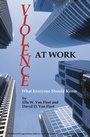
Violence at Work
What Everyone Should Know
Published on 23. April 2014
Book
Paperback/Softback
332 pages
978-1-62396-685-0 (ISBN)
Description
Every day we wake up, send our children to school, go to work, attend sports or other entertainment events, etc. Then suddenly the unexpected happens. This day will not end like yesterday and a thousand other days. Our lives are changed forever. Suddenly we realize how precious and fragile life is, and we question whether we could have done something to prevent this emergency event. We have become accustomed to violence, but we do not need to accept it. Our study of workplace violence, terrorism, and other forms of dysfunctional behavior associated with work suggests that both managers and non-managers would like to reduce the risks associated with violence at the workplace. The book is designed to help do just that. You can be underpaid, overworked, or get fired even though you are performing well. You can be a victim of sabotage or harassment even though-or sometimes because!-you are doing an outstanding job. You can be a victim on company premises of an angry, psychologically impaired, or chemically dependent manager, non-manager, former coworker, spouse, or even a stranger. The violent act you face may have stemmed from coworker interaction, worker-boss relations, a sick corporate environment, or even family problems.
Top executives and other managerial and non-managerial personnel clearly need to take steps toward reducing the threat of workplace violence. Numerous studies have been done regarding workplace problems, resulting in numerous books and professional journal articles. Some books, articles, workshops, seminars, and the like proffer general advice to managers. However, virtually all of that advice has come from psychologists, physicians, and lawyers. And very little counsel is provided to non-manager employees on dealing with problems that involve co-workers or managers. What has been lacking is advice that would reduce the threat of workplace violence and therefore (1) reduce stress, (2) enable organizations to develop potential competitive advantages in terms of their personnel and productivity, and (3) guide organizational personnel in their efforts to solve problems before they culminate in violent actions. This book fills that need. We believe it is the first to offer both general and specific information and advice from a managerial point of view. The authors have spent their careers intimately involved with the practice, teaching, and research on management and organizations.
Top executives and other managerial and non-managerial personnel clearly need to take steps toward reducing the threat of workplace violence. Numerous studies have been done regarding workplace problems, resulting in numerous books and professional journal articles. Some books, articles, workshops, seminars, and the like proffer general advice to managers. However, virtually all of that advice has come from psychologists, physicians, and lawyers. And very little counsel is provided to non-manager employees on dealing with problems that involve co-workers or managers. What has been lacking is advice that would reduce the threat of workplace violence and therefore (1) reduce stress, (2) enable organizations to develop potential competitive advantages in terms of their personnel and productivity, and (3) guide organizational personnel in their efforts to solve problems before they culminate in violent actions. This book fills that need. We believe it is the first to offer both general and specific information and advice from a managerial point of view. The authors have spent their careers intimately involved with the practice, teaching, and research on management and organizations.
More details
Language
English
Place of publication
Charlotte
United States
Publishing group
Emerald Publishing Inc
Target group
Professional and scholarly
College/higher education
Dimensions
Height: 234 mm
Width: 156 mm
Thickness: 18 mm
Weight
506 gr
ISBN-13
978-1-62396-685-0 (9781623966850)
Copyright in bibliographic data and cover images is held by Nielsen Book Services Limited or by the publishers or by their respective licensors: all rights reserved.
Schweitzer Classification
Other editions
Additional editions
E-Book
10/2014
1st Edition
Information Age Publishing
from
€62.33
Available for download
Persons
Ella W. Van Fleet, Professional Business Associates
David D. Van Fleet, Arizona State University, USA
David D. Van Fleet, Arizona State University, USA
Content
Preface.
Introduction.
Section I. Manager Behavior and Violence.
Chapter 1. Manager Behavior: How It Can Contribute to Violence.
Chapter 2. Bad Manager Behavior: What Managers Can Do.
Chapter 3. Bad Manager Behavior: What Nonmanagers Can Do.
Appendage I. Anecdotes of Bad Manager Behavior.
Section II. Nonmanager Behavior and Violence.
Chapter 4. Bad Nonmanager Behavior: How It Can Contribute to Violence.
Chapter 5. Bad Nonmanager Behavior: What Managers Can Do.
Chapter 6. Bad Nonmanager Behavior: What Nonmanagers Can Do.
Appendage II: Anecdotes of Bad Nonmanager Behavior.
Section III. Jobs/Workplaces and Violence.
Chapter 7. Bad Job/Workplace Factors That May Lead to Violence.
Chapter 8. Bad Jobs/Workplaces: What Managers Can Do.
Chapter 9. Bad Jobs/Workplaces: What Nonmanagers Can Do.
Appendage III: Anecdotal Descriptions of Bad Jobs/Workplaces.
Section IV. Now What?
Chapter 10. What Do We Know.
Chapter 11. Option 4: Moving On.
Exercises.
Appendix: Psychopathy Indicators.
Bibliography.
About the Authors.
Introduction.
Section I. Manager Behavior and Violence.
Chapter 1. Manager Behavior: How It Can Contribute to Violence.
Chapter 2. Bad Manager Behavior: What Managers Can Do.
Chapter 3. Bad Manager Behavior: What Nonmanagers Can Do.
Appendage I. Anecdotes of Bad Manager Behavior.
Section II. Nonmanager Behavior and Violence.
Chapter 4. Bad Nonmanager Behavior: How It Can Contribute to Violence.
Chapter 5. Bad Nonmanager Behavior: What Managers Can Do.
Chapter 6. Bad Nonmanager Behavior: What Nonmanagers Can Do.
Appendage II: Anecdotes of Bad Nonmanager Behavior.
Section III. Jobs/Workplaces and Violence.
Chapter 7. Bad Job/Workplace Factors That May Lead to Violence.
Chapter 8. Bad Jobs/Workplaces: What Managers Can Do.
Chapter 9. Bad Jobs/Workplaces: What Nonmanagers Can Do.
Appendage III: Anecdotal Descriptions of Bad Jobs/Workplaces.
Section IV. Now What?
Chapter 10. What Do We Know.
Chapter 11. Option 4: Moving On.
Exercises.
Appendix: Psychopathy Indicators.
Bibliography.
About the Authors.