

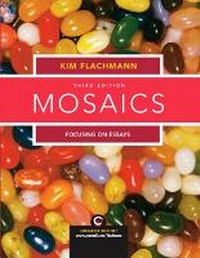
Mosaics
Focusing on Essays
3rd Edition
Published on 22. March 2004
Book
Paperback/Softback
864 pages
978-0-13-185019-4 (ISBN)
Description
For Developmental English, Basic Skills or Remedial Writing courses, or low-level Freshman Composition.
Students study their own writing! MOSAICS is a three-book writing series that focuses on students learning and studying their own writing as they progress. The essay level teaches the processes and skills common to all good academic writing and includes both professional and student models, as well as a multitude of exercises and activities, which help students apply the techniques and skills to their own writing.
Students study their own writing! MOSAICS is a three-book writing series that focuses on students learning and studying their own writing as they progress. The essay level teaches the processes and skills common to all good academic writing and includes both professional and student models, as well as a multitude of exercises and activities, which help students apply the techniques and skills to their own writing.
More details
Edition
3rd edition
Language
English
Place of publication
United States
Publishing group
Pearson Education (US)
Target group
Professional and scholarly
Dimensions
Height: 232 mm
Width: 191 mm
Weight
1288 gr
ISBN-13
978-0-13-185019-4 (9780131850194)
Copyright in bibliographic data and cover images is held by Nielsen Book Services Limited or by the publishers or by their respective licensors: all rights reserved.
Schweitzer Classification
Other editions
Content
I. THE WRITING PROCESS.
1. Writing in College.
2. Prewriting.
3. Writing a Thesis Statement.
4. Developing Body Paragraphs.
5. Organizing Your Essay.
6. Writing the Introduction, Conclusion, and Title.
7. Revising.
8. Editing.
II. WRITING EFFECTIVE ESSAYS.
9. Describing.
10. Narrating.
11. Illustrating.
12. Analyzing a Process.
13. Comparing and Contrasting.
14. Dividing and Classifying.
15. Defining.
16. Analyzing Causes and Effects.
17. Arguing.
III. THE ESSAY WITH SOURCES.
18. Recognizing an Essay with Sources.
19. Avoiding Plagiarism.
20. Finding Sources.
21. How to Write an Essay with Sources.
22. Service Learning.
23. Revising and Editing an Essay with Sources.
24. Writing Workshop.
IV. FROM READING TO WRITING.
25. Describing.
Mario Suarez, El Hoyo.
Linda Hogan, Dwellings.
26. Narrating.
Lynda Barry, The Sanctuary of School.
Stan Higgins, Writer's Retreat.
27. Illustrating.
Mike Rose, I Just Wanna Be Average.
Chana Schoenberger,Getting to Know About You and Me.
28. Analyzing a Process.
Roger Flax, Don't be Cruel.
David Levy, Why We Have a Moon.
29. Comparing and Contrasting.
Stephanie Coontz, The American Family.
Tony Cohan, Between Worlds.
30. Dividing and Classifying.
Bernice Reagon, Black Music in Our Hands.
Marion Winik, What Are Friends For?
31. Defining.
Wang Ping, Ways to Ai.
Michael Norlen, Healing Myself with the Power of Work.
32. Analyzing Causes and Effects.
Michael Alvear, A Family Dilemma: To Scout or Not to Scout?
Stacey Colino, Happiness is Catching: Why Emotions are Contagious.
33. Arguing.
Dave Grossman, We Are Training Our Kids to Kill.
Richard Willard, Anti-Loitering Laws can Reduce Gang Violence.
David Cole, Anti-Loitering Laws Are Ineffective and Biased.
V. THE HANDBOOK.
Introduction: Parts of Speech, Phrases, and Clauses.
Unit One: Sentences
34. Subjects and Verbs.
35. Fragments.
36. Fused Sentences and Comma Splices.
Unit Tests.
Unit Two: Verbs
37. Regular and Irregular Verbs.
38. Verb Tense.
39. Subject-Verb Agreement.
40. More on Verbs.
Unit Tests.
Unit Three: Pronouns
41. Pronoun Problems.
42. Pronoun Reference and Point of View.
43. Pronoun Agreement.
Unit Tests.
Unit Four: Modifiers
44. Adjectives.
45. Adverbs.
46. Modifier Errors.
Unit Tests.
Unit Five: Punctuation
47. End Punctuation.
48. Commas.
49. Apostrophes.
50. Quotation Marks.
51. Other Punctuation Marks.
Unit Tests.
Unit Six: Mechanics
52. Capitalization.
53. Abbreviations and Numbers.
Unit Tests.
Unit Seven: Effective Sentences
54. Varying Sentence Structure.
55. Parallelism.
56. Combining Sentences.
Unit Tests.
Unit Eight: Choosing the Right Word.
57. Standard and Nonstandard English.
58. Easily Confused Words.
59. Spelling.
Unit Tests.
Appendices.
Index.
1. Writing in College.
2. Prewriting.
3. Writing a Thesis Statement.
4. Developing Body Paragraphs.
5. Organizing Your Essay.
6. Writing the Introduction, Conclusion, and Title.
7. Revising.
8. Editing.
II. WRITING EFFECTIVE ESSAYS.
9. Describing.
10. Narrating.
11. Illustrating.
12. Analyzing a Process.
13. Comparing and Contrasting.
14. Dividing and Classifying.
15. Defining.
16. Analyzing Causes and Effects.
17. Arguing.
III. THE ESSAY WITH SOURCES.
18. Recognizing an Essay with Sources.
19. Avoiding Plagiarism.
20. Finding Sources.
21. How to Write an Essay with Sources.
22. Service Learning.
23. Revising and Editing an Essay with Sources.
24. Writing Workshop.
IV. FROM READING TO WRITING.
25. Describing.
Mario Suarez, El Hoyo.
Linda Hogan, Dwellings.
26. Narrating.
Lynda Barry, The Sanctuary of School.
Stan Higgins, Writer's Retreat.
27. Illustrating.
Mike Rose, I Just Wanna Be Average.
Chana Schoenberger,Getting to Know About You and Me.
28. Analyzing a Process.
Roger Flax, Don't be Cruel.
David Levy, Why We Have a Moon.
29. Comparing and Contrasting.
Stephanie Coontz, The American Family.
Tony Cohan, Between Worlds.
30. Dividing and Classifying.
Bernice Reagon, Black Music in Our Hands.
Marion Winik, What Are Friends For?
31. Defining.
Wang Ping, Ways to Ai.
Michael Norlen, Healing Myself with the Power of Work.
32. Analyzing Causes and Effects.
Michael Alvear, A Family Dilemma: To Scout or Not to Scout?
Stacey Colino, Happiness is Catching: Why Emotions are Contagious.
33. Arguing.
Dave Grossman, We Are Training Our Kids to Kill.
Richard Willard, Anti-Loitering Laws can Reduce Gang Violence.
David Cole, Anti-Loitering Laws Are Ineffective and Biased.
V. THE HANDBOOK.
Introduction: Parts of Speech, Phrases, and Clauses.
Unit One: Sentences
34. Subjects and Verbs.
35. Fragments.
36. Fused Sentences and Comma Splices.
Unit Tests.
Unit Two: Verbs
37. Regular and Irregular Verbs.
38. Verb Tense.
39. Subject-Verb Agreement.
40. More on Verbs.
Unit Tests.
Unit Three: Pronouns
41. Pronoun Problems.
42. Pronoun Reference and Point of View.
43. Pronoun Agreement.
Unit Tests.
Unit Four: Modifiers
44. Adjectives.
45. Adverbs.
46. Modifier Errors.
Unit Tests.
Unit Five: Punctuation
47. End Punctuation.
48. Commas.
49. Apostrophes.
50. Quotation Marks.
51. Other Punctuation Marks.
Unit Tests.
Unit Six: Mechanics
52. Capitalization.
53. Abbreviations and Numbers.
Unit Tests.
Unit Seven: Effective Sentences
54. Varying Sentence Structure.
55. Parallelism.
56. Combining Sentences.
Unit Tests.
Unit Eight: Choosing the Right Word.
57. Standard and Nonstandard English.
58. Easily Confused Words.
59. Spelling.
Unit Tests.
Appendices.
Index.