

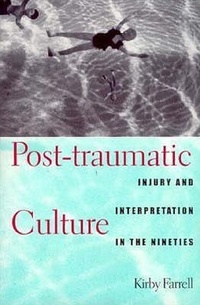
Post-traumatic Culture
Injury and Interpretation in the Nineties
Published on 24. November 1998
Book
Paperback/Softback
440 pages
978-0-8018-5787-4 (ISBN)
Description
According to Kirby Farrell, the concept of trauma has shaped some of the central narratives of the 1990s-from the war stories of Vietnam vets to the video farewells of Heaven's Gate cult members, from apocalyptic sci-fi movies to Ronald Reagan's memoir, Where's the Rest of Me? In Post-traumatic Culture, Farrell explores the surprising uses of trauma as both an enabling fiction and an explanatory tool during periods of overwhelming cultural change. Farrell's investigation begins in late Victorian England, when physicians invented the clinical concept of "traumatic neurosis" for an era that routinely categorized modern life as sick, degenerate, and stressful. He sees similar developments at the end of the twentieth century as the Vietnam war and feminism returned the concept to prominence as "post-traumatic stress syndrome." Seeking to understand the psychological dislocation associated with these two periods, Farrell analyzes conflicts produced by dramatic social and economic changes and suddenly expanded horizons. He locates parallels between the cultural fantasies of the 1890's in novels and stories by Arthur Conan Doyle, Rider Haggard, H. G.
Wells, Bram Stoker, and Oscar Wilde, and novels and films of the 1990's that explore such issues as child sexual abuse, domestic violence, unemployment, racism, and apocalyptic rage. In their dependence on late-Victorian models, the cultural narratives of 1990s America imply a crisis of "storylessness" deeply implicated in the sense of injury that haunts the close of the twentieth century.
Wells, Bram Stoker, and Oscar Wilde, and novels and films of the 1990's that explore such issues as child sexual abuse, domestic violence, unemployment, racism, and apocalyptic rage. In their dependence on late-Victorian models, the cultural narratives of 1990s America imply a crisis of "storylessness" deeply implicated in the sense of injury that haunts the close of the twentieth century.
More details
Language
English
Place of publication
Baltimore, MD
United States
Target group
College/higher education
Professional and scholarly
Product notice
Paperback (trade)
Dimensions
Height: 229 mm
Width: 152 mm
Thickness: 29 mm
Weight
640 gr
ISBN-13
978-0-8018-5787-4 (9780801857874)
DOI
10.56021/9780801857867
Copyright in bibliographic data and cover images is held by Nielsen Book Services Limited or by the publishers or by their respective licensors: all rights reserved.
Schweitzer Classification
Other editions
Additional editions

Book
11/1998
Johns Hopkins University Press
€66.51
Article not available for order
Person
Kirby Farrell is professor of English at the University of Massachusetts, Amherst. His books include Snuff, The American Satan, and Play-Death and Heroism in Shakespeare.
Content
Preface
Acknowledgements
Introduction: Trauma as Interpretation of Injury
Part I: The Sorrows of the Gay Nineties
Chapter 1. Traumatic Heroism
Chapter 2. Empty Treasure: Sherlock Holmes in Shock
Chapter 3. Post-Traumatic Mourning: Rider Haggard in the Underworld
Chapter 4. Traumatic Prophecy: H.G.Wells at the End of Time
Chapter 5. Post-Traumatic Style: Oscar Wilde in Prison
Part II: Trauma as Story in the 1990s
Chapter 6. Thinking Through Others: Prosthetic Fantasy and Trauma
Chapter 7. Abuse as a Prosthetic System
Chapter 8. Traumatic Triumph in a Black Childhood
Chapter 9. Traumatic Economies in Schindler's List
Chapter 10. Traumatic Romance / Romantic Trauma
Chapter 11. Berserk in Babylon
Chapter 12. Amok at the Apocalypse
Epilogue
Notes
Index
Acknowledgements
Introduction: Trauma as Interpretation of Injury
Part I: The Sorrows of the Gay Nineties
Chapter 1. Traumatic Heroism
Chapter 2. Empty Treasure: Sherlock Holmes in Shock
Chapter 3. Post-Traumatic Mourning: Rider Haggard in the Underworld
Chapter 4. Traumatic Prophecy: H.G.Wells at the End of Time
Chapter 5. Post-Traumatic Style: Oscar Wilde in Prison
Part II: Trauma as Story in the 1990s
Chapter 6. Thinking Through Others: Prosthetic Fantasy and Trauma
Chapter 7. Abuse as a Prosthetic System
Chapter 8. Traumatic Triumph in a Black Childhood
Chapter 9. Traumatic Economies in Schindler's List
Chapter 10. Traumatic Romance / Romantic Trauma
Chapter 11. Berserk in Babylon
Chapter 12. Amok at the Apocalypse
Epilogue
Notes
Index