

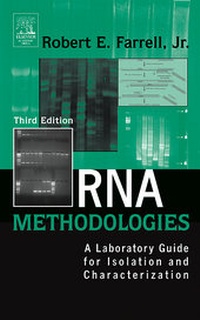
RNA Methodologies
A Laboratory Guide for Isolation and Characterization
3rd Edition
Published on 6. May 2005
Book
Hardback
688 pages
978-0-12-249696-7 (ISBN)
Description
This laboratory guide represents a growing collection of tried, tested and optimized laboratory protocols for the isolation and characterization of eukaryotic RNA, with lesser emphasis on the characterization of prokaryotic transcripts. Collectively the chapters work together to embellish the RNA story, each presenting clear take-home lessons, liberally incorporating flow charts, tables and graphs to facilitate learning and assist in the planning and implementation phases of a project.
RNA Methodologies, 3rd edition includes approximately 30% new material, including chapters on the more recent technologies of RNA interference including: RNAi; Microarrays; Bioinformatics. It also includes new sections on: new and improved RT-PCR techniques; innovative 5' and 3' RACE techniques; subtractive PCR methods; methods for improving cDNA synthesis.
RNA Methodologies, 3rd edition includes approximately 30% new material, including chapters on the more recent technologies of RNA interference including: RNAi; Microarrays; Bioinformatics. It also includes new sections on: new and improved RT-PCR techniques; innovative 5' and 3' RACE techniques; subtractive PCR methods; methods for improving cDNA synthesis.
Reviews / Votes
Praise for the third edition"This third edition of RNA Methodologies is an updated version of a laboratory guide edited for the first time in 1993; it represents an exhaustive collection of tried, tested, and optimized protocols for isolation and chracterization of RNA. The third edition of RNA Methodologies is a well-documented guide for any researcher who has to manage RNA studies. Each chapter of this book provides a rationale to help in the decision-making process...The inclusion of troubleshooting hints and annotations based on personal experience are provided to improve the method(s). This laboratory guide offers protocols on traditional and new technologies, with a focus on how to use the expedient technique for achieving an experimental goal in the study of gene expression." --Dr. Patrick Pagesy at INSERM for HEMOGLOBIN
More details
Edition
3rd edition
Language
English
Place of publication
San Diego
United States
Publishing group
Elsevier Science Publishing Co Inc
Target group
Professional and scholarly
Researchers, graduate students and lab technicians in the fields of molecular biology, cell biology, and biochemical genetics.
Edition type
New edition
Dimensions
Height: 229 mm
Width: 152 mm
Weight
1070 gr
ISBN-13
978-0-12-249696-7 (9780122496967)
Copyright in bibliographic data and cover images is held by Nielsen Book Services Limited or by the publishers or by their respective licensors: all rights reserved.
Schweitzer Classification
Other editions
New editions
Book
10/2009
4th Edition
Academic Press
€116.37
Article exhausted; check for reprint
Previous edition

Book
09/1998
2nd Edition
Academic Press
€60.65
Article exhausted; check for reprint
Person
Dr. Robert Farrell is a bench-current scientist who has 35 years of experience working with RNA in the study of transcriptional and posttranscriptional regulation of gene expression in a variety of model systems. He is also experienced in animal cell culture methods. Prior to joining the faculty at Penn State University, he operated a biotech education and service firm, winning the 1998 Small Business Contractor of the Year award from the U.S. Department of Agriculture. He is the recipient of campus- and college-wide awards for excellence in teaching, and has extensive experience running RNA and specialized biotechnology hands-on laboratory training programs all over the world. He often serves as a consultant within the pharmaceutical and biotech industries. Dr. Farrell received his Ph.D. and M.S. degrees from The Catholic University of America and his B.S. in Biology from Providence College. Dr. Farrell currently serves as the campus academic officer at Penn State York.
Content
Chapter 1: RNA and the Cellular Biochemistry Revisited
Chapter 2: Transcription and the Organization of Eukaryotic Genes
Chapter 3: Messenger RNA
Chapter 4: Resilient Ribonucleases
Chapter 5: RNA Isolation Strategies
Chapter 6: The Truth About Tissues
Chapter 7: Isolation of Polyadenylated RNA
Chapter 8: Quality Control for RNA Preparations
Chapter 9: Dot Blot Analysis
Chapter 10: Electrophoresis of RNA
Chapter 11: Photodocumentation and Image Analysis
Chapter 12: Northern Analysis
Chapter 13: Nucleic Acid Probe Technology
Chapter 14: Practical Nucleic Acid Hybridization
Chapter 15: Principles of Detection
Chapter 16: Quantification of Specific mRNAs by Nuclease Protection
Chapter 17: Analysis of Nuclear RNA
Chapter 18: cDNA Synthesis
Chapter 19: RT-PCR
Chapter 20: Quantitative PCR Techniques
Chapter 21: Transcript Subtraction Methods
Chapter 22: mRNA Differential Display
Chapter 23: High-Throughput Analysis of Gene Expression
Chapter 24: RNA Interference: Targeted Gene Silencing
Chapter 25: Genomes, Transcriptomes, Proteomes, and Bioinformatics
Chapter 26: An RNA Paradigm
Epilogue: A Few Pearls of Wisdom
Appendix A: Maintaining Complete and Accurate Records
Appendix B: Useful Stock Solutions for the Molecular Biologist
Appendix C: Phenol Preparation
Appendix D: Disposal of Ethidium Bromide and SYBR Green Solutions
Appendix E: DNase I Removal of DNA from an RNA Sample
Appendix F: RNase Incubation to Remove RNA from a DNA Sample
Appendix G: Deionization of Formamide, Formaldehyde, and Glyoxal
Appendix H: Silanizing Centrifuge Tubes and Glassware
Appendix I: Centrifugation as a Mainstream Tool for the Molecular Biologist
Appendix J: Trypsinization Protocol for Anchorage-Dependent Cells
Appendix K: Isolation of High-Molecular-Weight DNA by Salting-Out
Appendix L: RNA Isolation from Plant Tissue
Appendix M: Electrophoresis: Principles, Parameters, and Safety
Appendix N: Polyacrylamide Gel Electrophoresis
Appendix O: Selected Suppliers of Equipment, Reagents, and Services
Appendix P: Useful SI Units
Appendix Q: Common Abbreviations
Appendix R: Trademark Citations
Glossary
Index
Chapter 2: Transcription and the Organization of Eukaryotic Genes
Chapter 3: Messenger RNA
Chapter 4: Resilient Ribonucleases
Chapter 5: RNA Isolation Strategies
Chapter 6: The Truth About Tissues
Chapter 7: Isolation of Polyadenylated RNA
Chapter 8: Quality Control for RNA Preparations
Chapter 9: Dot Blot Analysis
Chapter 10: Electrophoresis of RNA
Chapter 11: Photodocumentation and Image Analysis
Chapter 12: Northern Analysis
Chapter 13: Nucleic Acid Probe Technology
Chapter 14: Practical Nucleic Acid Hybridization
Chapter 15: Principles of Detection
Chapter 16: Quantification of Specific mRNAs by Nuclease Protection
Chapter 17: Analysis of Nuclear RNA
Chapter 18: cDNA Synthesis
Chapter 19: RT-PCR
Chapter 20: Quantitative PCR Techniques
Chapter 21: Transcript Subtraction Methods
Chapter 22: mRNA Differential Display
Chapter 23: High-Throughput Analysis of Gene Expression
Chapter 24: RNA Interference: Targeted Gene Silencing
Chapter 25: Genomes, Transcriptomes, Proteomes, and Bioinformatics
Chapter 26: An RNA Paradigm
Epilogue: A Few Pearls of Wisdom
Appendix A: Maintaining Complete and Accurate Records
Appendix B: Useful Stock Solutions for the Molecular Biologist
Appendix C: Phenol Preparation
Appendix D: Disposal of Ethidium Bromide and SYBR Green Solutions
Appendix E: DNase I Removal of DNA from an RNA Sample
Appendix F: RNase Incubation to Remove RNA from a DNA Sample
Appendix G: Deionization of Formamide, Formaldehyde, and Glyoxal
Appendix H: Silanizing Centrifuge Tubes and Glassware
Appendix I: Centrifugation as a Mainstream Tool for the Molecular Biologist
Appendix J: Trypsinization Protocol for Anchorage-Dependent Cells
Appendix K: Isolation of High-Molecular-Weight DNA by Salting-Out
Appendix L: RNA Isolation from Plant Tissue
Appendix M: Electrophoresis: Principles, Parameters, and Safety
Appendix N: Polyacrylamide Gel Electrophoresis
Appendix O: Selected Suppliers of Equipment, Reagents, and Services
Appendix P: Useful SI Units
Appendix Q: Common Abbreviations
Appendix R: Trademark Citations
Glossary
Index