

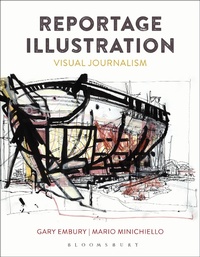
Reportage Illustration
Visual Journalism
Published on 11. January 2018
Book
Paperback/Softback
176 pages
978-1-4742-2459-8 (ISBN)
Description
The power of reportage drawing is in the immediacy of the images that are created and the feeling of the illustrator's presence on location. Comparable in some ways to photojournalism, reportage illustrators are acting as visual journalists, proactively creating narrative work about issues and subjects, translating what they witness into handmade imagery. There is evidence that illustrations connect to people in powerful ways whether they are drawings created while embedded with troops in Afghanistan, documenting during a courtroom trial or recreating the energy of the crowd at a rock concert. This area of applied illustration also provides career opportunities for students and takes them out of the classroom and into different environments and situations. With practical information about tools, techniques and coping in various situations as well as inspirational interviews and advice from reportage artists working in the field, this book will fill a gap in this growing market.
Reviews / Votes
Whether using sketchbook and pencil or adding online animation and interactive elements, the possibilities will excite illustrators who can work quickly in public and have something to say. * Communication Arts Magazine * Offers practical advice on the nitty-gritty of becoming a professional ... [The authors have] pulled together a great bunch of artists to feature in the book ... The book is excellent in encouraging readers to continue to experiment and explore, even when they may have found their own hard-won visual language ... This is a book that challenges us to confront what we are saying in our work and how we are saying it. * Urban Sketchers * Interest in reportage keeps growing, and this book is a great primer on the subject ... Authors Gary Embury and Mario Minichiello are practitioners and educators ... and they bring clear information and an enthusiasm for their subject which is infectious ... The book provides plenty of examples of riveting work and a strong argument for the power of illustration as a witness and recorder of events through first hand observation. * Association of Illustrators Blog *More details
Language
English
Place of publication
London
United Kingdom
Publishing group
Bloomsbury Publishing PLC
Target group
College/higher education
Illustrations
200 colour illus
Dimensions
Height: 270 mm
Width: 210 mm
Thickness: 15 mm
Weight
670 gr
ISBN-13
978-1-4742-2459-8 (9781474224598)
Copyright in bibliographic data and cover images is held by Nielsen Book Services Limited or by the publishers or by their respective licensors: all rights reserved.
Schweitzer Classification
Other editions
Additional editions
E-Book
01/2018
1st Edition
Bloomsbury Visual Arts
€32.99
Available for download
E-Book
01/2018
1st Edition
Bloomsbury Visual Arts
€32.99
Available for download
Persons
Gary Embury is a senior lecturer at the University of the West of England, Bristol and an illustrator with over 20 years of experience. Clients include The Guardian, The Daily Telegraph, Radio Times, Aardman Animations, BBC, BritishTelecom, Barclays Bank, The Economist, New Scientist, The Sunday Times Review, Sunday Times Magazine, Microsoft, Penguin Books, Macmillan, and many other advertising, editorial and publishing clients. Awarded Gold, in Images 30, The Best of British Contemporary Illustration 2006 and took part in a discussion on Radio 4's Front Row program hosted by Kirsty Lang on the future of illustration in the digital age. He is the editor of which showcases and initiates projects in the area of drawn reportage.
Mario Minichiello has held positions as a Professor at Newcastle University, Australia, Birmingham Children's Hospital, Birmingham Institute of Art and Design and Loughborough University UK. He is also the Co-Director of FASTlab and the author of several books and papers. He is a practising Artist and Academic based in Cambridge UK.
Mario Minichiello has held positions as a Professor at Newcastle University, Australia, Birmingham Children's Hospital, Birmingham Institute of Art and Design and Loughborough University UK. He is also the Co-Director of FASTlab and the author of several books and papers. He is a practising Artist and Academic based in Cambridge UK.
Content
Chapter 1: What is Reportage Drawing
Background
The rise of reportage and the influence of the war artist
The camera and the eye
Case study: George Butler/Syria
Interview: Jill Gibbon
Chapter 2: Materials, Media and Methods
Choosing the right materials
Technology and digital media
Case Study: Jenny Soep/ Capturing a live event
Exercise: Drawing a live event
Box: Checklist of materials
Interview: Julia Midgley
Interview: Tim Vyner
Chapter 3: Developing a Visual Language
Individual approaches
Case Study: Jedidiah Dore/New York City
Case Study: Sue Coe/Elephant Nature Park
Exercise: Developing your visual language
Interview: First Hand Reportage Collective
Interview: Olivier Kugler
Chapter 4: On Location
Beginning a project
Case Study: Gary Embury/ The Bristol Bike Project
Interview: Lucinda Rogers
Interview: Jenny Soep
Chapter 5: Capturing a sense of place
Case Study: Veronica Lawler/Mystic Seaport
Checklist
Tips and techniques: On location
Case Study: Luisa Crosbie/ Her Majesty's Theatre, London
Case Study: Anne Howeson/ Drawing and Memory
Interview: Bo Soremsky
Chapter 6: Creating a Narrative
Developing the story
Story selection and developing content
Tips and techniques
Outlining your story
Interview: Louis Netter
Interview: Chloe Regan
Exercise: Creating a story using a fixed viewpoint
Chapter 7: Becoming a Visual Journalist
Creating a digital portfolio
Tips in preparing your portfolio
Editing your portfolio
The world of work
Finding work
Speculative work
Working through a gallery
Direct calling and arranging interviews
Responsibilities
Human ethics and professional practice
Tips and checklists
Case Study: Mario Minichiello/Weekend Financial Times
Exercise: Developing a reportage illustration brief
Conclusion
The future of reportage
Interview: Martin Harrison
Contacts
Credits
Index
Background
The rise of reportage and the influence of the war artist
The camera and the eye
Case study: George Butler/Syria
Interview: Jill Gibbon
Chapter 2: Materials, Media and Methods
Choosing the right materials
Technology and digital media
Case Study: Jenny Soep/ Capturing a live event
Exercise: Drawing a live event
Box: Checklist of materials
Interview: Julia Midgley
Interview: Tim Vyner
Chapter 3: Developing a Visual Language
Individual approaches
Case Study: Jedidiah Dore/New York City
Case Study: Sue Coe/Elephant Nature Park
Exercise: Developing your visual language
Interview: First Hand Reportage Collective
Interview: Olivier Kugler
Chapter 4: On Location
Beginning a project
Case Study: Gary Embury/ The Bristol Bike Project
Interview: Lucinda Rogers
Interview: Jenny Soep
Chapter 5: Capturing a sense of place
Case Study: Veronica Lawler/Mystic Seaport
Checklist
Tips and techniques: On location
Case Study: Luisa Crosbie/ Her Majesty's Theatre, London
Case Study: Anne Howeson/ Drawing and Memory
Interview: Bo Soremsky
Chapter 6: Creating a Narrative
Developing the story
Story selection and developing content
Tips and techniques
Outlining your story
Interview: Louis Netter
Interview: Chloe Regan
Exercise: Creating a story using a fixed viewpoint
Chapter 7: Becoming a Visual Journalist
Creating a digital portfolio
Tips in preparing your portfolio
Editing your portfolio
The world of work
Finding work
Speculative work
Working through a gallery
Direct calling and arranging interviews
Responsibilities
Human ethics and professional practice
Tips and checklists
Case Study: Mario Minichiello/Weekend Financial Times
Exercise: Developing a reportage illustration brief
Conclusion
The future of reportage
Interview: Martin Harrison
Contacts
Credits
Index