

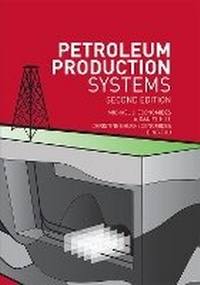
Petroleum Production Systems
2nd Edition
Will be published approx. on 17. October 2012
Book
Hardback
752 pages
978-0-13-703158-0 (ISBN)
Description
The Definitive Guide to Petroleum Production Systems-Now Fully Updated With the Industry's Most Valuable New Techniques
Petroleum Production Systems, Second Edition, is the comprehensive source for clear and fundamental methods for about modern petroleum production engineering practice. Written by four leading experts, it thoroughly introduces modern principles of petroleum production systems design and operation, fully considering the combined behavior of reservoirs, surface equipment, pipeline systems, and storage facilities. Long considered the definitive text for production engineers, this edition adds extensive new coverage of hydraulic fracturing, with emphasis on well productivity optimization. It presents new chapters on horizontal wells and well performance evaluation, including production data analysis and sand management.
This edition features
A structured approach spanning classical production engineering, well testing, production logging, artificial lift, and matrix and hydraulic fracture stimulation
Revisions throughout to reflect recent innovations and extensive feedback from both students and colleagues
Detailed coverage of modern best practices and their rationales
Unconventional oil and gas well design
Many new examples and problems
Detailed data sets for three characteristic reservoir types: an undersaturated oil reservoir, a saturated oil reservoir, and a gas reservoir
Petroleum Production Systems, Second Edition, is the comprehensive source for clear and fundamental methods for about modern petroleum production engineering practice. Written by four leading experts, it thoroughly introduces modern principles of petroleum production systems design and operation, fully considering the combined behavior of reservoirs, surface equipment, pipeline systems, and storage facilities. Long considered the definitive text for production engineers, this edition adds extensive new coverage of hydraulic fracturing, with emphasis on well productivity optimization. It presents new chapters on horizontal wells and well performance evaluation, including production data analysis and sand management.
This edition features
A structured approach spanning classical production engineering, well testing, production logging, artificial lift, and matrix and hydraulic fracture stimulation
Revisions throughout to reflect recent innovations and extensive feedback from both students and colleagues
Detailed coverage of modern best practices and their rationales
Unconventional oil and gas well design
Many new examples and problems
Detailed data sets for three characteristic reservoir types: an undersaturated oil reservoir, a saturated oil reservoir, and a gas reservoir
More details
Other editions
Additional editions
Michael Economides | A. Daniel Hill | Christine Ehlig-Economides
Petroleum Production Systems
E-Book
09/2012
2nd Edition
Pearson
€152.99
Available for download
Michael J. Economides | A. Daniel Hill | Christine Ehlig-Economides
Petroleum Production Systems
E-Book
09/2012
2nd Edition
Pearson
from
€95.99
Available for download
Previous edition
Michael J. Economides | Daniel A. Hill | Christine Ehlig-Economides
Petroleum Production Systems
Book
01/1994
Prentice Hall
€106.45
Article exhausted; check for reprint
Persons
Michael J. Economides is professor of engineering at the University of Houston. His work focuses on optimizing hydrocarbon production from reservoir to market. A leading energy analyst, he is editor-in-chief of Energy Tribune and the Journal of Natural Gas Science and Engineering.
A. Daniel Hill is professor in the Harold Vance Department of Petroleum Engineering at Texas A&M University, holds the R.L. Whiting endowed chair, and is a Distinguished Member of the Society of Petroleum Engineers (SPE).
Christine Ehlig-Economides is professor in the Harold Vance Department of Petroleum Engineering at Texas A&M University and holds the A.B. Stevens endowed chair. She is a member of the U.S. National Academy of Engineering.
Ding Zhu, is associate professor in the Harold Vance Department of Petroleum Engineering at Texas A&M University, holds the W.D. Von Gonten Faculty Fellowship, and is a Distinguished Member of the Society of Petroleum Engineers (SPE).
A. Daniel Hill is professor in the Harold Vance Department of Petroleum Engineering at Texas A&M University, holds the R.L. Whiting endowed chair, and is a Distinguished Member of the Society of Petroleum Engineers (SPE).
Christine Ehlig-Economides is professor in the Harold Vance Department of Petroleum Engineering at Texas A&M University and holds the A.B. Stevens endowed chair. She is a member of the U.S. National Academy of Engineering.
Ding Zhu, is associate professor in the Harold Vance Department of Petroleum Engineering at Texas A&M University, holds the W.D. Von Gonten Faculty Fellowship, and is a Distinguished Member of the Society of Petroleum Engineers (SPE).
Content
Foreword
Preface
About the Authors
Chapter 1: The Role of Petroleum Production Engineering
Chapter 2: Production from Undersaturated Oil Reservoirs
Chapter 3: Production from Two-Phase Reservoirs
Chapter 4: Production from Natural Gas Reservoirs
Chapter 5: Production from Horizontal Wells
Chapter 6: The Near-Wellbore Condition and Damage Characterization; Skin Effects
Chapter 7: Wellbore Flow Performance
Chapter 8: Flow in Horizontal Wellbores, Wellheads, and Gathering Systems
Chapter 9: Well Deliverability
Chapter 10: Forecast of Well Production
Chapter 11: Gas Lift
Chapter 12: Pump-Assisted Lift
Chapter 13: Well Performance Evaluation
Chapter 14: Matrix Acidizing: Acid/Rock Interactions
Chapter 15: Sandstone Acidizing Design
Chapter 16: Carbonate Acidizing Design
Chapter 17: Hydraulic Fracturing for Well Stimulation
Chapter 18: The Design and Execution of Hydraulic Fracturing Treatments
Chapter 19: Sand Management
Appendix A:
Appendix B:
Appendix C:
Index
Preface
About the Authors
Chapter 1: The Role of Petroleum Production Engineering
Chapter 2: Production from Undersaturated Oil Reservoirs
Chapter 3: Production from Two-Phase Reservoirs
Chapter 4: Production from Natural Gas Reservoirs
Chapter 5: Production from Horizontal Wells
Chapter 6: The Near-Wellbore Condition and Damage Characterization; Skin Effects
Chapter 7: Wellbore Flow Performance
Chapter 8: Flow in Horizontal Wellbores, Wellheads, and Gathering Systems
Chapter 9: Well Deliverability
Chapter 10: Forecast of Well Production
Chapter 11: Gas Lift
Chapter 12: Pump-Assisted Lift
Chapter 13: Well Performance Evaluation
Chapter 14: Matrix Acidizing: Acid/Rock Interactions
Chapter 15: Sandstone Acidizing Design
Chapter 16: Carbonate Acidizing Design
Chapter 17: Hydraulic Fracturing for Well Stimulation
Chapter 18: The Design and Execution of Hydraulic Fracturing Treatments
Chapter 19: Sand Management
Appendix A:
Appendix B:
Appendix C:
Index