

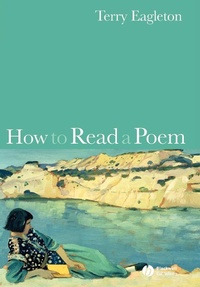
How to Read a Poem
1st Edition
Published on 20. September 2006
Book
Paperback/Softback
192 pages
978-1-4051-5141-2 (ISBN)
Description
Lucid, entertaining and full of insight, How To Read A Poem is designed to banish the intimidation that too often attends the subject of poetry, and in doing so to bring it into the personal possession of the students and the general reader.
Offers a detailed examination of poetic form and its relation to content.
Takes a wide range of poems from the Renaissance to the present day and submits them to brilliantly illuminating closes analysis.
Discusses the work of major poets, including John Milton, Alexander Pope, John Keats, Christina Rossetti, Emily Dickinson, W.B. Yeats, Robert Frost, W.H.Auden, Seamus Heaney, Derek Mahon, and many more.
Includes a helpful glossary of poetic terms.
Offers a detailed examination of poetic form and its relation to content.
Takes a wide range of poems from the Renaissance to the present day and submits them to brilliantly illuminating closes analysis.
Discusses the work of major poets, including John Milton, Alexander Pope, John Keats, Christina Rossetti, Emily Dickinson, W.B. Yeats, Robert Frost, W.H.Auden, Seamus Heaney, Derek Mahon, and many more.
Includes a helpful glossary of poetic terms.
Reviews / Votes
"The wit he brings to the task of helping readers read poems will, for some readers (myself included), be a source of pleasure." (Notes and Queries, June 2010)"From the first page, the reader of How to Read a Poem realises that this, at last, is a book which begins to answer Adrian Mitchell's charge: 'Most people ignore most poetry because most poetry ignores most people'. Eagleton introduces himself as 'a politically minded literary theorist'. The remarkable achievement of this book is to prove that such a theorist is the only person who can really show what poetry is for. By a brilliant and scrupulous series of readings - of Yeats and Frost and Auden and Dickinson - framed in a lively account of the function of criticism as perhaps only he could expound it, Eagleton shows how literary theory, seriously understood, is the ground of poetic understanding. This will be the indispensable apology for poetry in our time."
Bernard O'Donoghue, Wadham College, Oxford
"With energy and wit, Eagleton proves once and for all that close readers and theoretical readers should be partners rather than enemies." John Redmond, Liverpool University
"...lucid and engaging...Eagleton's book 'designed as an introduction to poetry for students and general readers', is a breath of fresh air." Marjorie Perloff, TLS, Books of the Year
"Eagleton raises many interesting points" Choice
"A how-to book with an agenda. Smart, witty and provocative ... How to Read a Poem challenges us not only to look again at poetic form, but also to bring aesthetics back into our discussions fo what makes a poem worth studying. We may not agree with Eagleton, but we would do well to accept his challenge."
College Literature
"Illuminating."
The Times
More details
Language
English
Place of publication
Hoboken
United Kingdom
Publishing group
John Wiley and Sons Ltd
Target group
Professional and scholarly
Product notice
Paperback (trade)
Dimensions
Height: 244 mm
Width: 170 mm
Thickness: 11 mm
Weight
349 gr
ISBN-13
978-1-4051-5141-2 (9781405151412)
Copyright in bibliographic data and cover images is held by Nielsen Book Services Limited or by the publishers or by their respective licensors: all rights reserved.
Schweitzer Classification
Other editions
Additional editions

Person
Terry Eagleton is John Edward Taylor Professor of English Literature at the University of Manchester. His recent publications include The English Novel (2004), Sweet Violence: The Idea of the Tragic (2003), The Idea of Culture (2000), Scholars and Rebels in Nineteenth-Century Ireland (1999), Literary Theory: An Introduction (Second Edition, 1996) and The Illusions of Postmodernism (1996), all published by Blackwell Publishing.
Content
Preface vii
Acknowledgements viii
1 The Functions of Criticism 1
1 The End of Criticism? 1
2 Politics and Rhetoric 8
3 The Death of Experience 17
4 Imagination 22
2 What is Poetry? 25
1 Poetry and Prose 25
2 Poetry and Morality 28
3 Poetry and Fiction 31
4 Poetry and Pragmatism 38
5 Poetic Language 41
3 Formalists 48
1 Literariness 48
2 Estrangement 49
3 The Semiotics of Yury Lotman 52
4 The Incarnational Fallacy 59
4 In Pursuit of Form 65
1 The Meaning of Form 65
2 Form versus Content 70
3 Form as Transcending Content 79
4 Poetry and Performance 88
5 Two American Examples 96
5 How to Read a Poem 102
1 Is Criticism Just Subjective? 102
2 Meaning and Subjectivity 108
3 Tone, Mood and Pitch 114
4 Intensity and Pace 118
5 Texture 120
6 Syntax, Grammar and Punctuation 121
7 Ambiguity 124
8 Punctuation 130
9 Rhyme 131
10 Rhythm and Metre 135
11 Imagery 138
6 Four Nature Poems 143
1 William Collins, 'Ode to Evening' 143
2 William Wordsworth, 'The Solitary Reaper' 149
3 Gerard Manley Hopkins, 'God's Grandeur' 153
4 Edward Thomas, 'Fifty Faggots' 157
5 Form and History 161
Glossary 165
Index 169
Acknowledgements viii
1 The Functions of Criticism 1
1 The End of Criticism? 1
2 Politics and Rhetoric 8
3 The Death of Experience 17
4 Imagination 22
2 What is Poetry? 25
1 Poetry and Prose 25
2 Poetry and Morality 28
3 Poetry and Fiction 31
4 Poetry and Pragmatism 38
5 Poetic Language 41
3 Formalists 48
1 Literariness 48
2 Estrangement 49
3 The Semiotics of Yury Lotman 52
4 The Incarnational Fallacy 59
4 In Pursuit of Form 65
1 The Meaning of Form 65
2 Form versus Content 70
3 Form as Transcending Content 79
4 Poetry and Performance 88
5 Two American Examples 96
5 How to Read a Poem 102
1 Is Criticism Just Subjective? 102
2 Meaning and Subjectivity 108
3 Tone, Mood and Pitch 114
4 Intensity and Pace 118
5 Texture 120
6 Syntax, Grammar and Punctuation 121
7 Ambiguity 124
8 Punctuation 130
9 Rhyme 131
10 Rhythm and Metre 135
11 Imagery 138
6 Four Nature Poems 143
1 William Collins, 'Ode to Evening' 143
2 William Wordsworth, 'The Solitary Reaper' 149
3 Gerard Manley Hopkins, 'God's Grandeur' 153
4 Edward Thomas, 'Fifty Faggots' 157
5 Form and History 161
Glossary 165
Index 169