


Word And Image
The Art Of The Early Middle Ages, 600-1050
1st Edition
Published on 28. August 2000
Book
Hardback
176 pages
978-0-8133-3577-3 (ISBN)
Description
This up-to-date, reliable introductory account and interpretation of early medieval art combines art, history, and ideas from around 600 to 1050. Diebold describes diversity and complexity of early medieval art by examining the relationship of word and image. The concept of word and image is broad enough to encompass the Anglo-Saxon art and oral culture of the Sutton Hoo treasure, as well as the literate art of the Carolingian and Ottonian courts. Diebold describes the stunning variety of early medieval objectsillustrated manuscripts, rich metalwork, ivories, textiles, statuary, jewels, painting and architecture. There are 63 black and white illustrations and 4 plates in color. }This up-to-date, reliable introductory account and interpretation of early medieval art combines art, history, and ideas from around 600 to 1050. Diebold describes diversity and complexity of early medieval art by examining the relationship of word and image. The concept of word and image is broad enough to encompass the Anglo-Saxon art and oral culture of the Sutton Hoo treasure, as well as the literate art of the Carolingian and Ottonian courts.
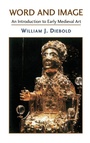
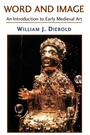
Diebold describes and explains the stunning variety of early medieval objects--illustrated manuscripts, rich metal work, ivories, textiles, statuary, jewels, painting and architecture produced north of the Alps beginning with Pope Gregory's Christianization of England and his justification of images, and ending with the spectacular gold reliquary statue of Ste. Foy at Conques, which separates Early Medieval art from the Romanesque. Diebold also discusses the function of (and audience for) medieval art; he shows why, how, and for whom it was made. Diebold outlines the role of artists and patrons in medieval society, and he explains art's institutional and social status. He defines basic historical and art-historical terms and concepts as they are encountered, and illustrations, a map, a glossary, notes, suggestions for further reading, and an index are included. }
Diebold describes and explains the stunning variety of early medieval objects--illustrated manuscripts, rich metal work, ivories, textiles, statuary, jewels, painting and architecture produced north of the Alps beginning with Pope Gregory's Christianization of England and his justification of images, and ending with the spectacular gold reliquary statue of Ste. Foy at Conques, which separates Early Medieval art from the Romanesque. Diebold also discusses the function of (and audience for) medieval art; he shows why, how, and for whom it was made. Diebold outlines the role of artists and patrons in medieval society, and he explains art's institutional and social status. He defines basic historical and art-historical terms and concepts as they are encountered, and illustrations, a map, a glossary, notes, suggestions for further reading, and an index are included. }
More details
Language
English
Place of publication
United States
Publishing group
Taylor & Francis Inc
Target group
College/higher education
Professional and scholarly
Dimensions
Height: 229 mm
Width: 152 mm
ISBN-13
978-0-8133-3577-3 (9780813335773)
Copyright in bibliographic data is held by Nielsen Book Services Limited or its licensors: all rights reserved.
Schweitzer Classification
Other editions
Additional editions
Book
08/2019
1st Edition
Routledge
€207.20
Shipment within 15-20 days
E-Book
05/2018
1st Edition
Routledge
€73.99
Available for download
E-Book
05/2018
1st Edition
Routledge
€73.99
Available for download
Book
02/2001
1st Edition
Westview Press Inc
€79.50
Shipment within 10-20 days
Content
List of Illustrations; Acknowledgments; Introduction: The Character of Early Medieval Art; Books for the Illiterate? Art in an Oral Culture; Art in the Service of the Word; Books for the Illiterate? Meaning in Early Medieval Art; The Crisis of Word and Image; Inscriptions and Images: Artist and Patron in the Early Middle Ages; Conclusion: Brother, What Do You Think of This Idol?; Notes; Further Reading in English