

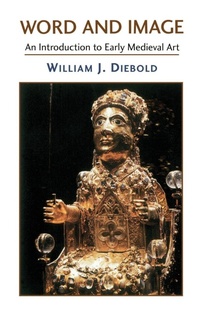
Word And Image
The Art Of The Early Middle Ages, 600-1050
1st Edition
Published on 28. August 2019
Book
Hardback
176 pages
978-0-367-31402-6 (ISBN)
Description
This up-to-date, reliable introductory account and interpretation of early medieval art combines art, history, and ideas from around 600 to 1050. Diebold describes diversity and complexity of early medieval art by examining the relationship of word and image. The concept of word and image is broad enough to encompass the Anglo-Saxon art and oral cu
More details
Language
English
Place of publication
London
United Kingdom
Publishing group
Taylor & Francis Ltd
Target group
College/higher education
Dimensions
Height: 235 mm
Width: 157 mm
Thickness: 14 mm
Weight
415 gr
ISBN-13
978-0-367-31402-6 (9780367314026)
Copyright in bibliographic data and cover images is held by Nielsen Book Services Limited or by the publishers or by their respective licensors: all rights reserved.
Schweitzer Classification
Other editions
Additional editions
E-Book
05/2018
1st Edition
Routledge
€73.99
Available for download
E-Book
05/2018
1st Edition
Routledge
€73.99
Available for download
Book
02/2001
1st Edition
Westview Press Inc
€79.50
Shipment within 10-20 days

Book
08/2000
1st Edition
Westview Press Inc
€126.28
Article exhausted; check different version
Person
William J. Diebold is associate professor of art history and humanities at Reed College. He has curated a number of exhibitions on medieval art, and he has written many articles and reviews for scholarly journals. Diebold received a Samuel H. Kress Fellowship in 1984-1986 and an Andrew W. Mellon Fellowship in 1994-1995. He was Chair at the College Art Association meetings in 1995 and 1997.
Content
INTRODUCTION: THE CHARACTER OF EARLY MEDIEVAL ART, 1 BOOKS FOR THE ILLITERATE? ART IN AN ORAL CULTURE, 2 ART IN THE SERVICE OF THE WORD, 3 BOOKS FOR THE ILLITERATE? MEANING IN EARLY MEDIEVAL ART, 4 THE CRISIS OF WORD AND IMAGE, 5 INSCRIPTIONS AND IMAGES: ARTIST AND PATRON IN THE EARLY MIDDLE AGES, CONCLUSION: "BROTHER, WHAT Do You THINK OF THIS IDOL?"