

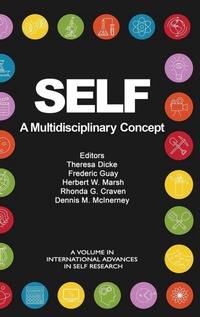
SELF - A Multidisciplinary Concept
Published on 21. December 2020
Book
Hardback
228 pages
978-1-64802-263-0 (ISBN)
Description
Research on the self relates to various phenomena including self-esteem, self-concept, self-verification, self-awareness, identity, self-efficacy, passion, self-determination, and goals. Moreover, research on self is multidisciplinary and of interest to a broad range of areas, such as education, economics, (social) psychology, neuro sciences, motivation, physical activity and behavior sciences, philosophy, and learning sciences. Chapters in this volume will illustrate some of the best of the research within these disciplines examining different aspects of self from various perspectives. A feature of this volume is that we will explore not only positive aspects of high perceived levels of self-determination and competence or self-concept on achievement, motivation and wellbeing, but also the dark side of an uncertain and negative self on identity and wellbeing. We learn from this that the self is a dynamic and powerful, yet fragile and highly amenable construct that needs self-care and constant reassurance.
SELF - A Multidisciplinary Concept thus highlights the broad application of self-research and its diversity. This volume is intended to develop both theoretical and methodological ideas and to present empirical evidence of various disciplines and applications dealing with self. The scope of this seventh volume of the International Advances in Self Research series, started in 2000 by Herbert W. Marsh, Dennis M. McInerney, and Rhonda G. Craven, is thus very broad. Keeping within the tradition of the series, this volume will highlight the applicability of a multitude of empirical approaches and methods to self-research. We also aimed to maintain a balance between discussing theoretical research in SELF and deriving implications for effective practice. This volume thus includes chapters covering self-related topics within an educational, social, emotional, psychological, physiological, managerial, and health context.
SELF - A Multidisciplinary Concept thus highlights the broad application of self-research and its diversity. This volume is intended to develop both theoretical and methodological ideas and to present empirical evidence of various disciplines and applications dealing with self. The scope of this seventh volume of the International Advances in Self Research series, started in 2000 by Herbert W. Marsh, Dennis M. McInerney, and Rhonda G. Craven, is thus very broad. Keeping within the tradition of the series, this volume will highlight the applicability of a multitude of empirical approaches and methods to self-research. We also aimed to maintain a balance between discussing theoretical research in SELF and deriving implications for effective practice. This volume thus includes chapters covering self-related topics within an educational, social, emotional, psychological, physiological, managerial, and health context.
More details
Series
Language
English
Place of publication
Charlotte
United States
Publishing group
Emerald Publishing Inc
Target group
Professional and scholarly
Dimensions
Height: 240 mm
Width: 161 mm
Thickness: 17 mm
Weight
511 gr
ISBN-13
978-1-64802-263-0 (9781648022630)
Copyright in bibliographic data and cover images is held by Nielsen Book Services Limited or by the publishers or by their respective licensors: all rights reserved.
Schweitzer Classification
Other editions
Additional editions
Theresa Dicke
SELF - A Multidisciplinary Concept
E-Book
01/2021
1st Edition
Information Age Publishing
from
€62.33
Available for download
Persons
Theresa Dicke, Australian Catholic University
Frederic Guay, Universite Laval
Herbert W. Marsh, Australian Catholic University and Oxford University
Rhonda G. Craven, Australian Catholic University
Dennis M. McInerney, Australian Catholic University and Education University of Hong Kong
Frederic Guay, Universite Laval
Herbert W. Marsh, Australian Catholic University and Oxford University
Rhonda G. Craven, Australian Catholic University
Dennis M. McInerney, Australian Catholic University and Education University of Hong Kong
Content
Preface.
Chapter 1. Self-Appraisals and Emotions: A Generalized Control-Value Approach; Reinhard Pekrun.
Chapter 2. Dimensional Comparison Theory: New Models, New Methods, New Insights; Jens Moeller, Fabian Wolff, and Friederike Helm.
Chapter 3. The Distinctions Separating the Social Classes: An Examination of Noncognitive Variables in Educational Contexts; Jennifer Archer and Nathan Berger.
Chapter 4. A Collaborative Approach to Building Youth Well-Being: A Case of a Municipality; Dianne A. Vella-Brodrick, Tan-Chyuan Chin, Adam Cooper, and Edwina Ricci.
Chapter 5. Do We Need Motivation to Sit Less? Thoughts on a Psychology of Sedentary Lifestyles; Stuart J. H. Biddle.
Chapter 6. Strengths-Based Approaches to Disability: Self-Determination and Autonomy-Supportive Interventions to Empower People with Disabilities; Michael L. Wehmeyer.
Chapter 7. Mind-the-Gap: Bright and Dark Sides of Digital Use, Self-identity, School Engagement, and Burnout; Katariina Salmela-Aro.
Chapter 8. The Helpful Self and the Hurtful Self: Positive and Negative Effects of Self-Processes on Well-Being; James E. Maddux.
Chapter 9. The Uncertain Self: Positive and Negative Influences on Social Identity, Group Behavior, and Leadership; Michael A. Hogg.
About the Authors.
Chapter 1. Self-Appraisals and Emotions: A Generalized Control-Value Approach; Reinhard Pekrun.
Chapter 2. Dimensional Comparison Theory: New Models, New Methods, New Insights; Jens Moeller, Fabian Wolff, and Friederike Helm.
Chapter 3. The Distinctions Separating the Social Classes: An Examination of Noncognitive Variables in Educational Contexts; Jennifer Archer and Nathan Berger.
Chapter 4. A Collaborative Approach to Building Youth Well-Being: A Case of a Municipality; Dianne A. Vella-Brodrick, Tan-Chyuan Chin, Adam Cooper, and Edwina Ricci.
Chapter 5. Do We Need Motivation to Sit Less? Thoughts on a Psychology of Sedentary Lifestyles; Stuart J. H. Biddle.
Chapter 6. Strengths-Based Approaches to Disability: Self-Determination and Autonomy-Supportive Interventions to Empower People with Disabilities; Michael L. Wehmeyer.
Chapter 7. Mind-the-Gap: Bright and Dark Sides of Digital Use, Self-identity, School Engagement, and Burnout; Katariina Salmela-Aro.
Chapter 8. The Helpful Self and the Hurtful Self: Positive and Negative Effects of Self-Processes on Well-Being; James E. Maddux.
Chapter 9. The Uncertain Self: Positive and Negative Influences on Social Identity, Group Behavior, and Leadership; Michael A. Hogg.
About the Authors.