

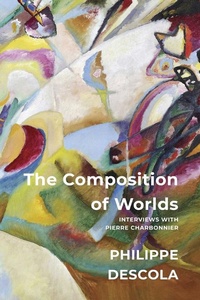
The Composition of Worlds
Interviews with Pierre Charbonnier
Published on 13. October 2023
Book
Paperback/Softback
194 pages
978-1-5095-5548-2 (ISBN)
Description
In this autobiographical reflection, the distinguished anthropologist Philippe Descola looks back on his intellectual career and examines both the central themes of his work and the key questions that have shaped anthropological debates over the last forty years.
A student of Levi-Strauss, Descola did ethnographic research among the Achuar of the upper Amazon in the late 1970s, focussing on how native societies relate to their environment. In this book he sheds fresh light on the evolution of his thinking from structuralism to an anthropology beyond the human, on the critique of the modern separation between nature and society, and above all on the genesis and scope of his master work Beyond Nature and Culture. This synthesis of the ways in which humans view their relationships with other-than-humans proposes four major 'compositions of worlds' (animism, naturalism, totemism, analogism) that characterise our ways of inhabiting the earth.
Presented in the form of an extended conversation with Pierre Charbonnier, this book is both a lucid introduction to the work of one of the most original anthropologists writing today and an impassioned plea for a pluralism of ontologies that would be more welcoming to the diversity of beings.
In this autobiographical reflection, the distinguished anthropologist Philippe Descola looks back on his intellectual career and examines both the central themes of his work and the key questions that have shaped anthropological debates over the last forty years.
A student of Levi-Strauss, Descola did ethnographic research among the Achuar of the upper Amazon in the late 1970s, focussing on how native societies relate to their environment. In this book he sheds fresh light on the evolution of his thinking from structuralism to an anthropology beyond the human, on the critique of the modern separation between nature and society, and above all on the genesis and scope of his master work <i>Beyond Nature and Culture</i>. This synthesis of the ways in which humans view their relationships with other-than-humans proposes four major 'compositions of worlds' (animism, naturalism, totemism, analogism) that characterise our ways of inhabiting the earth.
Presented in the form of an extended conversation with Pierre Charbonnier, this book is both a lucid introduction to the work of one of the most original anthropologists writing today and an impassioned plea for a pluralism of ontologies that would be more welcoming to the diversity of beings.
A student of Levi-Strauss, Descola did ethnographic research among the Achuar of the upper Amazon in the late 1970s, focussing on how native societies relate to their environment. In this book he sheds fresh light on the evolution of his thinking from structuralism to an anthropology beyond the human, on the critique of the modern separation between nature and society, and above all on the genesis and scope of his master work Beyond Nature and Culture. This synthesis of the ways in which humans view their relationships with other-than-humans proposes four major 'compositions of worlds' (animism, naturalism, totemism, analogism) that characterise our ways of inhabiting the earth.
Presented in the form of an extended conversation with Pierre Charbonnier, this book is both a lucid introduction to the work of one of the most original anthropologists writing today and an impassioned plea for a pluralism of ontologies that would be more welcoming to the diversity of beings.
In this autobiographical reflection, the distinguished anthropologist Philippe Descola looks back on his intellectual career and examines both the central themes of his work and the key questions that have shaped anthropological debates over the last forty years.
A student of Levi-Strauss, Descola did ethnographic research among the Achuar of the upper Amazon in the late 1970s, focussing on how native societies relate to their environment. In this book he sheds fresh light on the evolution of his thinking from structuralism to an anthropology beyond the human, on the critique of the modern separation between nature and society, and above all on the genesis and scope of his master work <i>Beyond Nature and Culture</i>. This synthesis of the ways in which humans view their relationships with other-than-humans proposes four major 'compositions of worlds' (animism, naturalism, totemism, analogism) that characterise our ways of inhabiting the earth.
Presented in the form of an extended conversation with Pierre Charbonnier, this book is both a lucid introduction to the work of one of the most original anthropologists writing today and an impassioned plea for a pluralism of ontologies that would be more welcoming to the diversity of beings.
More details
Edition
1
Language
English
Place of publication
Oxford
United Kingdom
Publishing group
John Wiley and Sons Ltd
Target group
Professional and scholarly
Dimensions
Height: 225 mm
Width: 155 mm
Thickness: 22 mm
Weight
336 gr
ISBN-13
978-1-5095-5548-2 (9781509555482)
Copyright in bibliographic data and cover images is held by Nielsen Book Services Limited or by the publishers or by their respective licensors: all rights reserved.
Schweitzer Classification
Other editions
Additional editions
E-Book
10/2023
1st Edition
Wiley-Scrivener
€20.99
Available for download
E-Book
10/2023
1st Edition
Polity Press
€18.99
Available for download
Book
10/2023
Polity Press
€65.00
Shipment within 15-20 days
Content
Foreword to the English edition
I. A taste for inquiry
Philosophical journeys
Discovering the mind, discovering the world
Among the tribe of anthropologists
Entering the pantheon
II. An Amazonian sojourn and the challenges of ethnography
The world of the forest
Living and working among the Achuar
The trial of return
III. The diversity of natures
The four corners of the world
Methodological questions
Conceptual reform
Forms of figuration
IV. The contemporary world in the light of anthropology
We Moderns
From anthropology to ecology
Political anthropology
The museum
Bibliography
Notes
Index
I. A taste for inquiry
Philosophical journeys
Discovering the mind, discovering the world
Among the tribe of anthropologists
Entering the pantheon
II. An Amazonian sojourn and the challenges of ethnography
The world of the forest
Living and working among the Achuar
The trial of return
III. The diversity of natures
The four corners of the world
Methodological questions
Conceptual reform
Forms of figuration
IV. The contemporary world in the light of anthropology
We Moderns
From anthropology to ecology
Political anthropology
The museum
Bibliography
Notes
Index