

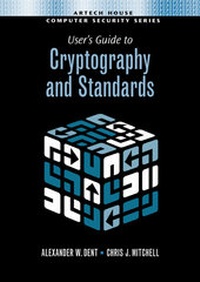
User's Guide to Cryptography and Standards
Published in November 2005
Book
Hardback
402 pages
978-1-58053-530-4 (ISBN)
Description
With the scope and frequency of attacks on valuable corporate data growing enormously in recent years, a solid understanding of cryptography is essential for computer/network security practitioners, systems designers, applications developers, and researchers. This timely book delivers the hands-on knowledge professionals need, offering comprehensive coverage on the latest and most-important standardized cryptographic techniques to help them protect their data and computing resources to the fullest. Rather than bogging professionals down with theory like other books on the market, this unique resource describes cryptography from an end-user perspective, presenting in-depth, highly practical comparisons of standards and techniques. Moreover, practitioners learn how to select standardized techniques that are most suitable for their specific needs.
More details
Edition
Unabridged edition
Language
English
Place of publication
Norwood
United States
Target group
Professional and scholarly
College/higher education
Edition type
Unabridged edition
ISBN-13
978-1-58053-530-4 (9781580535304)
Copyright in bibliographic data and cover images is held by Nielsen Book Services Limited or by the publishers or by their respective licensors: all rights reserved.
Schweitzer Classification
Other editions
Additional editions
Alexander W. Dent
User's Guide to Cryptography and Standards
E-Book
01/2004
1st Edition
Artech House
€98.49
Available for download
Persons
Alex W. Dent is an EPSRC junior research fellow at the Information Security Group, Royal Holloway, University of London. He holds a Ph.D. in mathematics from the University of London. Chris J. Mitchell is a professor of computer science at the Information Security Group, Royal Holloway, University of London. He holds a Ph.D. in mathematics from the University of London.
Content
Standards and the Standardization Process. Security Mechanisms and Security Services. Encryption. Cryptographic Hash-Functions. Message Authentication Codes (MACs). Digital Signatures. Non-Repudiation Mechanisms. Authentication Protocols. Key Management Framework. Public Key Infrastructures. Trusted Third Party Mechanisms. Cryptographic APIs.