

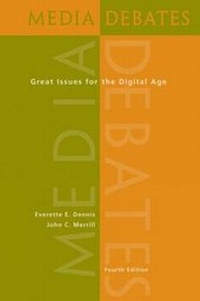
Media Debates : Great Issues for the Digital Age (with InfoTrac (R))
4th Edition
Published on 20. April 2005
Book
Paperback/Softback
261 pages
978-0-495-00181-2 (ISBN)
Description
There's lots of debate about the role of the media. Now you can read the best presentations from each side and decide for yourself. MEDIA DEBATES: GREAT ISSUES FOR THE DIGITAL AGE sets up experts to debate the pro or the con side of twenty issues that are central to today's media. You'll not only learn more about the media, you'll also discover your own opinion along the way.
Reviews / Votes
Preface. About the Authors. Introduction. 1. FREEDOM OF THE PRESS. Challenge - Dennis: Press freedom is not a settled issue. Response - Merrill: Press freedom is mostly a settled issue. 2. MEDIA?GOVERNMENT RELATIONSHIP. Challenge - Merrill: The media and government should not be adversaries. Response - Dennis: The media and government should be adversaries. 3. MEDIA AND DEMOCRACY. Challenge - Dennis: The media should be more democratic. Response - Merrill: The media need not be more democratic. 4. CONCENTRATION OF MEDIA OWNERSHIP. Challenge - Dennis: The new concentration of media ownership ultimately benefits the public. Response - Merrill: Concentration of ownership is dangerous for people and society. 5. MEDIA AND THE PUBLIC TRUST. Challenge - Merrill: The media exist mainly to make profits. Response - Dennis: The media must serve the public interest and make profits. 6. THE RIGHT TO KNOW. Challenge - Dennis: There is no right to know. Response - Merrill: There is a right to know. 7. MEDIA BIAS AND POLITICAL LEANINGS. Challenge - Dennis: The news media are not biased. Response - Merrill: The news media are biased. 8. MEDIA, POLITICS AND ELECTIONS. Challenge - Merrill: The media cover, but don?t control elections. Response - Dennis: The media influence?and often control?elections. 9. PUBLIC OPINION AND THE POLLS. Challenge - Dennis: The media structure and shape public opinion through polls. Response - Merrill: Polls in the media mainly report on public sentiment. 10. DECIDING WHAT?S NEWS. Challenge - Dennis: Market forces, not editors? judgments, should decide what is news. Response - Merrill: Editors? judgments, not market forces, should decide what is news. 11. MEDIA ETHICS. Challenge - Merrill: Journalists and other media people are essentially unethical. Response - Dennis: Journalists and other media people are essentially ethical. 12. JOURNALISTIC OBJECTIVITY. Challenge - Merrill: Journalistic objectivity is not possible. Response - Dennis: Journalistic objectivity is possible. 13. CIVIC/PUBLIC JOURNALISM. Challenge - Merrill: Civic or public journalism is a healthy trend for the media. Response - Dennis: Civic or public journalism is an unhealthy trend for the media. 14. DIGITAL STRATEGIES?THE INTERNET AND NEW MEDIA. Challenge - Merrill: The Internet and new media are debasing journalism. Response - Dennis: The Internet and new media are strengthening journalism. 15. RACE, ETHNICITY AND GENDER. Challenge - Dennis: Diversity needs rethinking and reassessment. Response - Merrill: Diversity does not need rethinking and reassessment. 16. WAR, TERRORISM AND NATIONAL EMERGENCIES. Challenge - Dennis: News should be mostly unconstrained, even during wars and national emergencies. Response - Merrill: News media should be constrained, under some circumstances, during wars and national emergencies. 17. JOURNALISM IS A PROFESSION. Challenge - Merrill: Journalism is not a profession. Response - Dennis: Journalism is a profession. 18. ADVERTISING. Challenge - Merrill: Advertising is a negative social force. Response - Dennis: Advertising is a positive social force. 19. PUBLIC RELATIONS. Challenge - Dennis: Public relations manipulates the news. Response - Merrill: Public relations provides an essential news service. 20. GLOBALIZATION AND THE MEDIA. Challenge - Dennis: Globalization greatly benefits people, the media and freedom of expression. Response - Merrill: Globalization harms national and local media thus impairing freedom of expression. Media Debates Web Resources. Index.More details
Edition
4th Revised edition
Language
English
Place of publication
Belmont, CA
United States
Publishing group
Cengage Learning, Inc
Target group
College/higher education
Edition type
Revised edition
ISBN-13
978-0-495-00181-2 (9780495001812)
Copyright in bibliographic data and cover images is held by Nielsen Book Services Limited or by the publishers or by their respective licensors: all rights reserved.
Schweitzer Classification
Persons
Everette E. Dennis is the Felix E. Larkin Professor of Communication and Media Instructor at Fordham?s Graduate School of Business in New York City. He was founding director of the respected Media Studies Center at Columbia University and founding president of the American Academy in Berlin. He has been a dean at the University of Oregon and taught at the Universities of Minnesota, Kansas State and Northwestern. Dr. Dennis recently completed a major study of the digital strategies of the top 25 media companies?the same year he won the coveted Eleanor Blum Award for service to research from the Association for Education in Journalism and Mass Communication. John C. Merrill is professor emeritus from the School of Journalism at the University of Missouri. Dr. Merrill spent most of his academic career at Missouri, but also served as director and professor of the Manship School of Journalism at Louisiana State University and held a chair at the University of Maryland. He has also taught at a number of schools overseas, including as a visiting professor at the American University, Cairo, in 2004.
Content
Preface. About the Authors. Introduction. 1. FREEDOM OF THE PRESS. Challenge - Dennis: Press freedom is not a settled issue. Response - Merrill: Press freedom is mostly a settled issue. 2. MEDIA-GOVERNMENT RELATIONSHIP. Challenge - Merrill: The media and government should not be adversaries. Response - Dennis: The media and government should be adversaries. 3. MEDIA AND DEMOCRACY. Challenge - Dennis: The media should be more democratic. Response - Merrill: The media need not be more democratic. 4. CONCENTRATION OF MEDIA OWNERSHIP. Challenge - Dennis: The new concentration of media ownership ultimately benefits the public. Response - Merrill: Concentration of ownership is dangerous for people and society. 5. MEDIA AND THE PUBLIC TRUST. Challenge - Merrill: The media exist mainly to make profits. Response - Dennis: The media must serve the public interest and make profits. 6. THE RIGHT TO KNOW. Challenge - Dennis: There is no right to know. Response - Merrill: There is a right to know. 7. MEDIA BIAS AND POLITICAL LEANINGS. Challenge - Dennis: The news media are not biased. Response - Merrill: The news media are biased. 8. MEDIA, POLITICS AND ELECTIONS. Challenge - Merrill: The media cover, but dont control elections. Response - Dennis: The media influence-and often control-elections. 9. PUBLIC OPINION AND THE POLLS. Challenge - Dennis: The media structure and shape public opinion through polls. Response - Merrill: Polls in the media mainly report on public sentiment. 10. DECIDING WHATS NEWS. Challenge - Dennis: Market forces, not editors judgments, should decide what is news. Response - Merrill: Editors judgments, not market forces, should decide what is news. 11. MEDIA ETHICS. Challenge - Merrill: Journalists and other media people are essentially unethical. Response - Dennis: Journalists and other media people are essentially ethical. 12. JOURNALISTIC OBJECTIVITY. Challenge - Merrill: Journalistic objectivity is not possible. Response - Dennis: Journalistic objectivity is possible. 13. CIVIC/PUBLIC JOURNALISM. Challenge - Merrill: Civic or public journalism is a healthy trend for the media. Response - Dennis: Civic or public journalism is an unhealthy trend for the media. 14. DIGITAL STRATEGIES-THE INTERNET AND NEW MEDIA. Challenge - Merrill: The Internet and new media are debasing journalism. Response - Dennis: The Internet and new media are strengthening journalism. 15. RACE, ETHNICITY AND GENDER. Challenge - Dennis: Diversity needs rethinking and reassessment. Response - Merrill: Diversity does not need rethinking and reassessment. 16. WAR, TERRORISM AND NATIONAL EMERGENCIES. Challenge - Dennis: News should be mostly unconstrained, even during wars and national emergencies. Response - Merrill: News media should be constrained, under some circumstances, during wars and national emergencies. 17. JOURNALISM IS A PROFESSION. Challenge - Merrill: Journalism is not a profession. Response - Dennis: Journalism is a profession. 18. ADVERTISING. Challenge - Merrill: Advertising is a negative social force. Response - Dennis: Advertising is a positive social force. 19. PUBLIC RELATIONS. Challenge - Dennis: Public relations manipulates the news. Response - Merrill: Public relations provides an essential news service. 20. GLOBALIZATION AND THE MEDIA. Challenge - Dennis: Globalization greatly benefits people, the media and freedom of expression. Response - Merrill: Globalization harms national and local media thus impairing freedom of expression. Media Debates Web Resources. Index.