


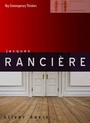
Jacques Ranciere
1st Edition
Published on 3. September 2010
Book
Hardback
224 pages
978-0-7456-4654-1 (ISBN)
Description
This book is a critical introduction to contemporary French philosopher Jacques Ranciere. It is the first introduction in any language to cover all of his major work and offers an accessible presentation and searching evaluation of his significant contributions to the fields of politics, pedagogy, history, literature, film theory and aesthetics.
This book traces the emergence of Ranciere's thought over the last forty-five years and situates it in the diverse intellectual contexts in which it intervenes. Beginning with his egalitarian critique of his former teacher Louis Althusser, the book tracks the subsequent elaboration of Ranciere's highly original conception of equality. This approach reveals that a grasp of his early archival and historiographical work is vital for a full understanding both of his later politics and his ongoing investigation of art and aesthetics.
Along the way, this book explains and analyses key terms in Ranciere's very distinctive philosophical lexicon, including the 'police' order, 'disagreement', 'political subjectivation', 'literarity', the 'part which has no part', the 'regimes of art' and 'the distribution of the sensory'.
This book argues that Ranciere's work sets a new standard in contestatory critique and concludes by reflecting on the philosophical and policy implications of his singular project.
This book traces the emergence of Ranciere's thought over the last forty-five years and situates it in the diverse intellectual contexts in which it intervenes. Beginning with his egalitarian critique of his former teacher Louis Althusser, the book tracks the subsequent elaboration of Ranciere's highly original conception of equality. This approach reveals that a grasp of his early archival and historiographical work is vital for a full understanding both of his later politics and his ongoing investigation of art and aesthetics.
Along the way, this book explains and analyses key terms in Ranciere's very distinctive philosophical lexicon, including the 'police' order, 'disagreement', 'political subjectivation', 'literarity', the 'part which has no part', the 'regimes of art' and 'the distribution of the sensory'.
This book argues that Ranciere's work sets a new standard in contestatory critique and concludes by reflecting on the philosophical and policy implications of his singular project.
Reviews / Votes
"An absolute model of explanatory clarity, with a level of critical distance made all the more impressive by this being the first monograph on Ranciere in any language."French Studies
"A solid introduction to Ranciere's thought that should help facilitate the reception of his work in the English-speaking world."
Choice "Well written and accessible ... the chapters are clear and capture the full extent of Ranciere's thinking, yet they remain remarkably critical."
Ethical Perspectives
"Davis has thought through how best to introduce Ranciere's philosophy and he does it convincingly and compellingly. His book will deservedly become the standard introduction and companion to Ranciere for first time readers at every level."
Jay Bernstein, New School for Social Research
"Oliver Davis's Jacques Ranciere is an overview of force and beauty. Working through the whole of Ranciere's reflections on philosophy, politics, historiography and aesthetics, Davis offers a clear and coherent account of work that has changed the way we think about the emergence, the condition and the future of democracy."
Tom Conley, Harvard University
More details
Series
Language
English
Place of publication
Oxford
United Kingdom
Publishing group
John Wiley and Sons Ltd
Target group
Professional and scholarly
Product notice
sewn/stitched
Cloth over boards
Dimensions
Height: 231 mm
Width: 155 mm
Thickness: 23 mm
Weight
454 gr
ISBN-13
978-0-7456-4654-1 (9780745646541)
Copyright in bibliographic data and cover images is held by Nielsen Book Services Limited or by the publishers or by their respective licensors: all rights reserved.
Schweitzer Classification
Other editions
Additional editions
Person
Oliver Davis is Associate Professor of French Studies and Programme Director of the Centre for Research in Philosophy, Literature and the Arts at the University of Warwick.
Content
Preface vii
Acknowledgements xiii
1 The Early Politics: From Pedagogy to Equality 1
Althusser's lesson 2
Platonic inequality in Marx, Sartre and Bourdieu 15
Jacotot and radical equality 25
2 History and Historiography 36
Les Revoltes Logiques (1975-81) 36
The Nights of Labor: The Workers' Dream in Nineteenth-Century France [1981] 52
The Names of History: On the Poetics of Knowledge [1992] 57
Conclusion 72
3 The Mature Politics: From Policing to Democracy 74
Politics and 'the police' 76
Ranciere's structural account of democracy: the 'wrong' and the miscount 80
Political 'subjectivation' 84
The aesthetic dimension of politics: the 'division' or 'distribution' of 'the sensory' (le partage du sensible) 90
Overall assessment of Ranciere's account of politics 92
4 Literature 101
'What is literature?' 102
Writing, literarity . . . and literature 107
Ranciere as reader 115
5 Art and Aesthetics 126
Aesthetic experience and equality: with Kant and Gauny, against Bourdieu 128
The regimes of art 134
Film and film theory 138
Contemporary art, politics and community 152
Afterword 160
Notes 162
References 191
Index 207
Acknowledgements xiii
1 The Early Politics: From Pedagogy to Equality 1
Althusser's lesson 2
Platonic inequality in Marx, Sartre and Bourdieu 15
Jacotot and radical equality 25
2 History and Historiography 36
Les Revoltes Logiques (1975-81) 36
The Nights of Labor: The Workers' Dream in Nineteenth-Century France [1981] 52
The Names of History: On the Poetics of Knowledge [1992] 57
Conclusion 72
3 The Mature Politics: From Policing to Democracy 74
Politics and 'the police' 76
Ranciere's structural account of democracy: the 'wrong' and the miscount 80
Political 'subjectivation' 84
The aesthetic dimension of politics: the 'division' or 'distribution' of 'the sensory' (le partage du sensible) 90
Overall assessment of Ranciere's account of politics 92
4 Literature 101
'What is literature?' 102
Writing, literarity . . . and literature 107
Ranciere as reader 115
5 Art and Aesthetics 126
Aesthetic experience and equality: with Kant and Gauny, against Bourdieu 128
The regimes of art 134
Film and film theory 138
Contemporary art, politics and community 152
Afterword 160
Notes 162
References 191
Index 207