


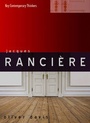
Jacques Rancière
Published on 24. April 2013
232 pages
978-0-7456-5913-8 (ISBN)
Description

This book is a critical introduction to contemporary Frenchphilosopher Jacques Rancière. It is the first introduction inany language to cover all of his major work and offers anaccessible presentation and searching evaluation of his significantcontributions to the fields of politics, pedagogy, history,literature, film theory and aesthetics.
This book traces the emergence of Rancière's thoughtover the last forty-five years and situates it in the diverseintellectual contexts in which it intervenes. Beginning with hisegalitarian critique of his former teacher Louis Althusser, thebook tracks the subsequent elaboration of Rancière'shighly original conception of equality. This approach reveals thata grasp of his early archival and historiographical work is vitalfor a full understanding both of his later politics and his ongoinginvestigation of art and aesthetics.
Along the way, this book explains and analyses key terms inRancière's very distinctive philosophical lexicon,including the 'police' order,'disagreement', 'political subjectivation','literarity', the 'part which has no part',the 'regimes of art' and 'the distribution of thesensory'.
This book argues that Rancière's work sets a newstandard in contestatory critique and concludes by reflecting onthe philosophical and policy implications of his singular project.
This book traces the emergence of Rancière's thoughtover the last forty-five years and situates it in the diverseintellectual contexts in which it intervenes. Beginning with hisegalitarian critique of his former teacher Louis Althusser, thebook tracks the subsequent elaboration of Rancière'shighly original conception of equality. This approach reveals thata grasp of his early archival and historiographical work is vitalfor a full understanding both of his later politics and his ongoinginvestigation of art and aesthetics.
Along the way, this book explains and analyses key terms inRancière's very distinctive philosophical lexicon,including the 'police' order,'disagreement', 'political subjectivation','literarity', the 'part which has no part',the 'regimes of art' and 'the distribution of thesensory'.
This book argues that Rancière's work sets a newstandard in contestatory critique and concludes by reflecting onthe philosophical and policy implications of his singular project.
More details
Other editions
Additional editions
Person
Oliver Davis is Associate Professor of French Studies and Programme Director of the Centre for Research in Philosophy, Literature and the Arts at the University of Warwick.
Content
Preface vii
Acknowledgements xiii
1 The Early Politics: From Pedagogy to Equality 1
Althusser's lesson 2
Platonic inequality in Marx, Sartre and Bourdieu 15
Jacotot and radical equality 25
2 History and Historiography 36
Les Révoltes Logiques (1975-81) 36
The Nights of Labor: The Workers' Dream in Nineteenth-CenturyFrance [1981] 52
The Names of History: On the Poetics of Knowledge [1992]57
Conclusion 72
3 The Mature Politics: From Policing to Democracy 74
Politics and 'the police' 76
Rancière's structural account of democracy: the 'wrong' andthe miscount 80
Political 'subjectivation' 84
The aesthetic dimension of politics: the 'division' or'distribution' of 'the sensory' (le partage du sensible) 90
Overall assessment of Rancière's account of politics 92
4 Literature 101
'What is literature?' 102
Writing, literarity . . . and literature 107
Rancière as reader 115
5 Art and Aesthetics 126
Aesthetic experience and equality: with Kant and Gauny, againstBourdieu 128
The regimes of art 134
Film and film theory 138
Contemporary art, politics and community 152
Afterword 160
Notes 162
References 191
Index 207
Acknowledgements xiii
1 The Early Politics: From Pedagogy to Equality 1
Althusser's lesson 2
Platonic inequality in Marx, Sartre and Bourdieu 15
Jacotot and radical equality 25
2 History and Historiography 36
Les Révoltes Logiques (1975-81) 36
The Nights of Labor: The Workers' Dream in Nineteenth-CenturyFrance [1981] 52
The Names of History: On the Poetics of Knowledge [1992]57
Conclusion 72
3 The Mature Politics: From Policing to Democracy 74
Politics and 'the police' 76
Rancière's structural account of democracy: the 'wrong' andthe miscount 80
Political 'subjectivation' 84
The aesthetic dimension of politics: the 'division' or'distribution' of 'the sensory' (le partage du sensible) 90
Overall assessment of Rancière's account of politics 92
4 Literature 101
'What is literature?' 102
Writing, literarity . . . and literature 107
Rancière as reader 115
5 Art and Aesthetics 126
Aesthetic experience and equality: with Kant and Gauny, againstBourdieu 128
The regimes of art 134
Film and film theory 138
Contemporary art, politics and community 152
Afterword 160
Notes 162
References 191
Index 207
