

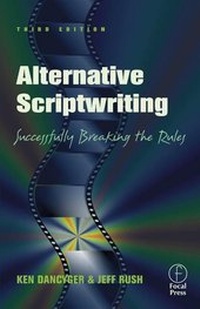
Alternative Scriptwriting
Successfully Breaking the Rules
3rd Edition
Published on 1. August 2002
Book
Paperback/Softback
382 pages
978-0-240-80477-4 (ISBN)
Description
Going beyond the conventional three act structure and exploring more inventive approaches, Alternative Scriptwriting challenges readers to take creative risks with genre, tone, character, and structure. It explores mainstream, personal, and experimental narrative forms, surveying both American and international films. In a field where novelty often equals commercial success, scriptwriters frequently strive to create screenplays that are innovative and exceptional.
Alternative Scriptwriting links scriptwriting to other forms of storytelling, and discusses issues including the three act structure, working with and against genre, character identification, and the implications of screenplay form. Key issues, examples, and case studies demonstrate what works, what doesn't, and why. Exercises encourage writers to explore new ways of viewing their work and to test the limits of their skills.
Additions to the third edition include:
* a comparative study of how two very different filmmakers handle different types of film.
* a look at ways in which narrative tension, story structure, and perspective can be used when writing for the digital film
* a study of adapting contemporary literature for film
Alternative Scriptwriting links scriptwriting to other forms of storytelling, and discusses issues including the three act structure, working with and against genre, character identification, and the implications of screenplay form. Key issues, examples, and case studies demonstrate what works, what doesn't, and why. Exercises encourage writers to explore new ways of viewing their work and to test the limits of their skills.
Additions to the third edition include:
* a comparative study of how two very different filmmakers handle different types of film.
* a look at ways in which narrative tension, story structure, and perspective can be used when writing for the digital film
* a study of adapting contemporary literature for film
More details
Edition
3rd New edition
Language
English
Place of publication
Oxford
United Kingdom
Publishing group
Taylor & Francis Ltd
Target group
College/higher education
Beginning and professional filmmakers/writers; students of screenwriting, especially in graduate courses<BR id="CRLF"><BR id="CRLF">
Edition type
New edition
Dimensions
Height: 229 mm
Width: 150 mm
ISBN-13
978-0-240-80477-4 (9780240804774)
Copyright in bibliographic data and cover images is held by Nielsen Book Services Limited or by the publishers or by their respective licensors: all rights reserved.
Schweitzer Classification
Other editions
New editions
Book
10/2006
4th Edition
Focal Press
€27.27
Article exhausted; check for reprint
Previous edition
Book
09/1995
2nd Edition
Focal Press
€23.55
Article exhausted; check for reprint
Persons
Ken Dancyger is the author of numerous books on screenwriting, editing, and production. He conducts screenwriting forums and workshops in North America, Europe, and Asia. A past chair of Undergraduate studies in the Department of Film and Television at NYU, he is currently Professor of Film and Television at the Tisch School of the Arts at New York University.
Jeff Rush is an associate professor at Temple University's Department of Film & Media Arts. He has served as director of the MFA program and as Department Chair in Film & Media Arts. He received an MFA in Screenwriting and Directing from the American Film Institute and an MFA in Fiction Writing from the University of Iowa's Writer's Workshop. In addition to teaching, Jeff has worked as a freelance screenwriter and has published numerous articles and books.
Ken Dancyger is the author of numerous books on screenwriting, editing, and production. He conducts screenwriting forums and workshops in North America, Europe, and Asia. A past chair of Undergraduate studies in the Department of Film and Television at NYU, he is currently Professor of Film and Television at the Tisch School of the Arts at New York University.
Jeff Rush is an associate professor at Temple University's Department of Film & Media Arts. He has served as director of the MFA program and as Department Chair in Film & Media Arts. He received an MFA in Screenwriting and Directing from the American Film Institute and an MFA in Fiction Writing from the University of Iowa's Writer's Workshop. In addition to teaching, Jeff has worked as a freelance screenwriter and has published numerous articles and books.
Jeff Rush is an associate professor at Temple University's Department of Film & Media Arts. He has served as director of the MFA program and as Department Chair in Film & Media Arts. He received an MFA in Screenwriting and Directing from the American Film Institute and an MFA in Fiction Writing from the University of Iowa's Writer's Workshop. In addition to teaching, Jeff has worked as a freelance screenwriter and has published numerous articles and books.
Ken Dancyger is the author of numerous books on screenwriting, editing, and production. He conducts screenwriting forums and workshops in North America, Europe, and Asia. A past chair of Undergraduate studies in the Department of Film and Television at NYU, he is currently Professor of Film and Television at the Tisch School of the Arts at New York University.
Jeff Rush is an associate professor at Temple University's Department of Film & Media Arts. He has served as director of the MFA program and as Department Chair in Film & Media Arts. He received an MFA in Screenwriting and Directing from the American Film Institute and an MFA in Fiction Writing from the University of Iowa's Writer's Workshop. In addition to teaching, Jeff has worked as a freelance screenwriter and has published numerous articles and books.
Content
Beyond the Rules; Structure; Critique of Restorative Three-act Form; Counter-structure; Working Against Genre--Reframing the Active/passive Character Distinction; Stretching the Limits of Character Identification; Main and Secondary Characters; Subtext, Action and Character; The Subtitles and Implications of Screenplay Form; Character, History and Politics; Tone - the Inescapability of Irony; Dramatic Voice/Narrative Voice; Writing; Rewriting; Personal Scriptwriting; Narrative and Anti-Narrative: the Case of the Two Stevens; Working With Genre II; Voice and Structure in DV Features; Adaptations from Contemporary Literature