

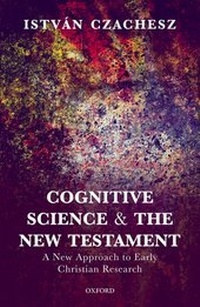
Cognitive Science and the New Testament
A New Approach to Early Christian Research
Published on 5. January 2017
Book
Hardback
284 pages
978-0-19-877986-5 (ISBN)
Description
Over the last few decades, our knowledge of how the human mind and brain works increased dramatically. The field of cognitive science enables us to understand religious traditions, rituals, and visionary experiences in novel ways. This has implications for the study of the New Testament and early Christianity. How people in the ancient Mediterranean world remembered sayings and stories, what they experienced when participating in rituals, how they thought about magic and miracle, and how they felt and reasoned about moral questions--all of that can be now better understood with the help of insights from cognitive science. Istvan Czachesz argues that the field of New Testament Studies witnesses the beginning of a cognitive turn. He surveys relevant developments in the Cognitive Science of Religion and explores the field of cognitive and behavioral sciences in search of opportunities of gaining new insights about biblical materials. Czachesz presents some methodological tools and initial steps, together with a large number of examples of applying the cognitive approach to the New Testament and related ancient literature.
Reviews / Votes
This is a landmark study in the field of NT and one I highly recommend. * James Prather, Restoration Quarterly *More details
Language
English
Place of publication
Oxford
United Kingdom
Target group
College/higher education
Professional and scholarly
Dimensions
Height: 241 mm
Width: 161 mm
Thickness: 22 mm
Weight
558 gr
ISBN-13
978-0-19-877986-5 (9780198779865)
Copyright in bibliographic data and cover images is held by Nielsen Book Services Limited or by the publishers or by their respective licensors: all rights reserved.
Schweitzer Classification
Other editions
Additional editions
E-Book
12/2016
1st Edition
OUP eBook
€48.99
Available for download
E-Book
12/2016
1st Edition
OUP eBook
€56.49
Available for download
Person
Istvan Czachesz is based at the University of Tromso. His publications include The Grotesque Body in Early Christian Discourse: Hell, Scatology and Metamorphosis (Routledge, 2012) and Mind, Morality and Magic: Cognitive Science Approaches in Biblical Studies (with Risto Uro; Routledge, 2013).
Content
Introduction
1: A Cognitive Turn
1.1: Opening the black box
1.2: The human mind: Basic questions
1.3: Cognitive Science of Religion
1.4: Cognitive science and the study of the New Testament
2: Evolution
2.1: A very short introduction to evolutionary theory
2.2: Genetic inheritance and religion
2.2.1: Hypersensitive agent-detection
2.2.2: Theory of Mind
2.2.3: Teleological reasoning
2.2.4: Expectations about ontological categories
2.2.5: Recursion
2.2.6: Emotions
2.2.7: Adaptations for cooperation
2.2.8: Traits favored by sexual selection
2.2.9: Group selection
2.3: Epigenetic inheritance in religion
2.4: Behavioral inheritance and religion
2.5: Symbolic inheritance and religion
2.6: Excursus: Epidemiology and memetics
2.7: Conclusion
3: The Human Brain: A Guided Tour
3.1: Brain and mind: same or different?
3.2: The anatomy of the human brain
3.3: Are all brains alike?
4: Memory and transmission
4.1: Memory in the brain
4.2: Chunks of information
4.3: Mental schemata
4.4: Narrative schemata: Scripts
4.5: Serial recall
4.6: Memory and emotions
4.7: Selective processes in transmission
4.8: Memory and literacy in antiquity
4.9: Memory and the New Testament: Some reflections
5: Ritual
5.1: What is ritual?
5.2: Acting without practical purpose
5.3: Ritual as the foundation of society
5.4: Ritual as a tool of cultural transmission
5.5: Ritual as a means of changing the state of affairs
5.6: Encountering the Holy
5.7: Conclusion
6: Magic and Miracle
6.1: Magic as an academic concept
6.2: Magic and superstitious conditioning
6.3: How people think about magic
6.4: The appeal of miracle stories
6.5: Miracle and culture
6.6: Example: Paul in Ephesus
6.7: Conclusion
7: Religious experience
7.1: Subjective religious experience
7.2: Religious experience in context
7.3: The Lobes Theory of religious experience
7.4: The Lobes Theory and the Corinthian church
7.5: Tours of heaven
7.6: Neuroscientific explanations of extreme religious experience
7.7: Toward a neuroscientific model of the narrative structure of the tours
7.8: Example: The tour of heaven in the Ascension of Isaiah
7.9: Conclusion
8: Morality
8.1: Empathy and morality
8.2: Religion from evolved morality
8.3: Morality from religion
8.4: Morality and exploitation
8.5: Imitating moral examples
8.6: Conclusion
9: Social networks and computer models
9.1: Computer models of religion
9.2: Weak social ties in emerging Christianity
9.3: Modeling the spread of Christianity
9.4: Learning from the Mission model
9.5: Patterns of conversion
9.6: Conclusions
10: Hermeneutical reflections
10.1: The text as window
10.2: Text as mirror
10.3: Text as image
Bibliography
1: A Cognitive Turn
1.1: Opening the black box
1.2: The human mind: Basic questions
1.3: Cognitive Science of Religion
1.4: Cognitive science and the study of the New Testament
2: Evolution
2.1: A very short introduction to evolutionary theory
2.2: Genetic inheritance and religion
2.2.1: Hypersensitive agent-detection
2.2.2: Theory of Mind
2.2.3: Teleological reasoning
2.2.4: Expectations about ontological categories
2.2.5: Recursion
2.2.6: Emotions
2.2.7: Adaptations for cooperation
2.2.8: Traits favored by sexual selection
2.2.9: Group selection
2.3: Epigenetic inheritance in religion
2.4: Behavioral inheritance and religion
2.5: Symbolic inheritance and religion
2.6: Excursus: Epidemiology and memetics
2.7: Conclusion
3: The Human Brain: A Guided Tour
3.1: Brain and mind: same or different?
3.2: The anatomy of the human brain
3.3: Are all brains alike?
4: Memory and transmission
4.1: Memory in the brain
4.2: Chunks of information
4.3: Mental schemata
4.4: Narrative schemata: Scripts
4.5: Serial recall
4.6: Memory and emotions
4.7: Selective processes in transmission
4.8: Memory and literacy in antiquity
4.9: Memory and the New Testament: Some reflections
5: Ritual
5.1: What is ritual?
5.2: Acting without practical purpose
5.3: Ritual as the foundation of society
5.4: Ritual as a tool of cultural transmission
5.5: Ritual as a means of changing the state of affairs
5.6: Encountering the Holy
5.7: Conclusion
6: Magic and Miracle
6.1: Magic as an academic concept
6.2: Magic and superstitious conditioning
6.3: How people think about magic
6.4: The appeal of miracle stories
6.5: Miracle and culture
6.6: Example: Paul in Ephesus
6.7: Conclusion
7: Religious experience
7.1: Subjective religious experience
7.2: Religious experience in context
7.3: The Lobes Theory of religious experience
7.4: The Lobes Theory and the Corinthian church
7.5: Tours of heaven
7.6: Neuroscientific explanations of extreme religious experience
7.7: Toward a neuroscientific model of the narrative structure of the tours
7.8: Example: The tour of heaven in the Ascension of Isaiah
7.9: Conclusion
8: Morality
8.1: Empathy and morality
8.2: Religion from evolved morality
8.3: Morality from religion
8.4: Morality and exploitation
8.5: Imitating moral examples
8.6: Conclusion
9: Social networks and computer models
9.1: Computer models of religion
9.2: Weak social ties in emerging Christianity
9.3: Modeling the spread of Christianity
9.4: Learning from the Mission model
9.5: Patterns of conversion
9.6: Conclusions
10: Hermeneutical reflections
10.1: The text as window
10.2: Text as mirror
10.3: Text as image
Bibliography