

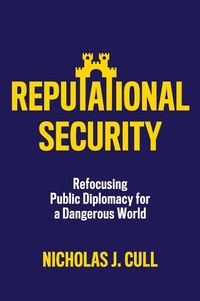
Reputational Security
Refocusing Public Diplomacy for a Dangerous World
1st Edition
Published on 22. December 2023
Book
Paperback/Softback
232 pages
978-1-5095-5926-8 (ISBN)
Description
We are living in turbulent times, witnessing renewed international conflict, resurgent nationalism, declining multilateralism, and a torrent of hostile propaganda. How are we to understand these developments and conduct diplomacy in their presence?
Nicholas J. Cull, the distinguished historian of propaganda, revisits the international media campaigns of the past in the light of the challenges of the present. His concept of Reputational Security deftly links issues of national image and outreach to the deepest needs of any state, rescuing them from the list of low-priority optional extras to which they are so often consigned in the West. Reputational Security, he argues, comes from being known and appreciated in the world. With clarity and determination, Cull considers core tasks, approaches, and opportunities available for international actors today, including counter propaganda, media development, diaspora diplomacy, cultural work, and - perhaps most surprisingly of all - media disarmament. This book is crucial for all who care about responding to the threat of malign media disruption, revitalizing international cooperation, and establishing the Reputational Security we and our allies need to survive and flourish.
Reputational Security is enlightening reading for students and scholars of public diplomacy, international relations, security studies, communications, and media, as well as practitioners.
We are living in turbulent times, witnessing renewed international conflict, resurgent nationalism, declining multilateralism, and a torrent of hostile propaganda. How are we to understand these developments and conduct diplomacy in their presence?
Nicholas J. Cull, the distinguished historian of propaganda, revisits the international media campaigns of the past in the light of the challenges of the present. His concept of Reputational Security deftly links issues of national image and outreach to the deepest needs of any state, rescuing them from the list of low-priority optional extras to which they are so often consigned in the West. Reputational Security, he argues, comes from being known and appreciated in the world. With clarity and determination, Cull considers core tasks, approaches, and opportunities available for international actors today, including counter propaganda, media development, diaspora diplomacy, cultural work, and - perhaps most surprisingly of all - media disarmament. This book is crucial for all who care about responding to the threat of malign media disruption, revitalizing international cooperation, and establishing the Reputational Security we and our allies need to survive and flourish.
<i>Reputational Security</i> is enlightening reading for students and scholars of public diplomacy, international relations, security studies, communications, and media, as well as practitioners.
Nicholas J. Cull, the distinguished historian of propaganda, revisits the international media campaigns of the past in the light of the challenges of the present. His concept of Reputational Security deftly links issues of national image and outreach to the deepest needs of any state, rescuing them from the list of low-priority optional extras to which they are so often consigned in the West. Reputational Security, he argues, comes from being known and appreciated in the world. With clarity and determination, Cull considers core tasks, approaches, and opportunities available for international actors today, including counter propaganda, media development, diaspora diplomacy, cultural work, and - perhaps most surprisingly of all - media disarmament. This book is crucial for all who care about responding to the threat of malign media disruption, revitalizing international cooperation, and establishing the Reputational Security we and our allies need to survive and flourish.
Reputational Security is enlightening reading for students and scholars of public diplomacy, international relations, security studies, communications, and media, as well as practitioners.
We are living in turbulent times, witnessing renewed international conflict, resurgent nationalism, declining multilateralism, and a torrent of hostile propaganda. How are we to understand these developments and conduct diplomacy in their presence?
Nicholas J. Cull, the distinguished historian of propaganda, revisits the international media campaigns of the past in the light of the challenges of the present. His concept of Reputational Security deftly links issues of national image and outreach to the deepest needs of any state, rescuing them from the list of low-priority optional extras to which they are so often consigned in the West. Reputational Security, he argues, comes from being known and appreciated in the world. With clarity and determination, Cull considers core tasks, approaches, and opportunities available for international actors today, including counter propaganda, media development, diaspora diplomacy, cultural work, and - perhaps most surprisingly of all - media disarmament. This book is crucial for all who care about responding to the threat of malign media disruption, revitalizing international cooperation, and establishing the Reputational Security we and our allies need to survive and flourish.
<i>Reputational Security</i> is enlightening reading for students and scholars of public diplomacy, international relations, security studies, communications, and media, as well as practitioners.
More details
Language
English
Place of publication
Oxford
United Kingdom
Publishing group
John Wiley and Sons Ltd
Target group
Professional and scholarly
Dimensions
Height: 228 mm
Width: 154 mm
Thickness: 19 mm
Weight
363 gr
ISBN-13
978-1-5095-5926-8 (9781509559268)
Copyright in bibliographic data and cover images is held by Nielsen Book Services Limited or by the publishers or by their respective licensors: all rights reserved.
Schweitzer Classification
Other editions
Additional editions
Book
12/2023
1st Edition
Polity Press
€65.00
Shipment within 15-20 days
E-Book
12/2023
1st Edition
Wiley-Scrivener
€18.99
Available for download
Person
Nicholas J. Cull is Professor of Public Diplomacy at the University of Southern California's Annenberg School for Communications and Journalism.
<b>Nicholas J. Cull</b> is Professor of Public Diplomacy at the University of Southern California's Annenberg School for Communications and Journalism.
<b>Nicholas J. Cull</b> is Professor of Public Diplomacy at the University of Southern California's Annenberg School for Communications and Journalism.
Content
Preface and Acknowledgements
List of Figures
Introduction: Reputation and Soft Power: Image and Action in World Affairs
Chapter One: Reputational Security: Frame, Objective and Agenda
Chapter Two: Technology and Reputational Security: Historical Cases of Media Disruption and Adoption
Chapter Three: Pushing Back: Counter-Propaganda and Reputational Security
Chapter Four: Media Development: A Tool for Reputational Security
Chapter Five: Information Disarmament: A Forgotten Element of Reputational Security
Chapter Six: Diaspora Diplomacy: From History to Reputational Security
Chapter Seven: Cultural Diplomacy, Cultural Relations, and Reputational Security
Chapter Eight: Rethinking US Public Diplomacy: The Apparatus of Reputational Security
Conclusion: The Reckoning: Reputational Security and Russia's War in Ukraine
Notes
Selected Bibliography
Index
List of Figures
Introduction: Reputation and Soft Power: Image and Action in World Affairs
Chapter One: Reputational Security: Frame, Objective and Agenda
Chapter Two: Technology and Reputational Security: Historical Cases of Media Disruption and Adoption
Chapter Three: Pushing Back: Counter-Propaganda and Reputational Security
Chapter Four: Media Development: A Tool for Reputational Security
Chapter Five: Information Disarmament: A Forgotten Element of Reputational Security
Chapter Six: Diaspora Diplomacy: From History to Reputational Security
Chapter Seven: Cultural Diplomacy, Cultural Relations, and Reputational Security
Chapter Eight: Rethinking US Public Diplomacy: The Apparatus of Reputational Security
Conclusion: The Reckoning: Reputational Security and Russia's War in Ukraine
Notes
Selected Bibliography
Index