

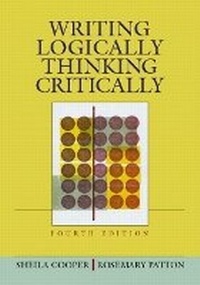
Writing Logically, Thinking Critically
4th Edition
Published on 24. July 2003
Book
Paperback/Softback
288 pages
978-0-321-14980-0 (ISBN)
Description
This concise, accessible text teaches students how to construct logical, cohesive arguments and how to evaluate the arguments of others.
Integrating writing skills with critical thinking skills, this practical book teaches students to draw logical inferences, identify premises and conclusions and use language precisely. Students also learn how to identify fallacies and to distinguish between inductive and deductive reasoning. Ideal for any composition class that emphasizes argument, this text includes coverage of writing style, research, documentation, literature, rhetoric, and logic.
Integrating writing skills with critical thinking skills, this practical book teaches students to draw logical inferences, identify premises and conclusions and use language precisely. Students also learn how to identify fallacies and to distinguish between inductive and deductive reasoning. Ideal for any composition class that emphasizes argument, this text includes coverage of writing style, research, documentation, literature, rhetoric, and logic.
More details
Edition
4th edition
Language
English
Place of publication
United States
Publishing group
Pearson Education (US)
Target group
Professional and scholarly
Dimensions
Height: 235 mm
Width: 158 mm
Thickness: 12 mm
Weight
372 gr
ISBN-13
978-0-321-14980-0 (9780321149800)
Copyright in bibliographic data and cover images is held by Nielsen Book Services Limited or by the publishers or by their respective licensors: all rights reserved.
Schweitzer Classification
Other editions
New editions
Sheila Cooper | Rosemary Patton
Writing Logically, Thinking Critically
Book
04/2006
5th Edition
Pearson
€44.53
Article exhausted; check for reprint
Previous edition
Sheila Cooper | Rosemary Patton
Writing Logically, Thinking Critically
Book
08/2000
3rd Edition
Pearson
€29.68
Article exhausted; check for reprint
Content
DETAILED CONTENTS.
Preface.
1. Thinking and Writing-A Critical Connection.
Thinking Made Visible.
The Power of Writing Persuasively.
Critical Thinking.
Audience and Purpose.
Writing Assignment 1. Considering Your Audience.
Writing as a Process.
Writing Assignment 2. Your Writing Process.
He or She?
What You Can Expect from This Book.
Enjoying The Challenge of Thinking and Writing.
Key Terms.
2. Inference-Critical Thought.
What Is an Inference?
What Is a Fact?
What Is a Judgment?
Achieving a Balance Between Inference and Facts.
Reading Critically.
Writing Assignment 3. Reconstructing the Lost Tribe.
Making Inferences-Analyzing Images.
Making Inferences-Writing About Fiction.
Writing Assignment 4. Interpreting Fiction.
Summary.
Key Terms.
3. The Structure of Argument.
Premises and Conclusions.
Distinguishing Between Premises and Conclusions.
Standard Form.
Ambiguous Argument Structure.
Argument and Explanation-Distinctions.
Argument Structure, Logical Essay Organization, and Revision.
Summaries.
Writing Assignment 5. Constructing a Summary and Response.
Plagiarism.
Logical Relationships Between Ideas-Joining Words.
Hidden Assumptions in Argument.
Writing Assignment 8. A Letter of Application.
Summary.
Key Terms.
4. Written Argument.
Focusing Your Topic.
Shaping a Written Argument-Rhetorical Strategies.
A Dialectical Approach to Argument.
Logical Joining of Contrasting and Concessive Ideas.
More on Coherence.
Sample Essays.
Four Approaches to Writing Arguments.
Writing Assignment 7. Arguing Both Sides of an Issue.
Writing Assignment 8. Taking a Stand.
Writing Assignment 10. Exploring an Argument in Depth.
Writing Assignment 11. Collaborating on a Complex Issue.
Summary.
Key Terms.
5. The Language of Argument-Definition.
Logical Definition.
Definition and the Social Sciences.
Definition and Perception.
Language: An Abstract System of Symbols.
Writing Assignment 11. Composing an Extended Definition of an Abstract Term.
Stipulating Personal Meaning.
Writing Assignment 12. Creating a New Word.
Summary.
Key Terms.
6. Fallacious Arguments.
What Is a Fallacious Argument?
Writing Assignment 13. Analyzing an Extended Argument.
Key Terms.
7. Deductive and Inductive Argument.
Key Distinctions.
The Relationship Between Induction and Deduction.
Deductive Reasoning.
Inductive Reasoning.
Writing Assignment 14. Questioning Generalizations.
Writing Assignment 15. Conducting a Survey: A Collaborative Project.
Summary.
Key Terms.
8. The Language of Argument-Style.
Sentence Length.
Appositives-A Strategy for Defining Terms Within the Sentence.
Verbal Modifiers-A Strategy for Combining and Expanding Sentences.
Parallelism: A Strategy for Coherence and Balance.
Sentence Focus-Techniques for Sharpening the Flow of Ideas.
Concrete Subjects.
Revision.
Writing Assignment 16. Revising an Essay.
Summary.
Key Terms.
9. Research and Documentation.
Research.
Documentation.
Formatting Your Paper.
A Reminder.
Sample Research Paper.
Credits.
Index.
GUIDE TO READINGS.
Chapter 1. Thinking and Writing-A Critical Connection.
"The Problem with New Data," Jon Carroll (Newspaper Column).
"The Bird," by Anne Lamot (Book Excerpt).
"The Writer," by Richard Wilbur (Poem).
Chapter 2. Inference-Critical Thought.
"The Facts of Media Life," by Max Frankel (Essay).
"The Totleigh Riddles," by John Cotton (Poem).
"Mirror," by Sylvia Plath (Poem).
"Metaphors," by Sylvia Plath (Poem).
"The Story of an Hour,"Kate Chopin (Fiction).
"Hostess," Donald Magnum (Fiction).
Chapter 3. The Structure of Argument.
"Walker Guilty," San Diego Union-Tribune (Editorial).
"Supreme Court Attacks Students' Rights," by Ryan Guptill (Student Essay).
"Indivisible? Wanna Bet?," by Anna Quindlen (Magazine Column).
"Other People's Words," by Paul Gray (Essay).
Chapter 4. Written Argument.
"Rap Takes a Bum Rap," by John Herschend (Student Essay).
"A Case for Affirmative Action," by Cynthia Tucker (Editorial).
"Gender Vendors," by Paul Gray (Essay).
The Language of Argument-Definition.
"The Voice You Hear When You Read Silently," by Thomas Lux (Poem).
"Radical," [1], (Student Essay).
"Radical," [2], (Student Essay).
"Fun," (Student Essay).
Fallacious Arguments.
"On Date Rape," by Camile Paglia (Essay).
"Boxing, Doctors-Round Two," by Lowell Cohn.
"Say Goodbye to SUVs," by Rich Lowrey (Editorial).
Chapter 7. Deductive and Inductive Argument.
"Mechanics' Logic," by Robert Pirsig (Book Excerpt).
"A Study in Scarlet, " by Arthur Conan Doyle (Fiction).
"Preventive Medicine, Properly Practiced," by Susan Love (Essay).
Chapter 8. The Language of Argument-Style.
"What Drives Sane People to Riot," Pamela Reynolds (Editorial).
Chapter 9. Research and Documentation.
"Antibiotics in Food Animals Can Be Hazardous to Your Health," by Paola Grasso (Student Essay).
Preface.
1. Thinking and Writing-A Critical Connection.
Thinking Made Visible.
The Power of Writing Persuasively.
Critical Thinking.
Audience and Purpose.
Writing Assignment 1. Considering Your Audience.
Writing as a Process.
Writing Assignment 2. Your Writing Process.
He or She?
What You Can Expect from This Book.
Enjoying The Challenge of Thinking and Writing.
Key Terms.
2. Inference-Critical Thought.
What Is an Inference?
What Is a Fact?
What Is a Judgment?
Achieving a Balance Between Inference and Facts.
Reading Critically.
Writing Assignment 3. Reconstructing the Lost Tribe.
Making Inferences-Analyzing Images.
Making Inferences-Writing About Fiction.
Writing Assignment 4. Interpreting Fiction.
Summary.
Key Terms.
3. The Structure of Argument.
Premises and Conclusions.
Distinguishing Between Premises and Conclusions.
Standard Form.
Ambiguous Argument Structure.
Argument and Explanation-Distinctions.
Argument Structure, Logical Essay Organization, and Revision.
Summaries.
Writing Assignment 5. Constructing a Summary and Response.
Plagiarism.
Logical Relationships Between Ideas-Joining Words.
Hidden Assumptions in Argument.
Writing Assignment 8. A Letter of Application.
Summary.
Key Terms.
4. Written Argument.
Focusing Your Topic.
Shaping a Written Argument-Rhetorical Strategies.
A Dialectical Approach to Argument.
Logical Joining of Contrasting and Concessive Ideas.
More on Coherence.
Sample Essays.
Four Approaches to Writing Arguments.
Writing Assignment 7. Arguing Both Sides of an Issue.
Writing Assignment 8. Taking a Stand.
Writing Assignment 10. Exploring an Argument in Depth.
Writing Assignment 11. Collaborating on a Complex Issue.
Summary.
Key Terms.
5. The Language of Argument-Definition.
Logical Definition.
Definition and the Social Sciences.
Definition and Perception.
Language: An Abstract System of Symbols.
Writing Assignment 11. Composing an Extended Definition of an Abstract Term.
Stipulating Personal Meaning.
Writing Assignment 12. Creating a New Word.
Summary.
Key Terms.
6. Fallacious Arguments.
What Is a Fallacious Argument?
Writing Assignment 13. Analyzing an Extended Argument.
Key Terms.
7. Deductive and Inductive Argument.
Key Distinctions.
The Relationship Between Induction and Deduction.
Deductive Reasoning.
Inductive Reasoning.
Writing Assignment 14. Questioning Generalizations.
Writing Assignment 15. Conducting a Survey: A Collaborative Project.
Summary.
Key Terms.
8. The Language of Argument-Style.
Sentence Length.
Appositives-A Strategy for Defining Terms Within the Sentence.
Verbal Modifiers-A Strategy for Combining and Expanding Sentences.
Parallelism: A Strategy for Coherence and Balance.
Sentence Focus-Techniques for Sharpening the Flow of Ideas.
Concrete Subjects.
Revision.
Writing Assignment 16. Revising an Essay.
Summary.
Key Terms.
9. Research and Documentation.
Research.
Documentation.
Formatting Your Paper.
A Reminder.
Sample Research Paper.
Credits.
Index.
GUIDE TO READINGS.
Chapter 1. Thinking and Writing-A Critical Connection.
"The Problem with New Data," Jon Carroll (Newspaper Column).
"The Bird," by Anne Lamot (Book Excerpt).
"The Writer," by Richard Wilbur (Poem).
Chapter 2. Inference-Critical Thought.
"The Facts of Media Life," by Max Frankel (Essay).
"The Totleigh Riddles," by John Cotton (Poem).
"Mirror," by Sylvia Plath (Poem).
"Metaphors," by Sylvia Plath (Poem).
"The Story of an Hour,"Kate Chopin (Fiction).
"Hostess," Donald Magnum (Fiction).
Chapter 3. The Structure of Argument.
"Walker Guilty," San Diego Union-Tribune (Editorial).
"Supreme Court Attacks Students' Rights," by Ryan Guptill (Student Essay).
"Indivisible? Wanna Bet?," by Anna Quindlen (Magazine Column).
"Other People's Words," by Paul Gray (Essay).
Chapter 4. Written Argument.
"Rap Takes a Bum Rap," by John Herschend (Student Essay).
"A Case for Affirmative Action," by Cynthia Tucker (Editorial).
"Gender Vendors," by Paul Gray (Essay).
The Language of Argument-Definition.
"The Voice You Hear When You Read Silently," by Thomas Lux (Poem).
"Radical," [1], (Student Essay).
"Radical," [2], (Student Essay).
"Fun," (Student Essay).
Fallacious Arguments.
"On Date Rape," by Camile Paglia (Essay).
"Boxing, Doctors-Round Two," by Lowell Cohn.
"Say Goodbye to SUVs," by Rich Lowrey (Editorial).
Chapter 7. Deductive and Inductive Argument.
"Mechanics' Logic," by Robert Pirsig (Book Excerpt).
"A Study in Scarlet, " by Arthur Conan Doyle (Fiction).
"Preventive Medicine, Properly Practiced," by Susan Love (Essay).
Chapter 8. The Language of Argument-Style.
"What Drives Sane People to Riot," Pamela Reynolds (Editorial).
Chapter 9. Research and Documentation.
"Antibiotics in Food Animals Can Be Hazardous to Your Health," by Paola Grasso (Student Essay).