

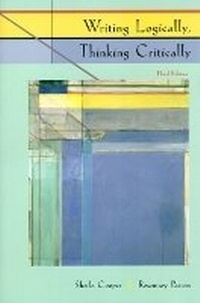
Writing Logically, Thinking Critically
3rd Edition
Published on 3. August 2000
Book
Paperback/Softback
272 pages
978-0-321-07237-5 (ISBN)
Description
Writing Logically, Thinking Critically shows students how to analyze and evaluate the arguments of others and to construct logical arguments on their own. These skills enable students to write in all disciplines, to choose wisely as voters and consumers, and to advocate their own ideas.
More details
Edition
3rd edition
Language
English
Place of publication
United States
Publishing group
Pearson Education (US)
Target group
Professional and scholarly
Dimensions
Width: 230 mm
Thickness: 12 mm
Weight
337 gr
ISBN-13
978-0-321-07237-5 (9780321072375)
Copyright in bibliographic data and cover images is held by Nielsen Book Services Limited or by the publishers or by their respective licensors: all rights reserved.
Schweitzer Classification
Other editions
New editions
Sheila Cooper | Rosemary Patton
Writing Logically, Thinking Critically
Book
07/2003
4th Edition
Pearson
€33.40
Article exhausted; check for reprint
Previous edition

Rosemary Patton | Sheila Cooper
WRITING LOGIC THINK CRIT+MLA UPDATE CARD PKG
Book
04/2000
2nd Edition
Longman
€23.55
Article exhausted; check for reprint
Content
Preface.
1. Thinking and Writing-A Critical Connection.
Thinking Made Visible.
The Power of Writing Persuasively.
Our Multicultural Society.
Critical Thinking.
Critical Thinking as Self-Defense.
An Open Mind-Examining Your World View.
Profile of a Critical Thinker.
Reason, Intuition, and Imagination.
Audience and Purpose.
Writing Assignment 1: Considering Your Audience.
Writing as a Process.
Strategies for Generating Ideas.
The First Draft.
The Time to Be Critical.
One Writer's Process.
Writing Assignment 2: Your Writing Process.
He or She?
What You Can Expect from This Book.
More Than One Approach.
Collaboration.
Sharpening Sentence Skills.
Enjoying the Challenge of Thinking and Writing.
Key Terms.
2. Inference-Critical Thought.
What Is an Inference?
What Is a Fact?
What Is a Judgement?
Application to Writing.
Achieving a Balance between Inference and Facts.
Facts Only.
Selecting Facts.
Inferences Only.
Reading Critically.
Writing Assignment 3: Analyzing a Recent Inference.
Writing Assignment 4: Reconstructing the Lost Tribe.
Making Inferences-Writing About Fiction.
The Story of an Hour.
Writing Assignment 5: Interpreting Fiction.
Hostess.
Writing Assignment 6: Analyzing Fiction.
Hills Like White Elephants.
Summary.
Key Terms.
3. The Structure of Argument.
Premises and Conclusions.
Distinguishing between Premises and Conclusions.
Standard Form.
Ambiguous Argument Structure.
Argument and Explanation-Distinctions.
Application To Writing.
Argument Structure, Logical Essay Organization, and Revision.
Summaries.
Writing Assignment 7: Constructing a Summary and Response.
Logical Relationships Between Ideas-Joining Words.
Choice of Joining Words.
Revising For Coherence.
Hidden Assumptions in Argument.
Dangers of Hidden Assumptions.
Hidden Assumptions and Standard Form.
Hidden Assumptions and Audience Awareness.
Writing Assignment 8: A Letter of Application.
Summary.
Key Terms.
4. Written Argument.
Focusing Your Topic.
The Issue.
The Question at Issue.
The Thesis.
Two Kinds of Thesis Statement.
Shaping a Written Argument-Rhetorical Strategies.
The Introduction.
The Development of Your Argument.
How Many Premises Should an Argument Have?
The Conclusion.
A Dialectal Approach To Argument.
Addressing Counterarguments.
How Much Counterargument?
Refutation and Concession.
Rogerian Strategy.
When There Is No Other Side.
Application To Writing.
Logical Joining of Contrasting and Concessive Ideas.
The Concessive Sentence.
More on Coherence.
Sample Essays.
Four Approaches To Writing Arguments.
Writing Assignment 9: Arguing Both Sides of an Issue.
Writing Assignment 10: Taking a Stand.
Writing Assignment 11: Exploring and argument in Depth.
Writing Assignment 12: Collaborating on a Complex Issue.
Summary.
Key Terms.
5. The Language of Argument-Definition.
Logical Definition.
Definition and the Social Sciences.
Definition And Perception.
Language: An Abstract System of Symbols.
The Importance Of Specificity.
The Manipulation Of Language.
Writing Assignment 13: Composing an Extended Definition of an Abstract Term.
Stipulating Personal Meaning.
Inventing New Word to Fill a Need.
Writing Assignment 14: Creating a New Word.
Summary.
Key Terms.
6. Fallacious Arguments.
What Is a Fallacious Argument?
Appeal to Authority.
Appeal to Fear.
Appeal to Pity.
Begging the Questions.
Equivocation.
False Analogy.
False Cause.
False Dilemma.
Hasty Generalization.
Personal Attack.
Poisoning the Well.
Slippery Slope.
Special Pleading.
Straw Man.
Writing Assignment 15: Analyzing an Extended Argument.
Key Terms.
7. Deductive and Inductive Argument.
Key Distinctions.
Necessity Versus Probability.
From General To Specific, Specific To General.
The Relationship Between Induction And Deduction.
Deductive Reasoning.
Class Logic.
Relationship Between Classes.
Class Logic and the Syllogism.
The Subject and the Predicate.
Truth, Validity, and Soundness.
Guilt by Association.
More on Syllogisms.
A Note on Deduction and Written Argument.
Inductive Reasoning.
Generalization.
The Direction of Inductive Reasoning.
Testing Inductive Generalizations.
Criteria for Evaluating Statistical Generalizations.
Hasty Generalizations.
Thinking Critically About Surveys and Statistics.
Consider the Source.
Writing Assignment 16: Questioning Generalizations.
Writing Assignment 17: Conducting a Survey: A Collaborative Project.
Application To Writing.
Deduction, Induction, and Organizational Patterns.
Summary.
Key Terms.
8. The Language of Argument-Style.
Sentence Length.
Appositives-A Strategy for Defining and Identifying Terms within the Sentence.
Appositives and Argument.
Punctuation of Appositives.
Parallelism.
The Structure of Parallelism.
Logic of the Parallel Series.
Emphasizing Ideas with Parallelism.
Sentence Focus-Techniques for Sharpening the Flow of Ideas.
Concrete Subjects.
Active and Passive Verbs.
Passive Verbs and Evasion.
When the Passive is Appropriate.
More Ways to Sharpen Focus.
Writing Assignment 18: Revising an Essay.
Summary.
Key Terms.
9. Research and Documentation.
Research.
Think First.
How to Conduct Your Research.
Reading Strategies.
Printed Sources.
The Internet.
Searching the Internet.
Thinking Critically about the Material.
Evaluating Web Sites-A Warning.
Finding Your Own Data.
Documentation.
What Information Should Be Documented?
Incorporating the Ideas of Others Into Your Own Writing.
Punctuation and Format of Quotations.
Omitting Words from a Direct Quotation.
How Should Information Be Documented?
The MLA Style of Documentation for Printed Sources.
Citations Within Your Text.
List of Works Cited: MLA.
The APA Style of Documentation for Printed Sources.
Citations Within Your Text.
List of Works Cited: APA.
Electronic Sources.
Citations Within Your Text.
List of Works Cited: MLA.
List of Works Cited: APA.
Formatting Your Paper.
Placement of Quotations.
Verb Tenses.
In Conclusion.
Credits.
Index.
1. Thinking and Writing-A Critical Connection.
Thinking Made Visible.
The Power of Writing Persuasively.
Our Multicultural Society.
Critical Thinking.
Critical Thinking as Self-Defense.
An Open Mind-Examining Your World View.
Profile of a Critical Thinker.
Reason, Intuition, and Imagination.
Audience and Purpose.
Writing Assignment 1: Considering Your Audience.
Writing as a Process.
Strategies for Generating Ideas.
The First Draft.
The Time to Be Critical.
One Writer's Process.
Writing Assignment 2: Your Writing Process.
He or She?
What You Can Expect from This Book.
More Than One Approach.
Collaboration.
Sharpening Sentence Skills.
Enjoying the Challenge of Thinking and Writing.
Key Terms.
2. Inference-Critical Thought.
What Is an Inference?
What Is a Fact?
What Is a Judgement?
Application to Writing.
Achieving a Balance between Inference and Facts.
Facts Only.
Selecting Facts.
Inferences Only.
Reading Critically.
Writing Assignment 3: Analyzing a Recent Inference.
Writing Assignment 4: Reconstructing the Lost Tribe.
Making Inferences-Writing About Fiction.
The Story of an Hour.
Writing Assignment 5: Interpreting Fiction.
Hostess.
Writing Assignment 6: Analyzing Fiction.
Hills Like White Elephants.
Summary.
Key Terms.
3. The Structure of Argument.
Premises and Conclusions.
Distinguishing between Premises and Conclusions.
Standard Form.
Ambiguous Argument Structure.
Argument and Explanation-Distinctions.
Application To Writing.
Argument Structure, Logical Essay Organization, and Revision.
Summaries.
Writing Assignment 7: Constructing a Summary and Response.
Logical Relationships Between Ideas-Joining Words.
Choice of Joining Words.
Revising For Coherence.
Hidden Assumptions in Argument.
Dangers of Hidden Assumptions.
Hidden Assumptions and Standard Form.
Hidden Assumptions and Audience Awareness.
Writing Assignment 8: A Letter of Application.
Summary.
Key Terms.
4. Written Argument.
Focusing Your Topic.
The Issue.
The Question at Issue.
The Thesis.
Two Kinds of Thesis Statement.
Shaping a Written Argument-Rhetorical Strategies.
The Introduction.
The Development of Your Argument.
How Many Premises Should an Argument Have?
The Conclusion.
A Dialectal Approach To Argument.
Addressing Counterarguments.
How Much Counterargument?
Refutation and Concession.
Rogerian Strategy.
When There Is No Other Side.
Application To Writing.
Logical Joining of Contrasting and Concessive Ideas.
The Concessive Sentence.
More on Coherence.
Sample Essays.
Four Approaches To Writing Arguments.
Writing Assignment 9: Arguing Both Sides of an Issue.
Writing Assignment 10: Taking a Stand.
Writing Assignment 11: Exploring and argument in Depth.
Writing Assignment 12: Collaborating on a Complex Issue.
Summary.
Key Terms.
5. The Language of Argument-Definition.
Logical Definition.
Definition and the Social Sciences.
Definition And Perception.
Language: An Abstract System of Symbols.
The Importance Of Specificity.
The Manipulation Of Language.
Writing Assignment 13: Composing an Extended Definition of an Abstract Term.
Stipulating Personal Meaning.
Inventing New Word to Fill a Need.
Writing Assignment 14: Creating a New Word.
Summary.
Key Terms.
6. Fallacious Arguments.
What Is a Fallacious Argument?
Appeal to Authority.
Appeal to Fear.
Appeal to Pity.
Begging the Questions.
Equivocation.
False Analogy.
False Cause.
False Dilemma.
Hasty Generalization.
Personal Attack.
Poisoning the Well.
Slippery Slope.
Special Pleading.
Straw Man.
Writing Assignment 15: Analyzing an Extended Argument.
Key Terms.
7. Deductive and Inductive Argument.
Key Distinctions.
Necessity Versus Probability.
From General To Specific, Specific To General.
The Relationship Between Induction And Deduction.
Deductive Reasoning.
Class Logic.
Relationship Between Classes.
Class Logic and the Syllogism.
The Subject and the Predicate.
Truth, Validity, and Soundness.
Guilt by Association.
More on Syllogisms.
A Note on Deduction and Written Argument.
Inductive Reasoning.
Generalization.
The Direction of Inductive Reasoning.
Testing Inductive Generalizations.
Criteria for Evaluating Statistical Generalizations.
Hasty Generalizations.
Thinking Critically About Surveys and Statistics.
Consider the Source.
Writing Assignment 16: Questioning Generalizations.
Writing Assignment 17: Conducting a Survey: A Collaborative Project.
Application To Writing.
Deduction, Induction, and Organizational Patterns.
Summary.
Key Terms.
8. The Language of Argument-Style.
Sentence Length.
Appositives-A Strategy for Defining and Identifying Terms within the Sentence.
Appositives and Argument.
Punctuation of Appositives.
Parallelism.
The Structure of Parallelism.
Logic of the Parallel Series.
Emphasizing Ideas with Parallelism.
Sentence Focus-Techniques for Sharpening the Flow of Ideas.
Concrete Subjects.
Active and Passive Verbs.
Passive Verbs and Evasion.
When the Passive is Appropriate.
More Ways to Sharpen Focus.
Writing Assignment 18: Revising an Essay.
Summary.
Key Terms.
9. Research and Documentation.
Research.
Think First.
How to Conduct Your Research.
Reading Strategies.
Printed Sources.
The Internet.
Searching the Internet.
Thinking Critically about the Material.
Evaluating Web Sites-A Warning.
Finding Your Own Data.
Documentation.
What Information Should Be Documented?
Incorporating the Ideas of Others Into Your Own Writing.
Punctuation and Format of Quotations.
Omitting Words from a Direct Quotation.
How Should Information Be Documented?
The MLA Style of Documentation for Printed Sources.
Citations Within Your Text.
List of Works Cited: MLA.
The APA Style of Documentation for Printed Sources.
Citations Within Your Text.
List of Works Cited: APA.
Electronic Sources.
Citations Within Your Text.
List of Works Cited: MLA.
List of Works Cited: APA.
Formatting Your Paper.
Placement of Quotations.
Verb Tenses.
In Conclusion.
Credits.
Index.