

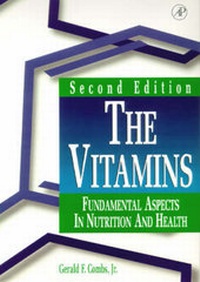
The Vitamins
Fundamental Aspects in Nutrition and Health
2nd Edition
Published on 6. November 1998
Book
Hardback
618 pages
978-0-12-183492-0 (ISBN)
Description
"The Vitamins, Second Edition" provides thoroughly updated, revised and expanded coverage of the biochemistry and physiology of vitamins and vitamin-like substances. It contains a cohesive, well-organized and readable presentation of each of the vitamins, as well as the history of their discoveries and the status of current knowledge concerning their roles in nutrition and health. The book is organized, personal, and supportive for effective teaching and learning. Each chapter begins with a list of concepts, objectives, and vocabulary, and concludes with case studies, student questions and exercises. "The Vitamins" is intended for use by students and health professionals as a text and major reference in human and animal nutrition and in clinical medicine. It will also be valuable to all researchers in food science, veterinary science and the animal sciences.
Key features include: extensively expanded revision of the widely used First Edition; concisely presented state of knowledge of the vitamins and vitamin-like substances; pertinent issues emerging from the fields of molecular biology and epidemiology; emphasizing the biochemical and clinical aspects of the vitamins; and employing a concept-based approach which facilitates meaningful learning. This book is extensively footnoted to provide reader with a deeper level of understanding of key issues. It uses advance organizers such as anchoring concepts, learning objectives and vocabulary at the beginning of each chapter. It presents illustrative case studies, study questions and exercises at the end of chapters and includes guide for instructors and students.
Key features include: extensively expanded revision of the widely used First Edition; concisely presented state of knowledge of the vitamins and vitamin-like substances; pertinent issues emerging from the fields of molecular biology and epidemiology; emphasizing the biochemical and clinical aspects of the vitamins; and employing a concept-based approach which facilitates meaningful learning. This book is extensively footnoted to provide reader with a deeper level of understanding of key issues. It uses advance organizers such as anchoring concepts, learning objectives and vocabulary at the beginning of each chapter. It presents illustrative case studies, study questions and exercises at the end of chapters and includes guide for instructors and students.
Reviews / Votes
Praise for the First Edition: "It was a pleasure to read this magnificent book that can be used for teaching and as a desk reference. In short, this is the premier textbook in vitamins and may be used at both the graduate and undergraduate levels." --JOURNAL OF OPTIMAL NUTRITION "This text would be useful for anyone teaching a course about vitamins." --FOOD TECHNOLOGY "The organization of the book is a unique and useful approach to presenting material. Students will find the formatting of individual chapters extremely useful. This is an excellent learning textbook for an undergraduate or early graduate course on the vitamins." --JOURNAL OF NUTRITION EDUCATION "The book is obviously valuable to those teaching or using information associated with vitamins. I also recommend the book to other teachers as a way of presenting material to students to learn rather than memorize." --JOURNAL OF VETERINARY MEDICAL EDUCATION "The strength of this book is the clear description of the chemistry of each vitamin and related compounds and of the biochemistry and metabolic functions in the body. For those who want to build their knowledge of the vitamins on a chemical and biochemical base, this book will prove excellent." --AUSTRALIAN VETERINARY JOURNAL "A comprehensive text providing the biochemistry, physiology and clinical aspects of vitamins, and vitamin-like substances. There are five appendixes with detailed tables of vitamin content of foods. A text for anybody interested in nutrition, students, teachers or just physicians." --JOURNAL OF PEDIATRIC ENDOCRINOLOGY & METABOLISM, Volume 13, No. 5, 2000More details
Edition
2nd Revised edition
Language
English
Place of publication
San Diego
United States
Publishing group
Elsevier Science Publishing Co Inc
Target group
Professional and scholarly
Edition type
Revised edition
Illustrations
index
Dimensions
Height: 254 mm
Width: 175 mm
Weight
1316 gr
ISBN-13
978-0-12-183492-0 (9780121834920)
Copyright in bibliographic data and cover images is held by Nielsen Book Services Limited or by the publishers or by their respective licensors: all rights reserved.
Schweitzer Classification
Other editions
New editions
Book
10/2007
3rd Edition
Academic Press
€65.71
Article exhausted; check for reprint
Previous edition

Book
01/1992
Academic Press
€56.43
Article exhausted; check for reprint
Person
Gerald F. Combs, Jr., Ph.D., is a Emeritus Professor of Nutrition at Cornell University. His specialties are the nutritional biochemistry of trace elements and vitamins, clinical intervention studies, and the linkages of agriculture and human health in national development. He has authored or co-authored 279 publications, including two major reference books.
Content
Perspectives on the Vitamins in Nutrition: What is a Vitamin? Discovery of the Vitamins. Chemical and Physiological Properties of the Vitamins. Vitamin Deficiency. The Individual Vitamins: Vitamin A. Vitamin D. Vitamin E. Vitamin K. Vitamin C. Thiamin. Riboflavin. Niacin. Vitamin B6. Biotin. Pantothenic Acid. Folate. Vitamin B12. Quasi-Vitamins. Using Current Knowledge of the Vitamins: Sources of the Vitamins. Assessing Vitamin Status. Quantifying Vitamin Requirements. Vitamin Safety. Appendices: Current and Obsolete Designations of "Vitamins" and Other Vitamin-Like "Factors" Studies. Original Reports for Case Studies. Some Additional Case Studies. A Core of Vitamin Research Literature. Tables of Vitamin Contents of Foods. Index.