

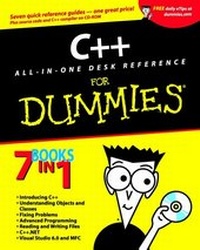
C++ All-in-One Desk Reference For Dummies
1st Edition
Published on 31. January 2003
Book
Paperback/Softback
864 pages
978-0-7645-1795-2 (ISBN)
Description
This handy reference presents eight book-length modules that show readers how to conquer all aspects of C++, today's most widely used programming language for software applications, with 3.6 million developers. It offers complete coverage of all the most popular compilers and integrated development environments for C++, including gcc, Borland, CodeWarrior and Microsoft's new Visual C++.NET and Visual Studio.NET IDE.
More details
Edition
1., Auflage
Language
English
Place of publication
Foster City
United States
Publishing group
John Wiley & Sons Inc
Target group
Professional and scholarly
Edition type
New edition
Illustrations
Illustrations
Dimensions
Height: 23.2 cm
Width: 18.8 cm
Weight
1279 gr
ISBN-13
978-0-7645-1795-2 (9780764517952)
Schweitzer Classification
Other editions
New editions
John Paul Mueller | Jeff Cogswell
C++ All-In-One Desk Reference For Dummies
Book
09/2009
2nd Edition
Wiley
€35.90
Article exhausted; check for reprint
Person
Jeff Cogswell is a software engineer, writer, consultant, and former educator. He is also the author of Developing Visual Studio.NET Macros and Add-Ins.
Content
Introduction.
Book I: Introducing C++.
Chapter 1: Creating a First C++ Program.
Chapter 2: Storing Data in C++.
Chapter 3: Directing Your C++ Program Flow.
Chapter 4: Dividing Your Work with Functions.
Chapter 5: Dividing Between Source-Code Files.
Chapter 6: Referring to Your Data Through Pointers.
Chapter 7: Working with Classes.
Chapter 8: Using Advanced C++ Features.
Book II: Understanding Objects and Classes.
Chapter 1: Planning and Building Objects.
Chapter 2: Describing Your Program with UML.
Chapter 3: Structuring Your Classes with UML.
Chapter 4: Demonstrating Behavior with UML.
Chapter 5: Modeling Your Programs with UML.
Chapter 6: Building with Design Patterns.
Book III: Fixing Problems.
Chapter 1: Dealing with Bugs.
Chapter 2: Debugging a Program.
Chapter 3: Stopping and Inspecting Your Code.
Chapter 4: Traveling About the Stack.
Book IV: Advanced Programming.
Chapter 1: Working with Arrays, Pointers, and References.
Chapter 2: Creating Data Structures.
Chapter 3: Constructors, Destructors, and Exceptions.
Chapter 4: Advanced Class Usage.
Chapter 5: Creating Classes with Templates.
Chapter 6: Programming with the Standard Library.
Book V: Reading and Writing Files.
Chapter 1: Filing Information with the Streams Library.
Chapter 2: Writing with Output Streams.
Chapter 3: Reading with Input Streams.
Chapter 4: Building Directories and Contents.
Chapter 5: Streaming Your Own Classes.
Book VI: C++.NET.
Chapter 1: In a.NET Frame of Mind.
Chapter 2: Moving About in Visual Studio.
Chapter 3: All About Strings.
Chapter 4: Managing Your Objects.
Chapter 5: Taking Managed Extensions Farther.
Chapter 6: Programming for Events.
Chapter 7: Building Forms in.NET.
Chapter 8: Managing Files in.NET.
Chapter 9: Building the Famous Web Services.
Chapter 10: Building and Managing Assemblies.
Book VII: Visual Studio 6.0 and MFC.
Chapter 1: Creating Visual Studio Projects.
Chapter 2: Manipulating and Debugging Projects.
Chapter 3: Editing with Wizardry.
Chapter 4: Just Browsing, Thank You.
Chapter 5: Creating Windows Programs with MFC.
Chapter 6: Adding Controls in MFC.
Book VIII: Appendixes.
Appendix A: Automating Your Programs with Makefiles.
Appendix B: About the CD-ROM.
Index.
End-User License Agreement.
Book I: Introducing C++.
Chapter 1: Creating a First C++ Program.
Chapter 2: Storing Data in C++.
Chapter 3: Directing Your C++ Program Flow.
Chapter 4: Dividing Your Work with Functions.
Chapter 5: Dividing Between Source-Code Files.
Chapter 6: Referring to Your Data Through Pointers.
Chapter 7: Working with Classes.
Chapter 8: Using Advanced C++ Features.
Book II: Understanding Objects and Classes.
Chapter 1: Planning and Building Objects.
Chapter 2: Describing Your Program with UML.
Chapter 3: Structuring Your Classes with UML.
Chapter 4: Demonstrating Behavior with UML.
Chapter 5: Modeling Your Programs with UML.
Chapter 6: Building with Design Patterns.
Book III: Fixing Problems.
Chapter 1: Dealing with Bugs.
Chapter 2: Debugging a Program.
Chapter 3: Stopping and Inspecting Your Code.
Chapter 4: Traveling About the Stack.
Book IV: Advanced Programming.
Chapter 1: Working with Arrays, Pointers, and References.
Chapter 2: Creating Data Structures.
Chapter 3: Constructors, Destructors, and Exceptions.
Chapter 4: Advanced Class Usage.
Chapter 5: Creating Classes with Templates.
Chapter 6: Programming with the Standard Library.
Book V: Reading and Writing Files.
Chapter 1: Filing Information with the Streams Library.
Chapter 2: Writing with Output Streams.
Chapter 3: Reading with Input Streams.
Chapter 4: Building Directories and Contents.
Chapter 5: Streaming Your Own Classes.
Book VI: C++.NET.
Chapter 1: In a.NET Frame of Mind.
Chapter 2: Moving About in Visual Studio.
Chapter 3: All About Strings.
Chapter 4: Managing Your Objects.
Chapter 5: Taking Managed Extensions Farther.
Chapter 6: Programming for Events.
Chapter 7: Building Forms in.NET.
Chapter 8: Managing Files in.NET.
Chapter 9: Building the Famous Web Services.
Chapter 10: Building and Managing Assemblies.
Book VII: Visual Studio 6.0 and MFC.
Chapter 1: Creating Visual Studio Projects.
Chapter 2: Manipulating and Debugging Projects.
Chapter 3: Editing with Wizardry.
Chapter 4: Just Browsing, Thank You.
Chapter 5: Creating Windows Programs with MFC.
Chapter 6: Adding Controls in MFC.
Book VIII: Appendixes.
Appendix A: Automating Your Programs with Makefiles.
Appendix B: About the CD-ROM.
Index.
End-User License Agreement.