

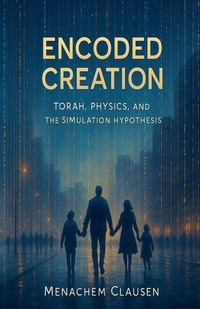
Encoded Creation
Torah, Physics, and the Simulation Hypothesis
Published on 20. October 2025
Book
Paperback/Softback
250 pages
979-8-232-80781-8 (ISBN)
Description
What if Torah is not only wisdom about the world, but a blueprint for how the world actually runs? Encoded Creation reads recurring structures: "And God said... and it was so," guarded speech and witnesses, layered worlds, names and access. It then asks what those structures imply. If creation answers to utterance and halakhic speech changes legal state, existence may behave like governed information.
This is not speculation by slogan. Each claim is graded with a four tier method: Direct Support, Structural Parallel, Philosophical Compatibility, Poetic Hint. Every chapter ends with limits, counters, and clear falsifiability notes. Enthusiasm with brakes.
Topics include: creation as executed speech; vows, betrothal, divorce, and agency as state transitions; gates, roles, and permissions; the Temple and Jacob's ladder as interfaces; malakhim as bounded agents; Divine Names and guarded transmission; observer and rendering; dreams and prophecy; teshuvah as identity reconfiguration; freedom and providence; and epochal resets through shemittot and yovel.
Written for scholars, teachers, and curious readers, Encoded Creation keeps a reverent tone and argues only where the sources warrant. It offers small practices for an ordinary week and a careful conversation between Torah, physics, and the simulation hypothesis.
More details
Language
English
Product notice
Paperback (trade)
Unsewn / adhesive bound
Dimensions
Height: 216 mm
Width: 140 mm
Thickness: 15 mm
Weight
358 gr
ISBN-13
979-8-232-80781-8 (9798232807818)
Copyright in bibliographic data and cover images is held by Nielsen Book Services Limited or by the publishers or by their respective licensors: all rights reserved.
Schweitzer Classification
Person
Menachem Clausen is a Jerusalem-based writer and editor whose work turns classic sources toward lived practice. He gives steady attention to mesorah and to the limits of speculation, and uses contemporary science only as a clarifying analogy. His writing ranges from Jewish thought to public ethics. When not writing, he studies with neighbors and helps communities align words with deeds.