

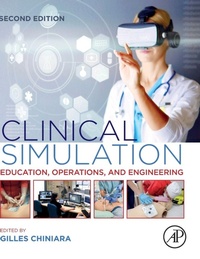
Clinical Simulation
Education, Operations and Engineering
2nd Edition
Published on 20. August 2019
Book
Hardback
992 pages
978-0-12-815657-5 (ISBN)
Description
Clinical Simulation: Education, Operations and Engineering, Second Edition, offers readers a restructured, comprehensive and updated approach to learn about simulation practices and techniques in a clinical setting. Featuring new and revised chapters from the industry's top researchers and educators, this release gives readers the most updated data through modern pedagogy. This new edition has been restructured to highlight five major components of simulation education, including simulation scenarios as tools, student learning, faculty teaching, necessary subject matter, and the learning environment. With clear and efficient organization throughout the book, users will find this to be an ideal text for students and professionals alike.
More details
Edition
2nd edition
Language
English
Place of publication
San Diego
United States
Publishing group
Elsevier Science Publishing Co Inc
Target group
Professional and scholarly
Product notice
Laminated cover
Dimensions
Height: 235 mm
Width: 191 mm
Thickness: 52 mm
Weight
1901 gr
ISBN-13
978-0-12-815657-5 (9780128156575)
Copyright in bibliographic data and cover images is held by Nielsen Book Services Limited or by the publishers or by their respective licensors: all rights reserved.
Schweitzer Classification
Other editions
Additional editions
E-Book
08/2019
2nd Edition
Academic Press
€175.00
Available for download
Previous edition
Richard Kyle | W. Bosseau Murray
Clinical Simulation
Book
12/2007
Academic Press
€116.50
Shipment within 15-20 days
Person
Gilles Chiniara has been practicing anesthesiology since 2003. He is an associate professor at Universite Laval (Quebec City, Canada) and has a Master in Health Professions Education (MHPE) from the University of Illinois at Chicago, with an interest in assessment and in studying human factors and situation awareness. Dr. Chiniara has been actively involved in healthcare simulation since 2004. He is the Scientific Director of Centre Apprentiss, an interdisciplinary simulation center at Universite Laval which he helped design. He has worked as educational consultant for private firms interested in venturing into simulation in healthcare, and has given talks and workshops on simulation and its pedagogy both nationally and internationally. He has collaborated, under the supervision of the Quebec College of Physicians, in establishing a provincial assessment program for practicing anesthesiologists, aimed at remediation. In addition to designing and implementing the oldest French train-the-trainer course in simulation, he has designed and implemented a graduate course on simulation given at Universite Laval.
Content
I. FOUNDATIONS IN CLINICAL SIMULATION
1. A Brief History of Clinical Simulation: How Did We Get Here?
2. The Many Faces of Simulation
3. Simulated and Standardized Patients
4. Virtual Patients and Serious Games
5. Physiologic Modeling for Simulators
II FOUNDATIONS IN CLINICAL SIMULATION
6. Adapting Learning in a Simulated Environment
7. Adult Learning and Simulation-Based Education
8. Theory for Practice: Learning Theories for Simulation
9. Simulation-Based Education and the Challenge of Transfer
10. Using Cognitive Load Theory to Optimize Simulation Design
11. Motivational Dynamics in Simulation
12. Learning Through PlayTraining
13. Simulation as a Social Event: Stepping Back, Thinking About Fundamental Assumptions
III BUILDING EFFECTIVE SIMULATION EXPERIENCES
14. Educational Foundations of Instructional Design Applied to Simulation-Based Education
15. Theory and Practice of Developing an Effective Simulation Curriculum
16. Creating Effective Learning Environments: The Educator's Perspective
17. Assessing and Planning for Simulation Implementation: An Approach to Instructional Design to Meet Organizational Needs
18. When Simulation Should and Should Not Be in the Curriculum
19. Integrating Simulation to Existing Educational Programs
20. Planning and Assessing Clinical Simulation Using Task Analysis
21. Theoretical Underpinnings of Scenario Design
22. Key Issues in Scenario Design for Simulation
23. A Systematic Approach to Scenario Design
24. A Pragmatic Approach to Scenario Scripting
IV THE GOALS AND OBJECTIVES OF LEARNING
25. Crisis Resource Management and Nontechnical Skills: From Individuals to Teams, From Danger to Safety
26. Simulation for Learning Clinical Reasoning
27. Simulation for Procedural Tasks
28. Simulation for Pediatrics and Neonatal Care
29. Simulation for Critical Care
30. Simulation for Obstetrics
31. Simulation for Pharmacy
32. Simulation for Workplace Adaptation and Organizational Change
V IMPLEMENTING SIMULATION
33. Prebriefing and Briefing
34. Debriefing Frameworks and Methods
35. Debriefing for the Transfer of Learning: A Cognitive Approach
36. Realism and the Art of Simulation
37. Moving Beyond Fidelity
38. In Situ Simulation
VI IMPLEMENTING SIMULATION
39. Simulation Facility Design 101: The Basics
40. Creation of Structure-Function Relationships in the Design of a Simulation Center
41. The One-Room Schoolhouse for Simulation
42. The One-Room Schoolhouse: A Practical Example
43. The Dedicated Clinical Simulation Suite
44. Simulation in Remote Areas
45. Simulation on a Low Budget
46. Funding for Simulation
47. Creative Procurement for Your Simulation Program
48. Evaluating and Choosing Patient Simulators and Equipment
49. Technological Infrastructure
50. Professional Stagecraft: Creating Simulated Clinical Environments
51. Governance and Administration of Simulation Programs: Providing the Structure and Strategic Foundation for Excellence
52. An Innovative Way to Think About a Simulation Center's Core Administrative Functions: Comparing Managing a Simulation Facility to a Restaurant
53. Challenges in Simulation Implementation: A National Simulation Program in Germany
VII IMPLEMENTING SIMULATION
54. Roles and Functions in a Simulation Center
55. Considerations on the Training of Simulation Educators
56. Train-the-Trainers: Creating Simulation Educators
VIII ASSESSMENT
57. Simulation for Assessment
58. Simulation and High-Stakes Assessment
59. Evaluating Simulation Programs Throughout the Program Development Life Cycle
60. Accrediting Simulation Programs
1. A Brief History of Clinical Simulation: How Did We Get Here?
2. The Many Faces of Simulation
3. Simulated and Standardized Patients
4. Virtual Patients and Serious Games
5. Physiologic Modeling for Simulators
II FOUNDATIONS IN CLINICAL SIMULATION
6. Adapting Learning in a Simulated Environment
7. Adult Learning and Simulation-Based Education
8. Theory for Practice: Learning Theories for Simulation
9. Simulation-Based Education and the Challenge of Transfer
10. Using Cognitive Load Theory to Optimize Simulation Design
11. Motivational Dynamics in Simulation
12. Learning Through PlayTraining
13. Simulation as a Social Event: Stepping Back, Thinking About Fundamental Assumptions
III BUILDING EFFECTIVE SIMULATION EXPERIENCES
14. Educational Foundations of Instructional Design Applied to Simulation-Based Education
15. Theory and Practice of Developing an Effective Simulation Curriculum
16. Creating Effective Learning Environments: The Educator's Perspective
17. Assessing and Planning for Simulation Implementation: An Approach to Instructional Design to Meet Organizational Needs
18. When Simulation Should and Should Not Be in the Curriculum
19. Integrating Simulation to Existing Educational Programs
20. Planning and Assessing Clinical Simulation Using Task Analysis
21. Theoretical Underpinnings of Scenario Design
22. Key Issues in Scenario Design for Simulation
23. A Systematic Approach to Scenario Design
24. A Pragmatic Approach to Scenario Scripting
IV THE GOALS AND OBJECTIVES OF LEARNING
25. Crisis Resource Management and Nontechnical Skills: From Individuals to Teams, From Danger to Safety
26. Simulation for Learning Clinical Reasoning
27. Simulation for Procedural Tasks
28. Simulation for Pediatrics and Neonatal Care
29. Simulation for Critical Care
30. Simulation for Obstetrics
31. Simulation for Pharmacy
32. Simulation for Workplace Adaptation and Organizational Change
V IMPLEMENTING SIMULATION
33. Prebriefing and Briefing
34. Debriefing Frameworks and Methods
35. Debriefing for the Transfer of Learning: A Cognitive Approach
36. Realism and the Art of Simulation
37. Moving Beyond Fidelity
38. In Situ Simulation
VI IMPLEMENTING SIMULATION
39. Simulation Facility Design 101: The Basics
40. Creation of Structure-Function Relationships in the Design of a Simulation Center
41. The One-Room Schoolhouse for Simulation
42. The One-Room Schoolhouse: A Practical Example
43. The Dedicated Clinical Simulation Suite
44. Simulation in Remote Areas
45. Simulation on a Low Budget
46. Funding for Simulation
47. Creative Procurement for Your Simulation Program
48. Evaluating and Choosing Patient Simulators and Equipment
49. Technological Infrastructure
50. Professional Stagecraft: Creating Simulated Clinical Environments
51. Governance and Administration of Simulation Programs: Providing the Structure and Strategic Foundation for Excellence
52. An Innovative Way to Think About a Simulation Center's Core Administrative Functions: Comparing Managing a Simulation Facility to a Restaurant
53. Challenges in Simulation Implementation: A National Simulation Program in Germany
VII IMPLEMENTING SIMULATION
54. Roles and Functions in a Simulation Center
55. Considerations on the Training of Simulation Educators
56. Train-the-Trainers: Creating Simulation Educators
VIII ASSESSMENT
57. Simulation for Assessment
58. Simulation and High-Stakes Assessment
59. Evaluating Simulation Programs Throughout the Program Development Life Cycle
60. Accrediting Simulation Programs