

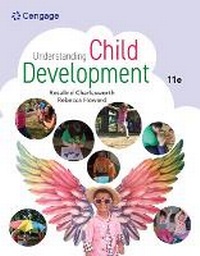
Understanding Child Development
11th Edition
Published on 1. January 2026
Book
Paperback/Softback
580 pages
979-8-214-13136-8 (ISBN)
Description
Working with young children is both rewarding and complex. "Understanding Child Development," 11th Edition, helps you build the knowledge and confidence to best support children from birth through age eight. You'll explore how children grow across physical, cognitive, language and emotional domains, and how to apply that knowledge in real-world settings. The text connects theory and research to practice, with updated content on brain development, cultural influences and inclusive education. Reflection prompts, case studies and practical tools help you think critically and prepare for your role as a teacher, caregiver or advocate. Whether you're new to the field or deepening your expertise, this book supports your journey.
More details
Edition
11th edition
Language
English
Place of publication
Belmont, CA
United States
Publishing group
Cengage Learning, Inc
Target group
College/higher education
Product notice
Paperback (trade)
Unsewn / adhesive bound
Dimensions
Height: 216 mm
Width: 274 mm
Thickness: 18 mm
Weight
1021 gr
ISBN-13
979-8-214-13136-8 (9798214131368)
Copyright in bibliographic data and cover images is held by Nielsen Book Services Limited or by the publishers or by their respective licensors: all rights reserved.
Schweitzer Classification
Other editions
Previous edition
Rosalind Charlesworth
Understanding Child Development
Book
01/2016
10th Edition
Wadsworth Publishing Co Inc
€275.50
Article not available at the moment
Persons
Rosalind Charlesworth, Ph.D., was professor emerita and retired department chair in the Department of Child and Family Studies at Weber State University in Ogden, Utah. Dr. Charlesworth's career in early childhood education included experiences with both typical and non-typical young children in laboratory schools, public schools and day care centers, plus research in social and cognitive development and behavior. Throughout her career, she was known for her contributions to research on early childhood teachers' beliefs and practices. In 1999, she was the co-recipient of the NAECTE/Allyn & Bacon Outstanding Early Childhood Teacher Educator award. In 2014, she received the Legacy Award from the Weber State University Child and Family Studies Department in recognition of her contributions to early childhood education. Dr. Charlesworth passed away in 2021, and leaves behind a legacy as a deeply respected and valued early childhood educator, author, advocate, mentor and inspiration to many in the field. Rebecca Howard, Ph.D., is an early childhood consultant, professional development trainer and university instructor. She was a faculty member at Miami University in Oxford, Ohio, where she held a variety of teaching and advising positions since 2000 in teacher education, educational leadership, interdisciplinary studies and theater. She founded the Oxford Early Childhood Center in 1986, and was owner/administrator and lead teacher until the program closed in 2014. While operating OECC, she created the OECC Integrated Curriculum, which was grounded in creativity and culturally responsive practice as foundational pedagogical components of a comprehensive approach to development across domains. She has presented at numerous professional conferences, provided extensive professional development trainings over a wide range of topics, published articles for Childhood Education and Journal of Dramatic Theory and Criticism and authored a chapter on dramatic play and gender performance in the book "Children Under Construction: Play as Curriculum" (2010). In 2023, she authored a major revision of the 12th edition of Mary Mayesky's "Creative Activities and Curriculum for Young Children," and in 2025 authored a major revision of the 9th edition of Rosalind Charlesworth's "Math and Science for Young Children," both for Cengage.
Content
Part I: OVERVIEW OF CHILD DEVELOPMENT AND THEORY.
1. Studying the Young Child.
Part II: GROWTH AND DEVELOPMENT ACROSS DOMAINS.
2. Physical/Motor Development and Health/Safety.
3. The Cognitive System, Concept Development, and Intelligence.
4. Expressive Language Development.
5. Affective Development.
Part III: FACTORS AFFECTING LEARNING.
6. Factors Affecting Learning I: Perception, Processes, Adult Role, and Assessment.
7. Factors Affecting Learning II: Play, Technology, and Families.
Part IV: PRENATAL AND INFANCY PERIODS.
8. Prenatal Period, Birth, and the First Two Weeks.
9. Infancy: Theory, Environment, Health, and Motor Development.
10. Infant Cognitive and Affective Development.
Part V: TODDLERS, PRE-K, AND KINDERGARTENERS: AGES ONE THROUGH SIX YEARS.
11. Toddlers: Autonomy, Independence, Transition.
12. Toddler, Pre-K, Kindergarten: Affective Development, Guidance, and Behavioral Management.
13. Support for Pre-K and Kindergarten Development Across Domains.
Part VI: PRIMARY GRADES: AGES SIX THROUGH EIGHT YEARS.
14. Pre-K To Primary: Bridging the Gap into the Primary Grades.
15. Physical Growth, Health, and Motor Development of Primary Grade Children.
1. Studying the Young Child.
Part II: GROWTH AND DEVELOPMENT ACROSS DOMAINS.
2. Physical/Motor Development and Health/Safety.
3. The Cognitive System, Concept Development, and Intelligence.
4. Expressive Language Development.
5. Affective Development.
Part III: FACTORS AFFECTING LEARNING.
6. Factors Affecting Learning I: Perception, Processes, Adult Role, and Assessment.
7. Factors Affecting Learning II: Play, Technology, and Families.
Part IV: PRENATAL AND INFANCY PERIODS.
8. Prenatal Period, Birth, and the First Two Weeks.
9. Infancy: Theory, Environment, Health, and Motor Development.
10. Infant Cognitive and Affective Development.
Part V: TODDLERS, PRE-K, AND KINDERGARTENERS: AGES ONE THROUGH SIX YEARS.
11. Toddlers: Autonomy, Independence, Transition.
12. Toddler, Pre-K, Kindergarten: Affective Development, Guidance, and Behavioral Management.
13. Support for Pre-K and Kindergarten Development Across Domains.
Part VI: PRIMARY GRADES: AGES SIX THROUGH EIGHT YEARS.
14. Pre-K To Primary: Bridging the Gap into the Primary Grades.
15. Physical Growth, Health, and Motor Development of Primary Grade Children.