

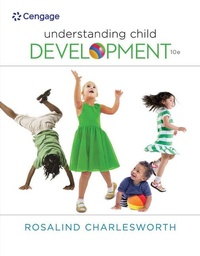
Understanding Child Development
10th Edition
Will be published approx. on 1. January 2016
Book
Paperback/Softback
560 pages
978-1-305-50103-4 (ISBN)
Description
UNDERSTANDING CHILD DEVELOPMENT, 10th Edition, introduces you to the unique qualities of young children from infants to age eight, and demonstrates how to work with each child in ways that correspond with their developmental level, and their social and cultural environment. Learning theories and research are included, as is information about the importance of play and technology in a young child's learning process. Learning objectives and specific NAEYC Program Standards, Accreditation Criteria, and Developmentally Appropriate Practices (DAP) are highlighted at the beginning of each chapter. Other topics covered include readiness, assessment, working with children and families from diverse cultures, working with children with special needs, and the early stages of reading, writing, and general cognitive development. Throughout the text, real-life examples and anecdotes bring theory and research to life
More details
Edition
10th edition
Language
English
Place of publication
Belmont, CA
United States
Publishing group
Cengage Learning, Inc
Target group
College/higher education
Product notice
Paperback (trade)
Unsewn / adhesive bound
Dimensions
Height: 272 mm
Width: 216 mm
Thickness: 23 mm
Weight
1134 gr
ISBN-13
978-1-305-50103-4 (9781305501034)
Copyright in bibliographic data and cover images is held by Nielsen Book Services Limited or by the publishers or by their respective licensors: all rights reserved.
Schweitzer Classification
Other editions
New editions
Rosalind Charlesworth | Rebecca Howard
Understanding Child Development
Book
01/2026
11th Edition
Wadsworth Publishing Co Inc
€276.50
Shipment within 10-20 days
Person
Rosalind Charlesworth, Ph.D., was professor emerita and retired department chair in the Department of Child and Family Studies at Weber State University in Ogden, Utah. Dr. Charlesworth's career in early childhood education included experiences with both typical and non-typical young children in laboratory schools, public schools and day care centers, plus research in social and cognitive development and behavior. Throughout her career, she was known for her contributions to research on early childhood teachers' beliefs and practices. In 1999, she was the co-recipient of the NAECTE/Allyn & Bacon Outstanding Early Childhood Teacher Educator award. In 2014, she received the Legacy Award from the Weber State University Child and Family Studies Department in recognition of her contributions to early childhood education. Dr. Charlesworth passed away in 2021, and leaves behind a legacy as a deeply respected and valued early childhood educator, author, advocate, mentor and inspiration to many in the field.
Content
Part I: OVERVIEW OF THE YOUNG CHILD: BIRTH THROUGH AGE EIGHT.
1. Studying the Young Child.
Part II: LEARNING: BIRTH THROUGH AGE EIGHT.
2. How Play, Technology and Digital Media, and Disabilities Affect Learning.
3. Factors Affecting Learning.
Part III: PRENATAL AND INFANCY PERIODS.
4. Prenatal Period, Birth, and the First Two Weeks.
5. Infancy: Theory, Environment, Health, and Motor Development.
6. Infant Cognitive and Affective Development.
Section IV: THE TODDLER: DEVELOPING TOWARD INDEPENDENCE.
7. The Toddler: Autonomy and Development.
Part V: THE PREKINDERGARTNER/KINDERGARTNER: AGES THREE THROUGH SIX.
8. Physical and Motor Development.
9. The Cognitive System, Concept Development, and Intelligence.
10. Oral and Written Language Development.
11. How Adults Enrich Language and Concept Development.
12. Affective Development.
13. How Adults Support Affective Development.
Part VI: THE PRIMARY CHILD: GROWTH AND DEVELOPMENT AGES SIX THROUGH EIGHT.
14. Preschool To Primary: Bridging the Gap into the Primary Grades.
15. Primary Grade Child Development.
1. Studying the Young Child.
Part II: LEARNING: BIRTH THROUGH AGE EIGHT.
2. How Play, Technology and Digital Media, and Disabilities Affect Learning.
3. Factors Affecting Learning.
Part III: PRENATAL AND INFANCY PERIODS.
4. Prenatal Period, Birth, and the First Two Weeks.
5. Infancy: Theory, Environment, Health, and Motor Development.
6. Infant Cognitive and Affective Development.
Section IV: THE TODDLER: DEVELOPING TOWARD INDEPENDENCE.
7. The Toddler: Autonomy and Development.
Part V: THE PREKINDERGARTNER/KINDERGARTNER: AGES THREE THROUGH SIX.
8. Physical and Motor Development.
9. The Cognitive System, Concept Development, and Intelligence.
10. Oral and Written Language Development.
11. How Adults Enrich Language and Concept Development.
12. Affective Development.
13. How Adults Support Affective Development.
Part VI: THE PRIMARY CHILD: GROWTH AND DEVELOPMENT AGES SIX THROUGH EIGHT.
14. Preschool To Primary: Bridging the Gap into the Primary Grades.
15. Primary Grade Child Development.