

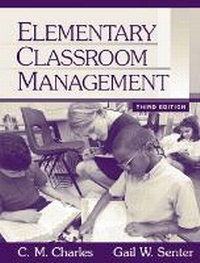
Elementary Classroom Management
3rd Edition
Published on 6. December 2002
Book
Paperback/Softback
296 pages
978-0-205-34342-3 (ISBN)
Description
Elementary Classroom Management, 3/e,offers teachers a concise and applied guide to successfully managing the elementary school classroom.
Well-conceived classroom management helps establish positive environments and programs where communication, cooperation, and dedication to learning prevail. This book is designed to assist teachers, both novice and experienced, in developing and refining management skills that lead to learning and enjoyment in the classroom. While based upon proven research methods, the aim of the book is to provide clear, practical advice.
Well-conceived classroom management helps establish positive environments and programs where communication, cooperation, and dedication to learning prevail. This book is designed to assist teachers, both novice and experienced, in developing and refining management skills that lead to learning and enjoyment in the classroom. While based upon proven research methods, the aim of the book is to provide clear, practical advice.
More details
Edition
3rd edition
Language
English
Place of publication
United States
Publishing group
Pearson Education (US)
Target group
Professional and scholarly
Dimensions
Height: 235 mm
Width: 178 mm
ISBN-13
978-0-205-34342-3 (9780205343423)
Copyright in bibliographic data and cover images is held by Nielsen Book Services Limited or by the publishers or by their respective licensors: all rights reserved.
Schweitzer Classification
Other editions
New editions
C. M. Charles | Gail W. Senter
Elementary Classroom Management
Book
06/2004
4th Edition
Pearson
€69.51
Article exhausted; check for reprint
Previous edition

C. M. Charles | Gail W. Senter
Elementary Classroom Management
Book
11/1999
2nd Edition
Pearson
€27.43
Article exhausted; check for reprint
Content
1. Classroom Management: Problems and Promises.
2. Laying Out the School Year.
3. Managing the Physical Environment of the Classroom.
4. Managing the Psychosocial Environment.
5. Managing Student Motivation to Learn.
6. Managing Instruction.
7. Managing Students at Work.
8. Managing Special Groups.
9. Managing Student Behavior.
10. Managing Assessment, Record Keeping, and Reporting.
11. Managing Communication with Students, Parents, and Others.
12. Managing the Work of Paraprofessionals.
13. Managing Substitute Teachers and Substitute Teaching.
14. Managing Stress Productively.
15. Resources for Expanding Horizons and Opportunities.
2. Laying Out the School Year.
3. Managing the Physical Environment of the Classroom.
4. Managing the Psychosocial Environment.
5. Managing Student Motivation to Learn.
6. Managing Instruction.
7. Managing Students at Work.
8. Managing Special Groups.
9. Managing Student Behavior.
10. Managing Assessment, Record Keeping, and Reporting.
11. Managing Communication with Students, Parents, and Others.
12. Managing the Work of Paraprofessionals.
13. Managing Substitute Teachers and Substitute Teaching.
14. Managing Stress Productively.
15. Resources for Expanding Horizons and Opportunities.